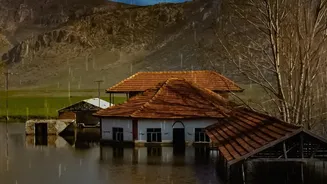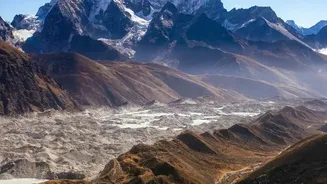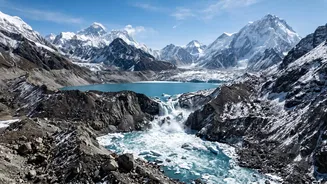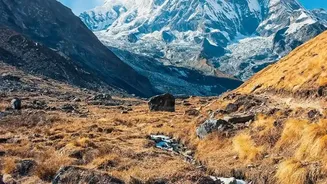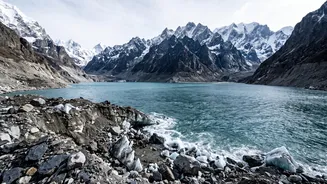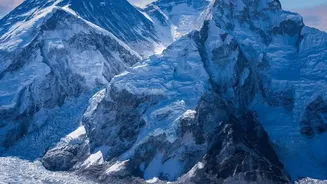





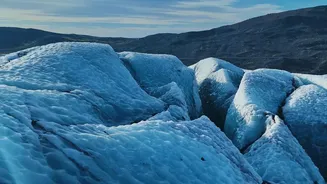
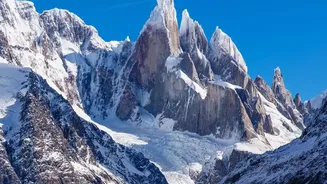
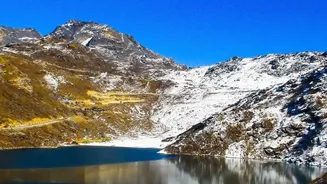
High in the Himalayas, thousands of glacial lakes are swelling, creating what UN officials describe as ticking time bombs. As global temperatures rise, the risk of catastrophic floods from these unstable lakes is growing, threatening millions downstream.
What is a Glacial Lake Outburst Flood?
A Glacial Lake Outburst Flood, or GLOF, is a sudden and often violent release of water from a lake that has formed from melting glaciers. These lakes are typically dammed by unstable natural barriers made of loose rock and debris called moraines. As the glacier retreats due to warming, the lake behind it can grow rapidly, putting immense pressure on its fragile dam. A trigger event—such as a landslide, an ice avalanche into the lake, or even heavy rainfall—can cause the dam to fail, unleashing a devastating torrent of water, mud, and boulders down the mountain valleys with little to no warning. Unlike regular river floods, GLOFs are exceptionally destructive due to the massive volume and velocity of the water released.
A 'Time Bomb' in the Third Pole
The Hindu Kush Himalaya region, often called the 'Third Pole' for its vast ice reserves, is a global hotspot for GLOF risks. Scientists have identified hundreds of potentially dangerous glacial lakes across India, Nepal, Bhutan, and China. A 2020 study alone pinpointed 47 high-risk lakes, though UN officials now believe the actual number is significantly higher. The danger is amplified because the Himalayan mountains are geologically young and tectonically active, making slopes unstable. Climate change is the primary driver, accelerating the melt of glaciers, which in turn leads to the rapid formation and expansion of these precarious lakes. Studies show the number of GLOF events per decade in the Himalayas is now nearly five times higher than before 1950.
India's Extreme Vulnerability
India is particularly vulnerable, with states like Sikkim, Himachal Pradesh, Uttarakhand, and Arunachal Pradesh lying in the shadow of these glacial threats. A recent UN-led report revealed that among eight Himalayan countries, India has recorded the highest number of deaths from GLOFs, totalling over 6,000 between 1835 and 2025. The catastrophic 2023 GLOF at South Lhonak Lake in Sikkim is a stark reminder of the danger. The flood, which killed dozens and destroyed the Chungthang dam, was a cascading disaster that highlighted the extreme vulnerability of downstream communities and crucial infrastructure like hydropower projects. Earlier events, such as the 2013 Kedarnath tragedy in Uttarakhand, also underscore the deadly potential of these mountain tsunamis.
The Race for Solutions
In the face of this escalating threat, the challenge is twofold: monitoring and mitigation. Technology, according to UN officials, is not advancing fast enough to prevent damage across the vast river systems. However, efforts are underway. In Sikkim, authorities have identified 40 high-hazard lakes and are developing specific mitigation plans for the most dangerous ones, such as the Shako Chho and Lhonak lake complexes. These strategies include installing early warning systems, proposing flood-retention structures, and even considering the controlled drainage of some lakes to reduce pressure on their natural dams. The transboundary nature of the threat—where a lake bursting in one country can flood another—necessitates regional cooperation on monitoring and disaster preparedness.