


The Sun’s Unseen Threat
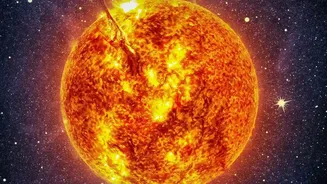
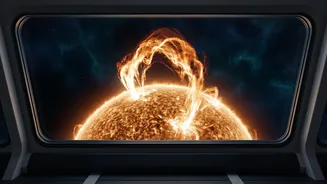
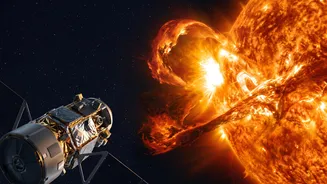
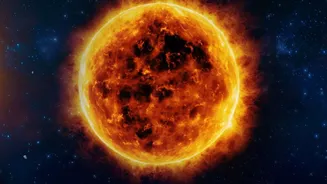
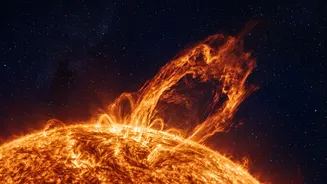
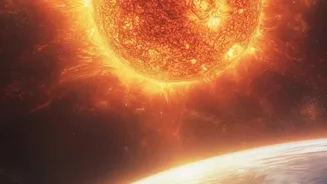
We often think of the Sun as a life-giving source of warmth and light. However, it also has a violent side. The Sun periodically releases massive explosions of plasma and magnetic fields known as Coronal Mass Ejections (CMEs). When one of these storms
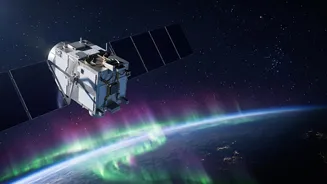
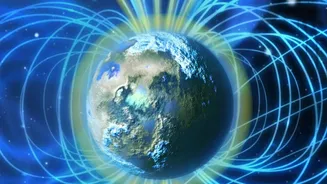
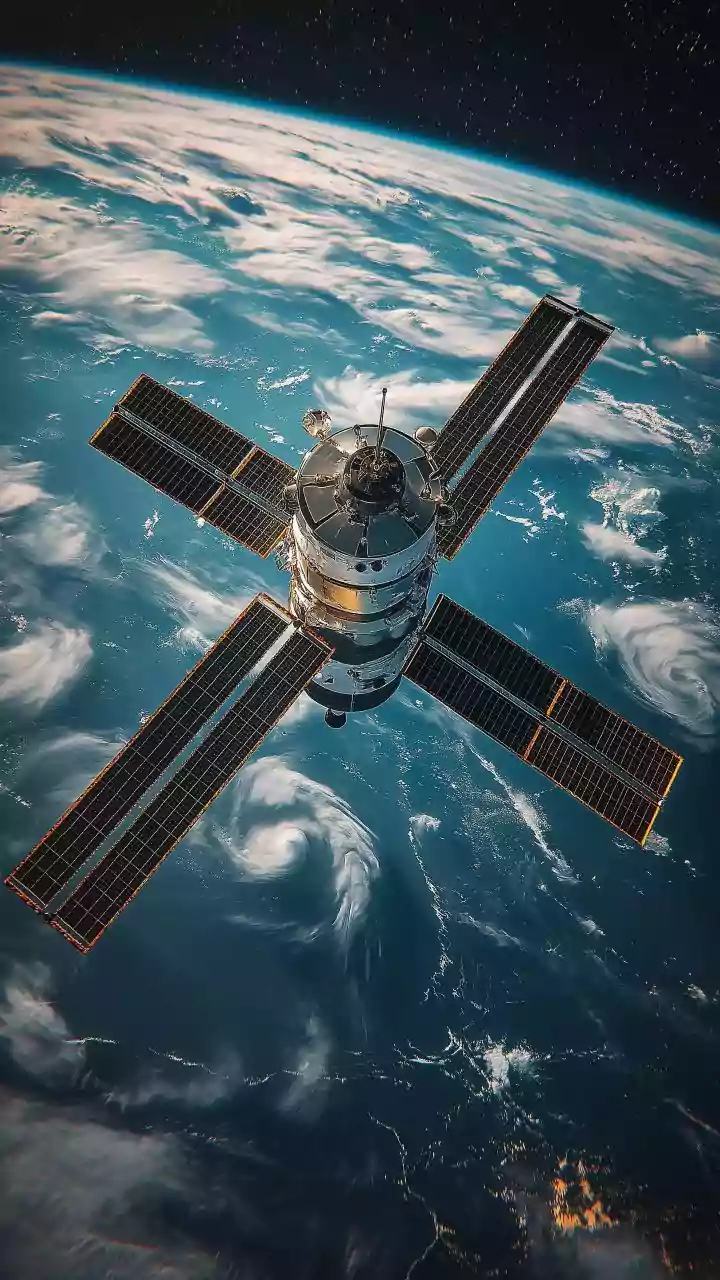
is aimed at Earth, it can have serious consequences. A powerful CME can interact with our planet's magnetic field, creating a geomagnetic storm. These storms are not just responsible for beautiful auroras; they can induce powerful electrical currents in long conductors on the ground. This can overload power grids, leading to widespread blackouts like the one that left six million people in Quebec without power for nine hours in 1989. In today’s hyper-connected society, the impact would be even more severe, potentially damaging satellites that we rely on for communication, navigation, and weather forecasting.
A Race Against Cosmic Time
For decades, predicting exactly when and where a CME will strike Earth has been a major challenge. Scientists monitor the Sun for eruptions, but knowing which ones pose a threat and how severe their impact will be is difficult. Even after a CME erupts, it can take days to travel to Earth, but traditional models have struggled to provide timely and specific warnings. Previous prediction systems either offered localized forecasts for specific areas or provided global predictions that were not fast enough to be actionable. Without a reliable and swift warning system, utility companies, satellite operators, and airlines have had little time to take protective measures, leaving critical infrastructure vulnerable to the Sun's unpredictable fury.
Enter the DAGGER System
To address this challenge, NASA has spearheaded the development of a groundbreaking new tool: DAGGER, which stands for Deep Learning Geomagnetic Perturbation. Developed by an international team of researchers, this computer model combines artificial intelligence with real-time data from a fleet of NASA satellites monitoring the solar wind—the constant stream of particles flowing from the Sun. By training the AI on historical data of past solar storms and their effects on Earth, DAGGER learned to identify the complex patterns that precede a significant geomagnetic disturbance. The result is a system that can predict the specific location and intensity of a solar storm's impact anywhere on Earth with an unprecedented lead time.
How AI Changes the Game
Unlike older models, DAGGER provides a crucial 30-minute advance warning before a storm hits. This may not sound like much, but in the world of infrastructure protection, it is a revolutionary leap. The system analyses incoming data from solar wind-monitoring spacecraft and delivers a global forecast in less than a second, with updates occurring every minute. The AI model's key advantage is its speed and precision. When tested against two major geomagnetic storms from 2011 and 2015, DAGGER was able to quickly and accurately predict their worldwide impacts, demonstrating its reliability. This is the first system to successfully merge the rapid analytical power of AI with real-time measurements from space to produce actionable, worldwide alerts.
From Prediction to Protection
That 30-minute warning is a game-changer for safeguarding our technological backbone. It gives power grid operators enough time to temporarily take sensitive systems offline to prevent catastrophic failures and widespread blackouts. Satellite controllers can command their spacecraft to move into safer orbits or shut down vulnerable components to minimize damage from radiation. Telecommunication companies can brace for disruptions, and even airlines can reroute flights to avoid areas where communication and navigation systems might be compromised. The open-source code for DAGGER can be adapted by various industries to create their own tailored warning systems, much like a tornado siren wails to warn towns of approaching danger. This technology represents a crucial shift from simply observing space weather to actively mitigating its risks.