


More Than Just a Garnish
Let’s be honest: calling coriander a mere ‘garnish’ in Indian cooking is a massive understatement. It’s the soul of countless dishes. It’s stirred into hot curries to add a final burst of freshness, ground into pastes for marinades that sing with flavour,
and liberally sprinkled over everything from poha to biryani. This humble herb is a non-negotiable part of our culinary identity. Its bright, zesty flavour cuts through richness, lifts earthy tones, and adds a layer of complexity that no other ingredient can replicate. Without it, many of our most beloved dishes would feel incomplete, lacking that signature fresh punch that we crave.
The Joy of Freshly Plucked Dhaniya
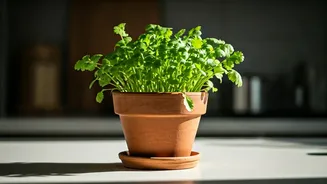
We’ve all been there. You buy a vibrant bunch of coriander from the sabziwala, but within two days, it’s a sad, wilted mess in the refrigerator. Or worse, the bunch you bought is gritty, requiring meticulous washing. A coriander pot elegantly solves this problem. The flavour difference is night and day. Freshly snipped coriander has a potent, almost electric aroma and a crisp texture that store-bought bunches, often days old, simply cannot match. Having a pot means you can harvest exactly what you need, moments before you need it. This isn't just convenient; it's a fundamental upgrade to your cooking, ensuring peak flavour every single time.
Your Simple Guide to Starting
Intimidated by gardening? Don't be. Coriander is one of the most forgiving herbs to grow. First, find a pot at least 6-8 inches deep with drainage holes. A regular terracotta gamla is perfect. Fill it with a good quality potting mix, easily available online or at a local nursery. Now for the secret: take whole coriander seeds (sabut dhaniya) from your masala dabba and gently crush them into two halves using a rolling pin or the bottom of a glass. This process, called splitting, significantly improves germination. Sprinkle these split seeds over the soil, cover them with a thin half-inch layer of soil, and water gently with a light spray.
The Right Balance of Sun and Water
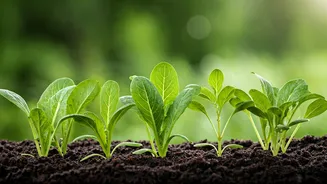
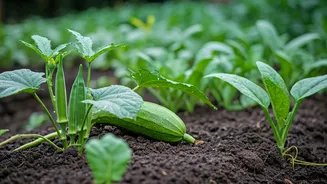
Coriander loves sunshine but can be sensitive to the harsh Indian afternoon heat. A spot that gets 4-5 hours of morning sunlight is ideal. A sunny balcony or a kitchen windowsill is a perfect home for your pot. When it comes to watering, consistency is key. Keep the soil moist but not waterlogged. A good rule of thumb is to stick your finger an inch into the soil; if it feels dry, it's time to water. Overwatering is a common mistake that can lead to root rot, so ensure your pot has excellent drainage. In a few weeks, you'll see delicate green shoots emerge, a truly rewarding sight.
Harvesting for a Continuous Supply
Once your plants are about 4-6 inches tall, you can begin harvesting. The trick is to use the ‘cut-and-come-again’ method. Snip the outer, larger leaves from the base of the plant with a pair of scissors. Avoid pulling up the whole plant or taking more than one-third of its leaves at once. This encourages the plant to keep producing new growth from the centre, giving you a continuous supply for weeks. Eventually, the plant will ‘bolt’—it will grow a tall stalk and produce flowers. This is its natural lifecycle. At this point, the leaves may taste more bitter, but the flowers and seeds are also edible and can be used in your cooking!