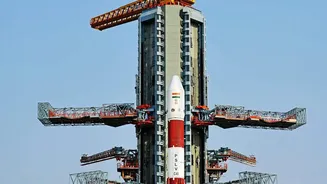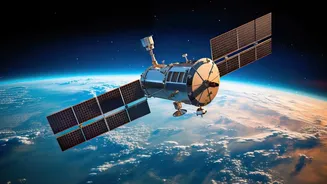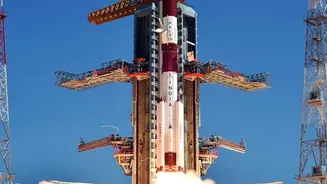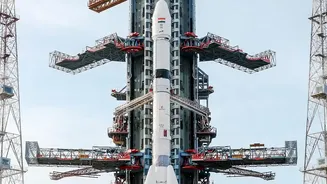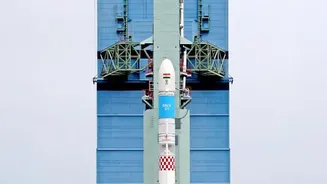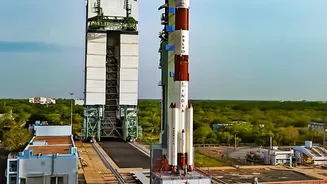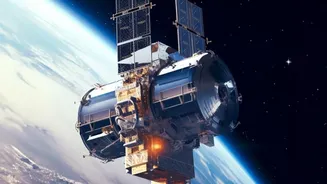




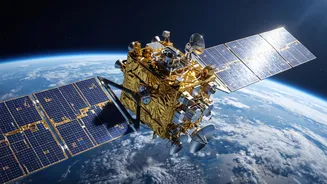
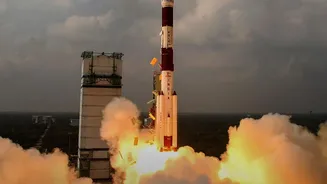
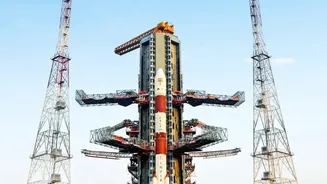
India’s push for a self-reliant navigation system, NavIC, hinges on the health of its satellite constellation. The latest addition, NVS-03, was successfully launched on October 30, 2026, but is not yet online, pending a critical final step.
What is NavIC and Why Is It Important?
NavIC, which
stands for Navigation with Indian Constellation, is India's indigenous regional satellite navigation system, often referred to as the country's answer to the US-owned Global Positioning System (GPS). Developed by the Indian Space Research Organisation (ISRO), its creation was spurred by the strategic need for self-reliance after access to GPS data was denied during the 1999 Kargil conflict. NavIC is designed to provide accurate, real-time positioning and timing services covering India and a region extending 1,500 kilometres beyond its borders. It offers two types of services: the Standard Positioning Service (SPS) for all users and a restricted, encrypted service for authorised users like the military, which is crucial for guiding missiles, tracking troop movements, and other strategic operations. A fully operational NavIC ensures that India's critical navigation capabilities remain secure and independent, irrespective of geopolitical situations.
The Vital Role of NVS-03
The NavIC system requires a minimum of four operational satellites to provide standalone positioning services. However, due to the failure of atomic clocks on older, first-generation satellites and the loss of NVS-02, which failed to reach its intended orbit in January 2025, the constellation had dwindled to just three functional satellites. This meant that while NavIC could provide timing services, it could not independently determine a user's location. The successful launch of NVS-03 on October 30, 2026, was a critical step to restore this minimum capability. NVS-03 is a second-generation satellite with a mission life of 12 years, featuring an indigenously developed Rubidium atomic clock, designed to be more reliable than the imported clocks that previously failed. It also broadcasts on the L1 frequency band, enhancing its compatibility with civilian devices like smartphones.
The Hurdle: What is 'Commissioning'?
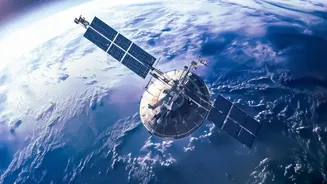
Reaching orbit is just the first step; a satellite is not operational immediately after launch. Before NVS-03 can join the NavIC network, it must undergo a meticulous process called commissioning. This phase, which can last up to 90 days for similar missions, involves a series of complex in-orbit tests to ensure the entire spacecraft and its payloads are functioning perfectly. ISRO engineers on the ground will systematically power on and check out all systems. This includes stabilizing the satellite in its final geosynchronous orbital slot, deploying components like solar panels, and most importantly, calibrating the navigation payload. The team will verify the performance of the new atomic clock and the accuracy of the navigation signals it broadcasts. This process is methodical and cannot be rushed, as the long term health and reliability of the entire NavIC constellation depend on it. Only after these exhaustive checks will the satellite be declared operational.
Current Status and What Lies Ahead
Following its launch on October 30, NVS_03 was successfully placed into a Geosynchronous Transfer Orbit (GTO). ISRO has since performed several orbit_raising manoeuvres using the satellite's onboard Liquid Apogee Motor (LAM) to guide it toward its final designated slot. The satellite's health has been reported as normal during these initial stages. Now, the detailed commissioning phase begins. While there is no official completion date announced, the process will involve weeks of careful testing. The failure of NVS_02 during its orbit_raising phase in 2025 underscores why these procedures are so critical. Once NVS_03 is fully commissioned, it will restore NavIC's standalone positioning capability by bringing the active satellite count to four. To build a truly robust and resilient system, however, ISRO's work is far from over. The full NavIC constellation is designed for seven active satellites, and plans are already in motion for launching NVS_04 and NVS_05 to further strengthen the network.