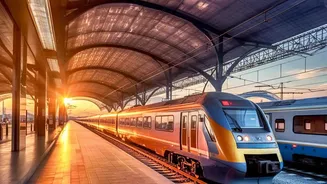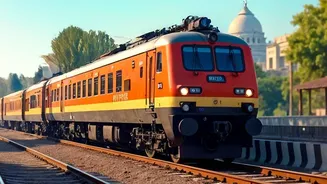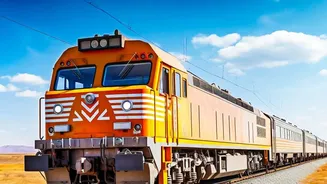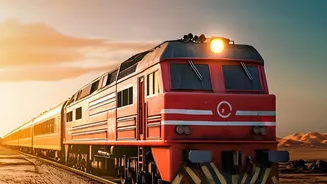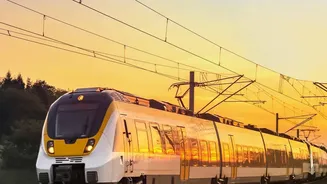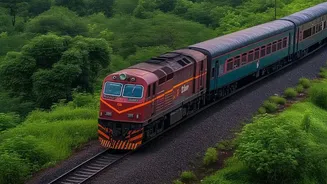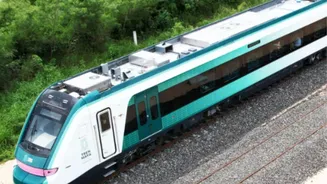


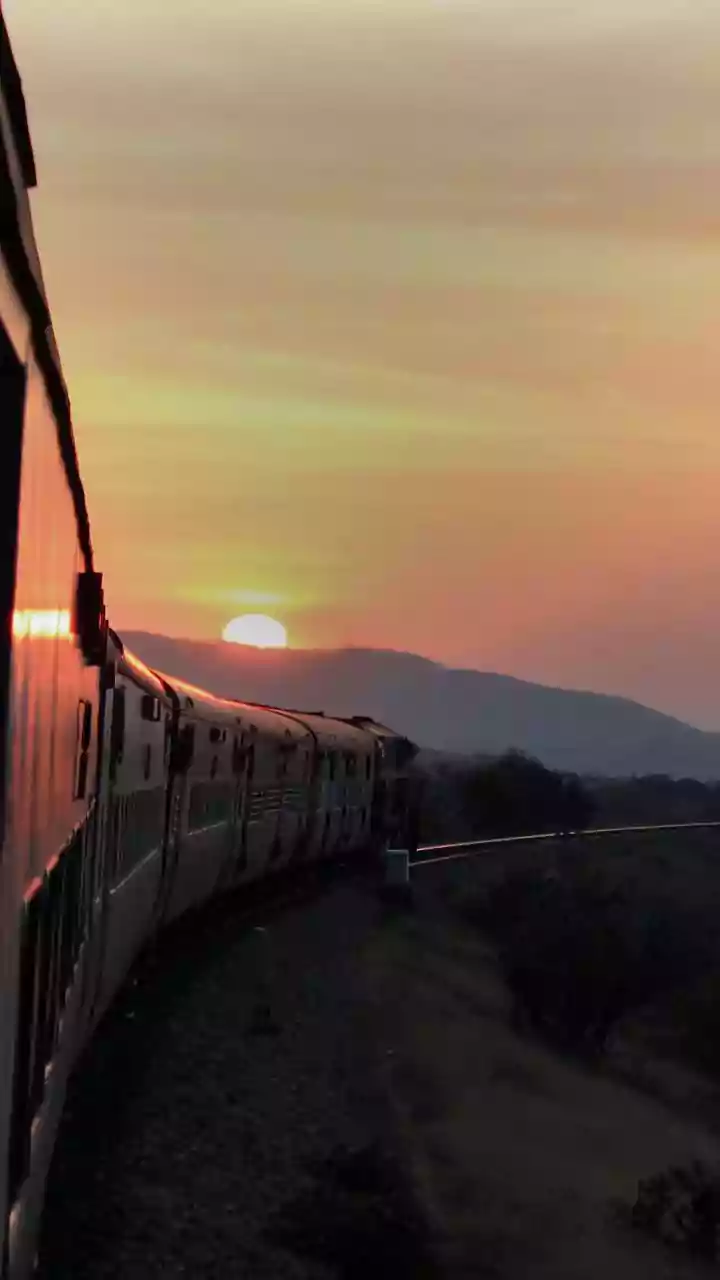


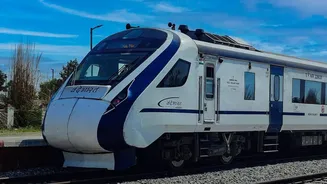
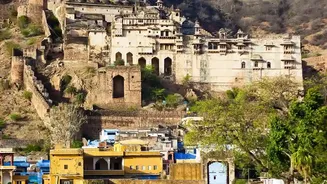
The image of a train weaving through Rajasthan's golden landscape is iconic. Now, that journey is being redefined by the Vande Bharat Express, merging heritage with high-speed efficiency and bringing the state into a new era of connectivity.
A Modern Voyage Through an Ancient Land
The quintessential
train journey across Rajasthan, with its views of arid plains, distant forts, and vibrant towns, is getting a significant upgrade. The introduction of Vande Bharat Express services is changing how people travel through this historic state. Routes like the one connecting Jodhpur to Sabarmati (Ahmedabad) cut across the desert terrain, offering passengers a unique blend of scenic beauty and modern comfort. A journey that once felt like a slow, romantic crawl through the sands is now a swift, climate-controlled glide. The Jodhpur-Sabarmati route, for instance, covers approximately 450 kilometres in just six hours, making same-day return trips for business or leisure a new reality. This route, along with others connecting key cities like Jaipur, Udaipur, and Bikaner to Delhi, has become a showcase for how advanced infrastructure can enhance a classic travel experience.
What Makes Vande Bharat Different?
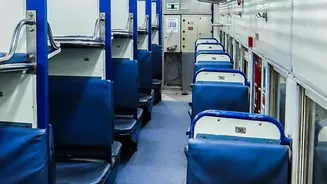
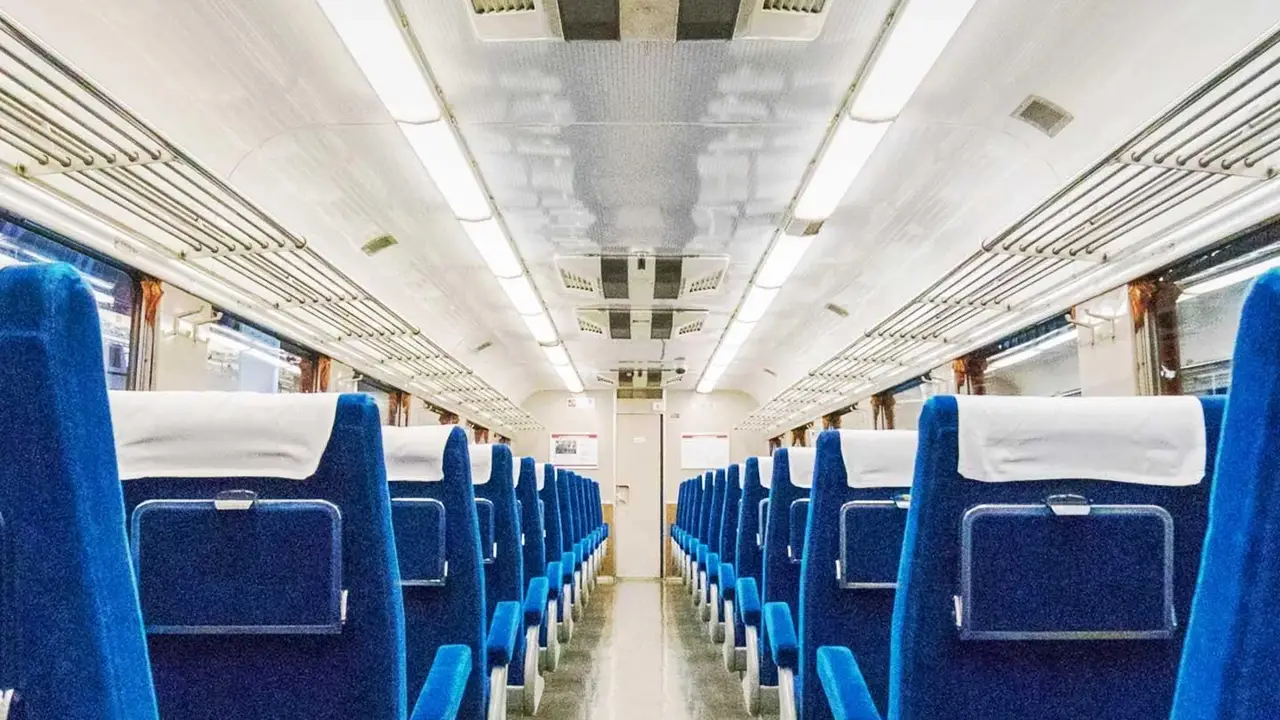
The Vande Bharat is not just another train; it's a leap in Indian railway technology. Designed and built in India under the 'Make in India' initiative, these semi-high-speed trains are engineered for operational speeds up to 160 km/h. For passengers, the difference is immediate. The experience is closer to air travel, with automatic plug doors, fully sealed gangways for easy movement between coaches, and large windows for panoramic views. Inside, the coaches are equipped with reclining ergonomic seats, with the executive class featuring 360-degree rotating chairs. Amenities like GPS-based passenger information screens, on-board Wi-Fi, bio-vacuum toilets, and dedicated charging sockets for every seat underscore the focus on comfort and convenience. Its engine-less, self-propelled system allows for faster acceleration and deceleration, significantly cutting down journey times compared to older express trains.
Boosting Connectivity and Economy
In a state as vast and tourism-dependent as Rajasthan, efficient connectivity is crucial. The Vande Bharat network is a game changer, slashing travel times between major commercial and tourist hubs. The Ajmer - Delhi Cantt service, for example, reduces the journey by an hour compared to the Shatabdi Express, making pilgrimage sites like Pushkar and the Ajmer Sharif Dargah more accessible. This improved connectivity provides a significant boost to the region's socio - economic development. Faster, more reliable travel encourages tourism, facilitates business, and integrates Rajasthan's cities more closely with the national capital and other economic centres like Ahmedabad and Chandigarh. The expansion of services, such as the introduction of a 20 - coach train on the high - demand Jodhpur - Delhi route in May 2026, reflects the project's role in bolstering regional economic activity.
More Than Just a Faster Train
The Vande Bharat initiative is about more than just speed; it represents a broader vision for the future of Indian Railways. Each train is a testament to domestic manufacturing capabilities and a symbol of national pride. For passengers, it signals a shift towards a more comfortable and secure travel experience, with advanced safety features like the KAVACH anti - collision system, CCTV surveillance in all coaches, and aerosol - based fire detection systems. This focus on a superior passenger experience is helping to make rail travel a more attractive option for a wider demographic, potentially reducing pressure on roads and air travel. However, some analysts caution that the focus on high - profile Vande Bharat routes should not come at the expense of investment in conventional services that connect more remote parts of the country.
The Vande Bharat network in Rajasthan continues to expand. As of late 2026 , the state boasts five key routes , with more planned . The ambition doesn't stop with chair - car services . The Ministry of Railways is developing India's first maintenance depot for Vande Bharat Sleeper trains at Bhagat Ki Kothi , near Jodhpur , which is expected to be partially ready by June 2026 . This signals Rajasthan's growing importance as a hub for next - generation rail services , including overnight sleeper versions that could further revolutionise long - distance travel . By blending the allure of its desert landscapes with the promise of high - speed , modern rail , Rajasthan is not just a destination but a key player in India's journey towards a world - class railway network .