







The Heart of Hatha Yoga
Hatha yoga is an ancient practice designed to align and calm your body, mind, and spirit in preparation for meditation. The term itself, from the Sanskrit words for sun ('ha') and moon ('tha'), symbolizes a balance of opposing forces. A typical Hatha class
focuses on physical postures (asanas), breath control (pranayama), and mindfulness, moving at a slower, more deliberate pace. Poses are often held for longer durations, allowing practitioners to focus on precise alignment and the connection between breath and body. This makes it highly accessible for beginners, serving as a foundation for other yoga styles. The goal isn't just physical flexibility; it’s about cultivating inner peace, reducing stress, and improving body awareness.
The Principles of Powerlifting
Powerlifting is a modern strength sport with a singular focus: lifting the maximum possible weight for one repetition in three specific exercises: the squat, the bench press, and the deadlift. Unlike bodybuilding, which prioritizes aesthetics, or Olympic weightlifting, which involves explosive movements, powerlifting is about pure, unadulterated strength. Training revolves around the principle of progressive overload—gradually increasing the weight to stimulate muscle and strength gains. A powerlifter's success is measured by their total combined weight lifted across the three movements in a competition setting. It requires immense discipline, technical precision, and a focus on building raw power and bone density.
Clash of Philosophies: Internal vs. External
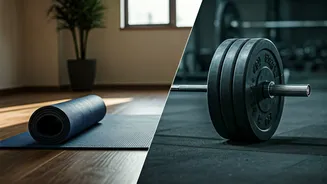
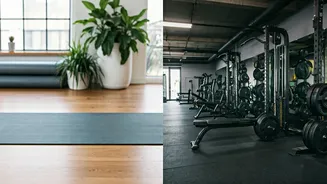
The core philosophies appear to be worlds apart. Hatha yoga is an internal practice. It encourages practitioners to turn inward, focusing on breath, sensation, and achieving a state of mental clarity and balance. Progress is personal and often intangible, measured in feelings of peace, stability, and a deeper mind-body connection. Powerlifting, conversely, is driven by external, measurable goals. Progress is concrete: more weight on the bar. The focus is on generating maximum force to overcome an external object. While lifters require significant mental focus, the ultimate expression of their effort is physical and quantifiable.
Benefits and Risks: Two Sides of the Coin
Both disciplines offer profound benefits. Yoga is celebrated for enhancing flexibility, mobility, balance, and reducing stress. It promotes better body awareness and can alleviate anxiety through its meditative aspects. Powerlifting excels at building muscle mass, raw strength, and increasing bone density, which is crucial for long-term health. However, both carry risks. Common yoga injuries often stem from overstretching or repetitive strain, affecting the lower back, hamstrings, wrists, and shoulders. Powerlifting injuries are frequently linked to heavy loads and can include lower back strain, shoulder impingement, and knee pain, particularly in the three main lifts.
Myth vs. Reality: Debunking Stereotypes
Many myths surround both practices. A common misconception is that you must be flexible to start yoga, when in reality, yoga is what builds flexibility. Another is that yoga is just stretching and not a 'real' workout, ignoring the strength and endurance required to hold challenging poses. On the other side, powerlifting is often stereotyped as an activity that makes you 'muscle-bound' and inflexible. While repetitive movements can lead to tightness, many powerlifters actively work on mobility to improve their lifts and prevent injury. The idea that lifting heavy weights is inherently dangerous is also a myth; with proper form and programming, injury rates are comparable to other non-contact sports.
Better Together: The Complementary Relationship
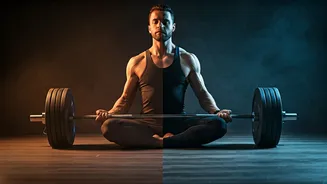
The 'versus' in the headline is perhaps the biggest myth of all. Increasingly, athletes are discovering that Hatha yoga and powerlifting are highly complementary. For powerlifters, yoga can increase flexibility and range of motion, leading to better form in squats and deadlifts. It also enhances breathing control, core stability, and mental focus, all of which are critical under a heavy barbell. For yogis, strength training can build the muscular stability needed to hold advanced poses safely, preventing joint strain. Lifting weights develops the power that yoga, which primarily builds endurance, sometimes lacks. This combination can lead to a more well-rounded, resilient, and injury-resistant body.