




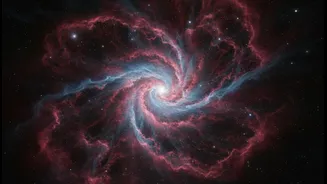


Meet the Galactic Neighbor
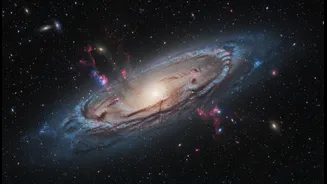
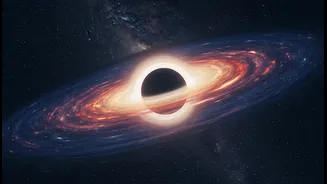
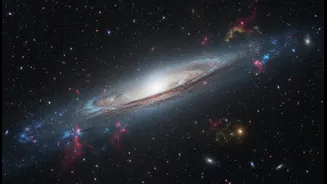
Centaurus A, located a relatively close 11 million light-years away, isn't your average galaxy. It’s what astronomers call an 'active galaxy,' meaning it's buzzing with activity, much of it violent. At its core is a supermassive black hole that is actively
feeding on surrounding gas and dust. This cosmic feast isn't a tidy affair; as the black hole eats, it spews out powerful jets of energy that shape the entire galaxy. Adding to the drama, Centaurus A is the product of a massive collision between two separate galaxies that happened about two billion years ago. These new images help us understand the lingering effects of that cosmic pile-up.
Webb’s Infrared Advantage
So, why is this new view so special? Previous telescopes like Hubble have studied Centaurus A, but their view in visible light was blocked by thick, dark lanes of cosmic dust that crisscross the galaxy's heart. It was like trying to see through a thick curtain. Other infrared telescopes, like the now-retired Spitzer, could see the larger structures but lacked the power to resolve fine details or individual stars. This is where Webb shines. Its powerful instruments operate in infrared light, allowing it to pierce through those obscuring dust clouds and see what lies beneath. For the first time, what once looked like a hazy glow is now revealed as a densely packed landscape of millions of individual stars.
A Portrait of Dust and Stars
Webb’s new images, taken with its Mid-Infrared Instrument (MIRI) and Near-Infrared Camera (NIRCam), reveal a stunningly complex tapestry. We can now see intricate filaments and glowing clouds of warm dust, including a strange parallelogram-shaped structure and a mysterious S-shaped feature near the core that scientists are still working to understand. The glowing points of light aren't just for show; many are stellar nurseries where new stars are being born, while others are aging stars shedding their material back into the cosmos. This level of detail allows astronomers to perform a kind of galactic archaeology.
Galactic Archaeology 101
Because Webb can resolve individual stars, scientists can now start to build a precise timeline of Centaurus A's violent history. They can distinguish between the original, older stars that existed before the merger, those that were born in the flurry of the collision itself, and the younger stars that have formed since. Each star is a data point helping to reconstruct the galaxy's evolution over billions of years. It’s like reading the rings of a cosmic tree to understand its past, from periods of quiet growth to the trauma of the galactic crash.
The Black Hole’s Tug-of-War
The new data also sheds light on one of the biggest questions in astronomy: how does a supermassive black hole affect its host galaxy?. Webb's instruments can measure the movement of gas within Centaurus A, showing how the black hole is both a creator and a destroyer. Observations show it can trigger star formation by compressing gas, but it can also halt it by violently blowing essential star-making material away into space. Centaurus A provides a perfect, nearby laboratory to study this complex feedback loop, helping scientists understand how galaxies all across the universe evolve.