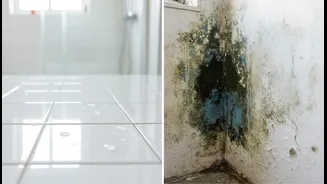









Battle Dampness and Musty Odours
High humidity is the defining challenge of the monsoon, creating a perfect breeding ground for mould and that unmistakable musty smell. The first line of defence is ventilation. Whenever the rain stops, open windows and doors to allow cross-ventilation,
which helps reduce moisture buildup. For persistent dampness, turn to your kitchen pantry. Bowls of coarse salt or charcoal briquettes placed in cupboards, corners, and bathrooms are excellent at naturally absorbing excess moisture from the air. To combat foul odours, place dried, used coffee grounds or bowls of baking soda in wardrobes and shoe racks; they are brilliant natural deodorisers. A few drops of essential oils like eucalyptus or lavender on cotton balls can also freshen up small, enclosed spaces.
Prevent Mould and Mildew Growth
Mould isn't just unsightly; it can trigger allergies and respiratory issues. A simple solution of equal parts white vinegar and water is a powerful, natural antifungal. Keep this mixture in a spray bottle and regularly wipe down surfaces prone to mould, such as bathroom tiles, window sills, and kitchen counters. For existing mould, spray undiluted white vinegar, let it sit for an hour, then scrub and rinse. Neem, a staple in traditional Indian remedies, is also highly effective. Boil a handful of neem leaves in water, let it cool, and use the solution to wipe down walls and other affected areas to halt fungal growth. On any sunny days, be sure to let as much light in as possible, as sunlight is a natural disinfectant that helps dry out damp spots.
Ward Off Unwanted Pests Naturally
Monsoon often forces pests like ants, cockroaches, and flies indoors in search of dry shelter and food. You can create effective barriers using common kitchen spices. To deter ants, find their entry points and sprinkle cinnamon powder or spray a solution of white vinegar and water to erase their scent trails. Cockroaches despise the smell of bay leaves and camphor; place crushed bay leaves in kitchen cabinets or camphor tablets near drains to keep them away. For flies, a simple trick is to stick cloves into a lemon half and place it near your dining area. These aromatic repellents keep pests at bay without filling your home with toxic fumes.
Care for Furniture and Floors
Wooden furniture and floors are particularly vulnerable during the rains, as they can swell, warp, or develop mould. Regularly wiping furniture with a dry cloth is essential. To protect wood, you can place camphor balls or silica gel packets (those little sachets from new shoes or bags) inside drawers and cupboards to absorb moisture. Carpets and rugs are best rolled up and stored away for the season, as they trap moisture and can become a source of mildew. If you must keep them, vacuum frequently and sprinkle baking soda on them before vacuuming to absorb odours. For floors, it's better to dry mop with a microfibre cloth that absorbs moisture effectively. If you wet mop, ensure the floor dries completely, perhaps with the help of a fan, to prevent a sticky feeling and fungal growth.
Keep Linens and Clothes Fresh
Drying laundry during the monsoon is a common struggle, often resulting in clothes with a sour, mildewy smell. If drying clothes indoors is your only option, ensure the room is well-ventilated or run a fan to speed up the process. Adding half a cup of white vinegar to the rinse cycle can help kill odour-causing bacteria and prevent mould spores from forming on the fabric. Never pile damp clothes in a laundry basket. When storing bedsheets and other linens, make sure they are bone dry. Placing neem leaves or more silica gel packets inside wardrobes can protect your clothes from dampness, fungus, and insects like silverfish.