



Kolkata is often fondly called the ‘London of India’. This nickname isn't just a casual comparison; it's a nod to a profound history when the city was the epicentre of the British Empire in Asia, leaving an indelible mark on its streets and soul.
The Empire’s Second City
The story
begins when Calcutta, as it was then known, became the capital of British India in 1772. For nearly 140 years, until the capital shifted to Delhi in 1911, it was the administrative, commercial, and political heart of the Raj. The British sought to build a city that would reflect their power, consciously modelling its grandeur after their own capital. During this period, Calcutta grew to become the second most important city in the entire British Empire, trailing only London itself. This deliberate development transformed a collection of villages into a metropolis of magnificent buildings, earning it another title: the ‘City of Palaces’.
An Architectural Echo of London
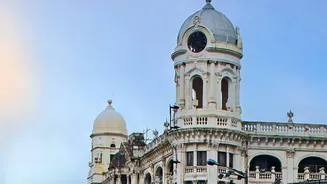
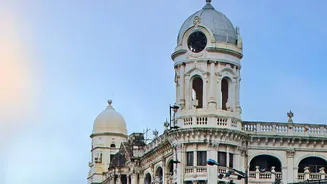
The most visible reason for the nickname is the city's stunning colonial architecture. British architects filled Kolkata with grand structures that mirrored the styles of London. Walking through the historic B.B.D. Bagh area, formerly Dalhousie Square, feels like stepping into a different era. You'll find a blend of Neoclassical, Gothic Revival, and Victorian styles. The Calcutta High Court, designed in a neo-Gothic style, is a striking example, as is St. Paul's Cathedral, which was the first Episcopal church built in Asia and evokes an Indo-Gothic sensibility. The General Post Office, with its towering Corinthian columns and majestic dome, adds to this European aesthetic.
The Crowning Jewel: Victoria Memorial
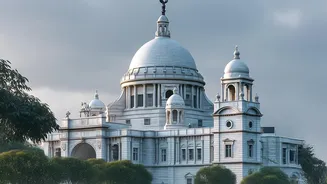
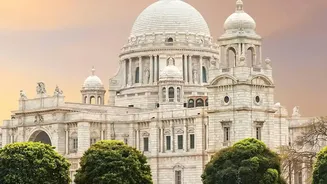
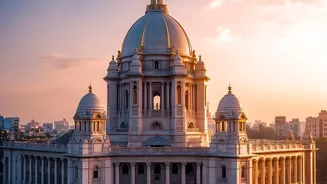
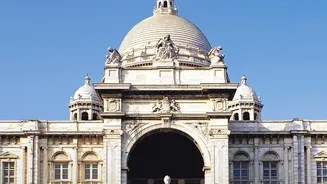
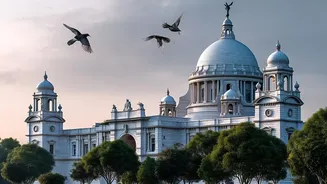
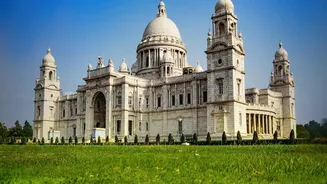
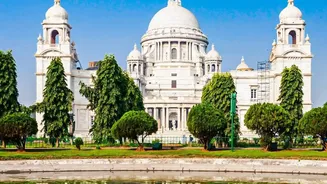
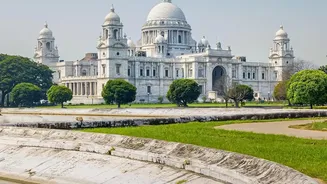
Perhaps no building embodies this legacy more than the Victoria Memorial. This massive white marble monument, built between 1906 and 1921 in memory of Queen Victoria, is an architectural masterpiece. Designed by William Emerson, it features a unique blend of British and Mughal architectural elements, sometimes referred to as the Indo-Saracenic style. While dedicated to a British monarch, its design incorporates Indian influences, creating a structure that is both imperial and uniquely adapted to its location. Surrounded by sprawling gardens, it remains Kolkata's most iconic landmark and a testament to its layered history.
Life Along the River
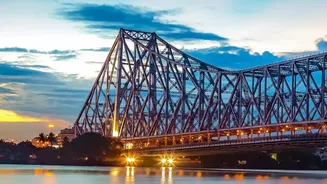
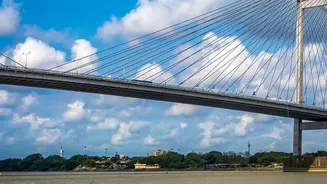
The comparison extends to the cities' lifelines: their rivers. Just as London developed along the River Thames, Kolkata's identity was shaped by the Hooghly River. The Hooghly was a vital artery for trade during the colonial era, with its ports serving as a bustling hub for goods moving between Europe and Asia. This parallel is not just geographical but also atmospheric. The ghats and promenades along the Hooghly, set against a backdrop of colonial buildings, evoke a visual memory of London's own riverside landscape. Iconic structures like the Howrah Bridge, an engineering marvel, further cement the river's central role in the city's identity.
The connection isn't limited to architecture and urban planning. Kolkata has long been regarded as India's intellectual and cultural capital, a reputation that mirrors London's own status as a global hub for arts and ideas. The 19th century Bengal Renaissance, a period of profound social, cultural, and artistic awakening, was centred in the city. Furthermore, the city’s transport system retains a piece of history that contributes to its European feel. Kolkata is the only city in India that still operates a tram network, with the slow moving vehicles adding to its distinct old world charm.