





Meet NASA's Next Great Observatory
Imagine having a camera that can take a picture of an entire bustling city street with the same crisp detail as a portrait of a single person. That, in essence, is the incredible power of the Nancy Grace Roman Space Telescope. Scheduled for launch on August
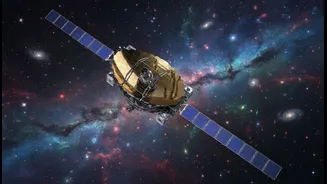
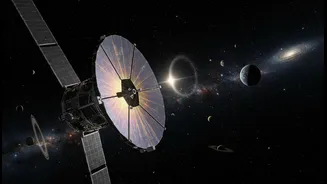
30, 2026, aboard a SpaceX Falcon Heavy rocket, Roman is poised to change how we see the universe. Named after Dr. Nancy Grace Roman, NASA's first Chief of Astronomy and the “mother of Hubble,” this new observatory shares a key piece of hardware with its famous predecessor: a primary mirror measuring 2.4 meters (7.9 feet) in diameter. This shared DNA means Roman will produce images with the same stunning sharpness that has made Hubble a household name. However, Roman has a secret weapon that sets it apart and defines its revolutionary mission.
Seeing the Big Picture: A Universe in Panorama
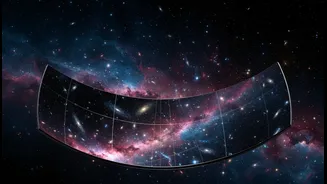
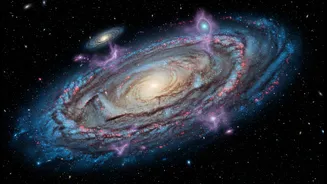
Roman's game-changing feature is its Wide Field Instrument (WFI), a 300.8-megapixel camera that gives it a colossal field of view. It can capture an area of the sky at least 100 times larger than Hubble's infrared cameras in a single shot. To put that in perspective, where Hubble might capture a few galaxies in a deep-field image, Roman will capture thousands, or even millions. The famous Hubble Ultra Deep Field image, which took hundreds of hours to create by stitching together multiple exposures, revealed about 10,000 galaxies. A single Roman deep field image will be just as sharp but could contain millions of galaxies, offering a far more comprehensive picture of the early universe. This panoramic capability turns the telescope into an unprecedented cosmic survey machine.
The Hunt for Dark Energy and New Worlds
With its vast reach, Roman is designed to tackle two of the biggest mysteries in astrophysics: dark energy and exoplanets. By surveying billions of galaxies and thousands of distant supernovae, Roman will help scientists map the structure of the cosmos and measure how the universe's expansion has changed over time. This data is crucial for understanding the mysterious force known as dark energy, which is causing this expansion to accelerate. Simultaneously, Roman will conduct a massive census of planets outside our solar system. Using a technique called gravitational microlensing, it is expected to discover thousands of new exoplanets, from gas giants to worlds smaller than Earth. Projections estimate Roman could find around 100,000 exoplanets, potentially more than all other telescopes combined have found to date.
A New Trifecta of Cosmic Observation
Roman isn't a replacement for Hubble or the James Webb Space Telescope (JWST); it's a powerful new member of the team. Think of them as a set of specialized tools. JWST is the microscope, offering incredibly detailed views of specific, small areas of the sky. Hubble provides sharp, versatile observations across a wider light spectrum, including crucial ultraviolet vision. Roman, on the other hand, is the wide-angle lens, efficiently mapping huge areas and identifying points of interest. Roman's surveys will discover countless rare and transient objects—like supernovae or colliding neutron stars—that the narrow-field Webb might miss. Scientists can then use Webb and Hubble for high-resolution follow-up studies on the most compelling targets Roman finds, creating a powerful synergy that will accelerate discovery.