







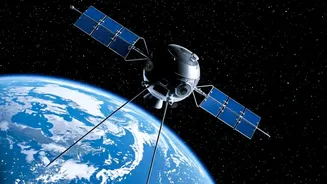
A Lifeline From The Stars
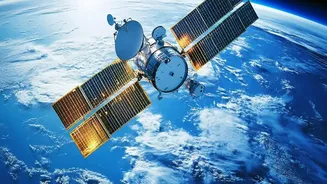
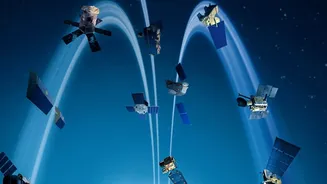
When the full-scale invasion began in 2022, Russia targeted Ukraine's communication infrastructure. The activation of SpaceX's Starlink satellite internet service was a game-changer. It provided a resilient, hard-to-disrupt connection for the Ukrainian
government, civilians, and, crucially, its military. From coordinating defences to simply allowing soldiers to contact their families, Starlink became woven into the fabric of Ukraine's resistance, enabling command and control, intelligence sharing, and situational awareness when conventional networks were down. The technology was praised for helping prevent the war from being lost in the chaotic early days.
The Escalation Dilemma
The very effectiveness of Starlink created a new problem. The service wasn't just being used for defence and communication; it was integral to offensive operations, particularly guiding long-range and high-speed drones. This placed SpaceX, a private American company, in an uncomfortable position. Elon Musk stated that Starlink is a commercial service intended for civilian or defensive use and that its involvement in offensive military action would be inappropriate for a commercial company. The concern was that the use of Starlink to facilitate attacks could be seen as an act of war, risking a dramatic escalation of the conflict. This tension between providing a defensive tool and enabling offensive strikes lies at the heart of the current controversy.
Drawing Digital Borders
Recent events have brought this conflict to a head. In mid-October 2026, Ukrainian military authorities reported a sudden and unannounced restriction on their Starshield service—the military-grade version of Starlink. Specifically, a speed cap of around 160 km/h (100 mph) was imposed on terminals in motion. This directly impacted some of Ukraine's most effective tools: fast-moving interceptor drones used to shoot down Russian jets and cruise missiles, as well as drones used for mid-range strikes. President Volodymyr Zelenskyy confirmed the restrictions were hampering Ukraine's ability to defend against Russian drone attacks, stating 'when the speed was reduced, we were unable to intercept some of the jet-powered Shaheds'.
A Geopolitical Blame Game
The question of who ordered the restrictions has ignited a firestorm. Elon Musk publicly stated that Starshield systems are owned and controlled by the U.S. government, and any limits are ultimately decided by the U.S. military and the President. However, reports have emerged, citing multiple sources, suggesting Musk himself proposed the speed cap to the White House, which then agreed. Ukrainian President Zelenskyy has asserted the message to limit the speed came from the U.S. government, which SpaceX then technically implemented. Meanwhile, U.S. officials have given conflicting accounts, with some denying high-level involvement and others calling for a congressional investigation into the matter. This has left Kyiv scrambling for answers, with Zelenskyy noting that SpaceX had stopped responding to inquiries from Ukraine's Ministry of Defense.
A Company Wielding State Power
The Starlink situation highlights a new era of warfare, where a private technology company holds immense sway over a sovereign nation's ability to defend itself. The Pentagon has contracts worth billions with SpaceX for these services, blurring the line between a commercial provider and a critical defense partner. The ability of a CEO or a government to throttle a crucial military capability with little warning exposes a significant vulnerability for any nation dependent on such commercial infrastructure. This incident raises profound questions about accountability, control, and the role of tech giants in international conflicts, moving them from simple contractors to powerful geopolitical actors in their own right.