


The Calorie and Sweetness Count
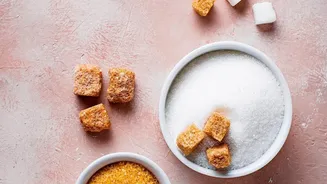
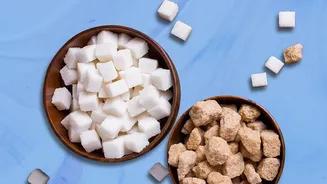
At first glance, sugar seems to have the edge on calories. A tablespoon of granulated white sugar has about 49 calories, while a tablespoon of honey contains around 64. However, this comparison is a bit misleading because honey is denser and sweeter than
sugar. Due to its higher fructose content, honey is about 1.2 to 1.5 times sweeter than sugar, meaning you may need less of it to achieve the same level of sweetness. When you account for using a smaller amount, the calorie difference often becomes negligible. So, if you're mindful of your portion size, honey can be just as calorie-conscious as sugar.
The Nutritional Divide
This is where honey starts to pull ahead. Refined white sugar is pure sucrose, offering what experts call 'empty calories' with no additional nutritional value. It's stripped of all minerals and vitamins during processing. Raw honey, on the other hand, is a more complex substance. It contains trace amounts of vitamins and minerals, including B vitamins, potassium, and magnesium. More importantly, honey is packed with antioxidants, such as flavonoids and phenolic acids, which are entirely absent in sugar. These compounds are linked to various health benefits, including supporting cellular health. Darker honeys often contain higher concentrations of these beneficial antioxidants.
Impact on Blood Sugar
The Glycemic Index (GI) measures how quickly a food raises blood sugar levels. Here, the difference is modest but notable. Table sugar has a GI of around 65, while honey's average GI is slightly lower, around 58. This can vary widely depending on the type of honey, with some varieties having a GI as low as 45 and others as high as 88. The lower GI means honey typically raises blood sugar a bit more gradually than sugar. However, it's crucial to remember that both are still sugars and will cause a rise in blood glucose. For individuals managing diabetes, neither should be considered a 'free' food, but honey may have a slight edge when used in moderation.
Raw Honey’s Health Halo
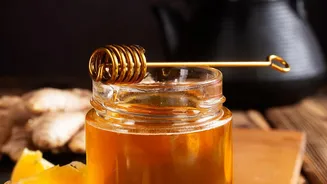
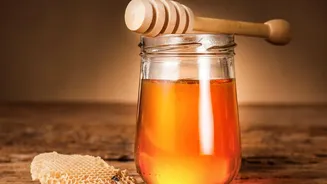
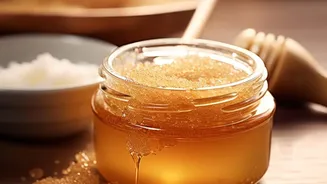
Much of honey's esteemed reputation comes from its raw, unprocessed form. Raw honey is not heated or heavily filtered, which means it retains natural enzymes, pollen, and its antibacterial and anti-inflammatory properties. For centuries, it has been a go-to home remedy for soothing sore throats and coughs, a benefit supported by modern studies. Processed honey, the clear, syrupy kind common in supermarkets, is often pasteurised (heated) to improve its appearance and prevent crystallisation. This process can destroy some of the beneficial enzymes and reduce its antioxidant content. For the full health benefits, choosing raw, minimally filtered honey is key.
The Heat Debate: Honey in Hot Tea
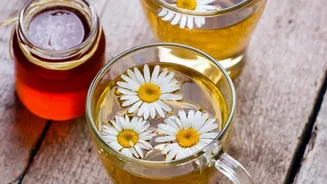
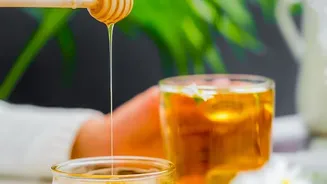
A common concern is whether adding honey to hot tea destroys its goodness. The answer is yes, to a degree. Many of honey’s beneficial enzymes and antimicrobial properties are sensitive to heat. Temperatures above 40-45°C (104-113°F) can begin to degrade these delicate compounds. Since a freshly brewed cup of tea is much hotter, adding honey immediately will diminish some of its therapeutic value. To preserve its benefits, it's best to let your tea cool for a few minutes before stirring in your honey. If you're only using it for flavour and sweetness, then the temperature doesn't matter as much.
Flavour, Function, and the Final Verdict
Beyond health metrics, there's the simple matter of taste. Sugar provides a clean, neutral sweetness that doesn't interfere with the flavour of your tea. Honey, in contrast, adds its own distinct character. Depending on the floral source—from light and delicate clover to robust buckwheat—honey can introduce complex floral, fruity, or earthy notes to your cup. The choice ultimately comes down to your personal priorities. If you seek a neutral sweetener, sugar is a straightforward option. If you value added antioxidants, a gentler impact on blood sugar, and a more complex flavour profile, then a spoonful of raw honey, added to tea that has cooled slightly, is the superior choice.