



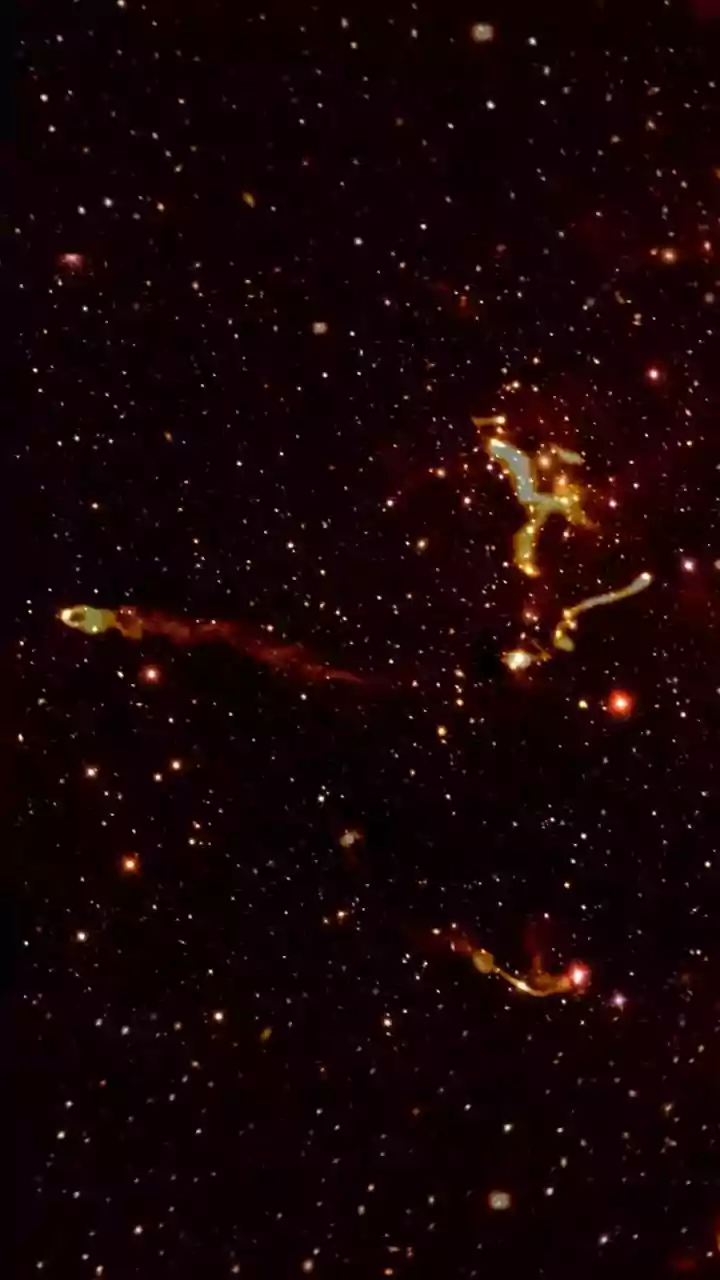



Deep in the frozen frontiers of our solar system, astronomers have spotted a new, mysterious object. Designated 2026 ED138, its identity remains a puzzle, forcing scientists to ask: what exactly is this distant traveller?
A New Dot in the Darkness
In late 2026, astronomers using
the Vera C. Rubin Observatory in Chile announced the discovery of a new object traversing the cold, dark space beyond Neptune. Given the provisional designation 2026 ED138, it is what is known as a trans-Neptunian object, or TNO. These are a vast population of small worlds and icy bodies that orbit our sun at a greater average distance than the planet Neptune. This particular object was found at a distance of roughly 46 times farther from the sun than Earth is. Discoveries like this are a testament to the power of modern telescopes, which can spot faint points of light moving slowly against the backdrop of distant stars, revealing the hidden residents of our own cosmic neighbourhood.
The Challenge of Cosmic Classification
The reason 2026 ED138's classification is 'unconfirmed' comes down to a simple but profound challenge: distance. From billions of kilometres away, this new discovery is just a faint speck of light. Determining its true nature requires more than just spotting it. Astronomers need to track its path over many months, if not years, to precisely map its orbit. They also analyze its brightness and colour. Is its brightness steady, or does it vary? A fluctuating light curve could suggest an irregular shape or even that it is a 'contact binary'—two objects that have gently fused together. Its colour, or spectrum, can provide clues about its surface composition—is it rocky, icy, or covered in dark, carbon-rich materials? Until more data is gathered, scientists are left with several intriguing possibilities.
Candidate One: A Rogue Asteroid or Comet?
One possibility is that 2026 ED138 is a very large asteroid or a dormant comet nucleus. The line between these two can be blurry in the outer solar system. Comets are distinguished by their icy composition, which turns to gas and creates a glowing coma and tail when they approach the sun. At the extreme cold of 2026 ED138's current location, any ice would be frozen solid, making it appear inert, much like an asteroid. Many long-period comets are believed to originate from the Oort Cloud, a theoretical sphere of icy bodies surrounding the solar system at an immense distance. This object could be one such body on a long journey inwards, its cometary nature yet to be revealed.
Candidate Two: A Potential Dwarf Planet
The most exciting possibility is that 2026 ED138 is a dwarf planet. The International Astronomical Union defines a dwarf planet as a celestial body that orbits the sun, has enough mass to be pulled into a nearly round shape by its own gravity, but has not cleared its orbital neighbourhood of other objects. Pluto is the most famous example. The brightness of 2026 ED138 for its distance suggests it is quite large, possibly between 600 and 1,500 kilometres in diameter. This would likely be large enough for gravity to make it spherical, meeting a key criterion for dwarf planet status. If confirmed, it would join an exclusive club of just five officially recognised dwarf planets and become one of the largest TNOs ever found.
Why This Cosmic Mystery Matters
The uncertainty surrounding 2026 ED138 is not a failure of science, but a demonstration of the scientific process in action. Each new object found in the Kuiper Belt and beyond is a primordial relic from the formation of our solar system over 4.5 billion years ago. Studying their orbits, sizes, and compositions allows us to piece together the history of how the planets formed and migrated to their current positions. These distant worlds are time capsules, preserving the original building blocks of our solar system. Whether 2026 ED138 turns out to be a comet, an asteroid, or a new dwarf planet, it holds valuable clues about our own origins, waiting to be unlocked.