



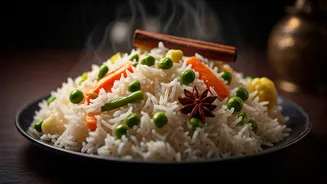


The Soul of the Dish: Perfect Grains
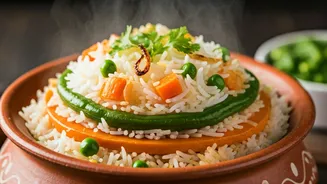
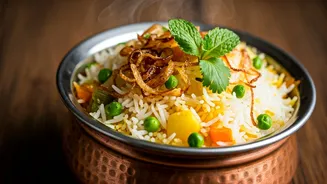
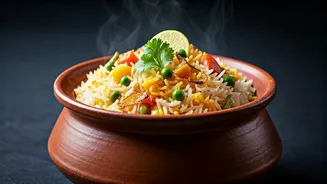
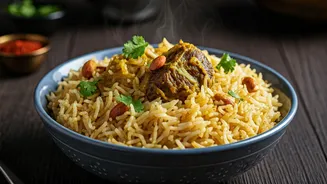
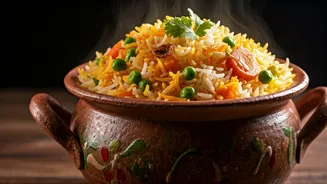
Before we talk about spices or vegetables, let's talk about the rice. A great biryani stands on the foundation of perfectly cooked, long-grain basmati. The grains must be aged, lending them a distinct aroma and the strength to remain separate and fluffy,
not mushy. Each grain should be a canvas, lightly kissed by saffron and ghee, distinct yet part of a harmonious whole. When you take a spoonful, you shouldn't get a clump. You should get a cascade of individual, flavour-infused grains. This isn't just boiled rice mixed with things; it’s carefully prepared, often par-cooked, and ready to absorb the magic that follows.
A Garden of Earthly Delights
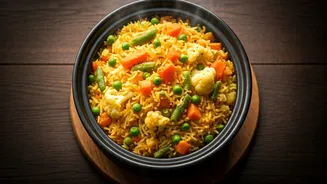
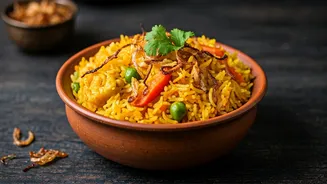
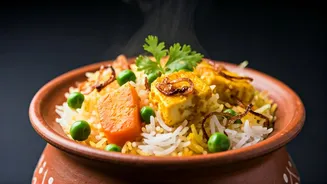
The heart of a veg biryani is, of course, the vegetables. But it's not a simple stir-fry. The best versions feature a thoughtful selection, each component treated with respect. Carrots and beans provide a sweet crunch, potatoes offer a comforting bite, and cauliflower florets absorb the masala beautifully. But the true stars are often the marinated additions. Think rich, creamy cubes of paneer, seared to a golden-brown. Or consider the meaty, satisfying texture of soya chunks or kathal (jackfruit), which, when marinated in yoghurt and spices, can mimic the heartiness many associate with biryani. These aren't afterthoughts; they are curated ingredients that build layers of texture and taste.
The Magic of Masala and Aromatics
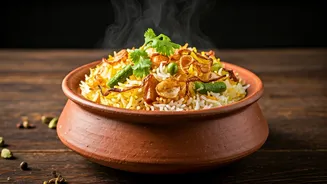
This is where the alchemy happens. The spice blend, or masala, is a closely guarded secret in many kitchens. It’s a complex dance of whole spices like cardamom, cloves, cinnamon, and bay leaves, along with powdered spices that form a rich, flavourful gravy. But it’s the finishing touches that elevate it to greatness. A generous sprinkle of 'birista' (crispy fried onions) adds a sweet, caramelised depth. Freshly chopped mint and coriander leaves lend a burst of freshness that cuts through the richness. And the pièce de résistance: saffron strands bloomed in warm milk, drizzled over the rice to create streaks of fragrant gold. A dash of kewra or rose water is the final whisper of Mughal luxury.
The Art of ‘Dum Pukht’
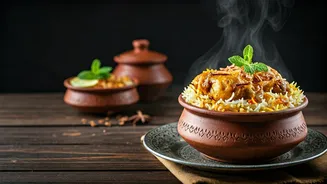
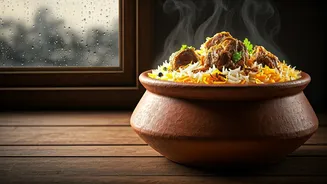
Herein lies the answer to the eternal, tired debate: “Isn’t veg biryani just pulao?” The answer is a resounding no, and the reason is 'dum'. Pulao is typically a one-pot dish where rice and ingredients cook together. A true biryani is layered. The par-cooked rice and the vegetable gravy are assembled in distinct layers in a heavy-bottomed pot (handi). The pot is then sealed shut—traditionally with dough—and cooked on a very low flame. This process, 'dum pukht', traps the steam and allows the flavours to meld and mature. The rice finishes cooking in the fragrant steam from the gravy below, absorbing every nuance of the spices without becoming heavy. It's this technique that creates the signature light texture and layered flavour profile that is unmistakably biryani.