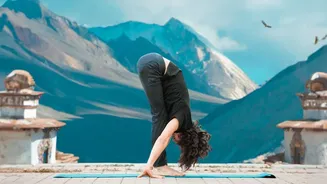

In the quest for flexibility, the urge to push deeper into a stretch like the Seated Forward Bend is common. Yet, true progress isn't found in force, but in control. Embracing a slow range of motion unlocks a safer, more profound stretch.
Why Rushing a Stretch Is Counterproductive
Many practitioners,
eager to touch their toes in Paschimottanasana, make the mistake of pulling, bouncing, or forcing their way into the fold. This approach is not only risky but often works against your body's goals. When you stretch a muscle too quickly, you trigger a protective mechanism called the myotatic stretch reflex. This reflex causes the very muscle you're trying to lengthen—in this case, the hamstrings and back muscles—to contract in order to prevent what it perceives as a potential tear. This involuntary contraction creates resistance, making the stretch less effective and increasing the likelihood of strain or injury. The common mistake is rounding the spine excessively to bring the head to the knees, which puts pressure on the back instead of effectively lengthening the hamstrings.
The Science of Slowing Down
When you move slowly and mindfully, you build a conversation with your nervous system. A slow, sustained stretch allows you to bypass the aggressive stretch reflex. Instead, you activate another group of sensory receptors called Golgi tendon organs (GTOs). Located where muscles and tendons meet, GTOs detect tension. When you hold a gentle stretch, the GTOs signal the muscles to relax and lengthen, a response known as autogenic inhibition. This process tells your body it is safe, allowing the muscles to release rather than resist. Moving slowly also activates the parasympathetic nervous system, the body's 'rest and digest' mode, which helps reduce stress, calm the mind, and promote deeper relaxation in the posture.
Setting the Foundation: Staff Pose (Dandasana)
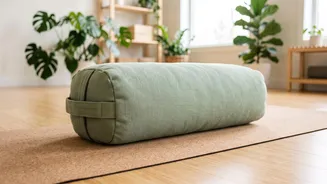
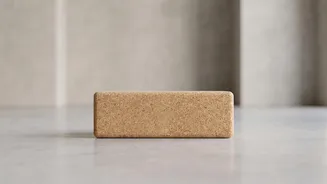
Before you even begin to fold, your setup is crucial. Start by sitting on the floor in Dandasana (Staff Pose). Extend your legs straight out in front of you. If you find your lower back rounding or your hamstrings are very tight, sit on the edge of a folded blanket or block. This elevation helps tilt your pelvis forward, which is the key to a healthy forward bend. Actively flex your feet, drawing your toes toward you to engage your leg muscles. Sit tall, lengthening your spine from your tailbone to the crown of your head. This initial alignment creates the necessary space between your vertebrae and establishes the correct pelvic position to hinge from.
The Controlled Hinge Forward
The movement into Paschimottanasana should always originate from the hips, not from rounding the back. Inhale to lengthen your spine even more, lifting your chest. As you exhale, begin to hinge forward from your hip creases, imagining your navel moving toward your thighs. The key is to maintain the length in your torso for as long as possible. Move with extreme slowness, feeling every inch of the movement. Instead of trying to grab your feet immediately, let your hands rest on your shins or ankles—wherever they land without you having to round your back. A yoga strap looped around your feet can also be an excellent tool to maintain alignment without forcing the pose.
Working With Your Breath and Your Edge
Once you've found your initial 'edge'—the first point of noticeable stretching sensation—pause. This is where the real work of a slow range of motion begins. With each inhalation, focus on creating a subtle sense of length, almost as if you are lifting slightly out of the pose. With each slow exhalation, allow your body to soften and release deeper into the stretch, perhaps folding a millimetre further. The goal is not to yank yourself down but to use the breath to melt into the space that opens up. If your hamstrings are tight, keep a generous bend in your knees, ensuring your belly and thighs stay connected. This ensures the stretch remains in the belly of the hamstrings and protects your lower back. Progress is measured in patience, not inches.