

What Exactly Is a Moon?
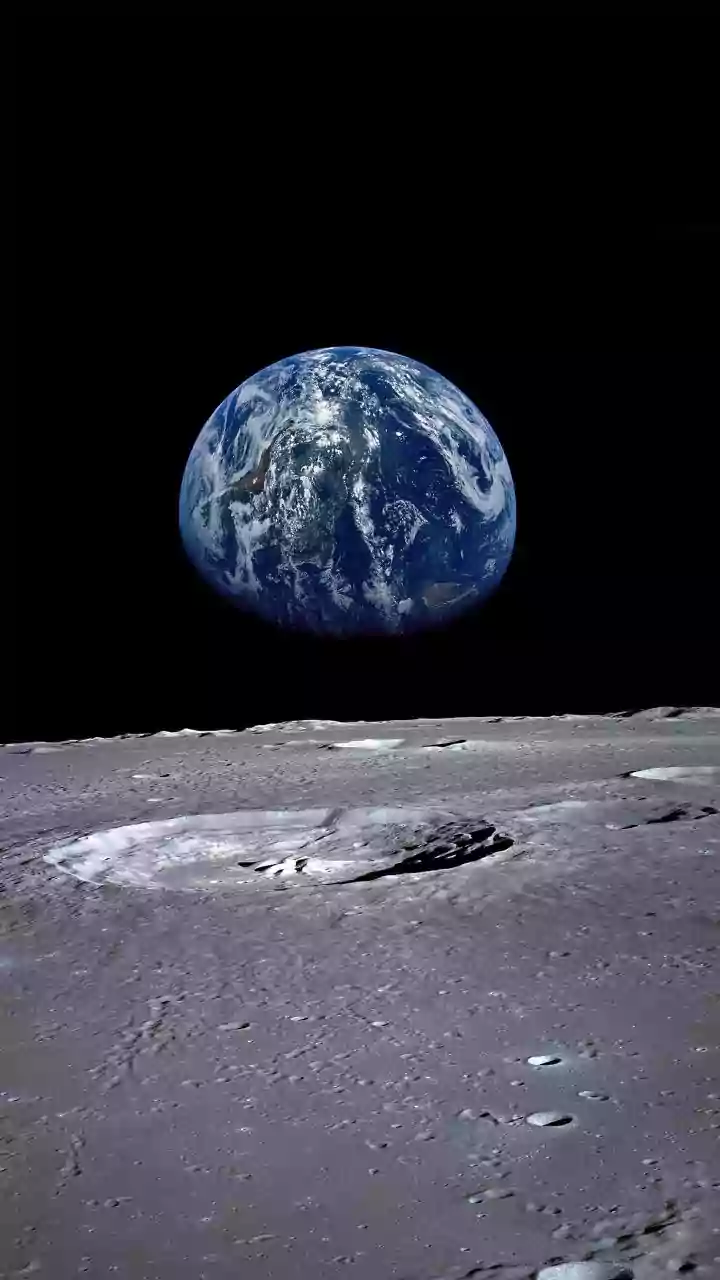
Part of the challenge lies in defining what a “moon” actually is. The International Astronomical Union (IAU), the body that names celestial objects, calls Earth's satellite 'the Moon' (with a capital M) but doesn't have a strict, technical definition
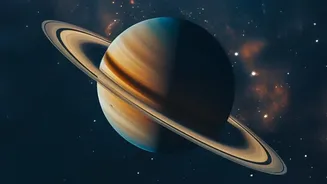
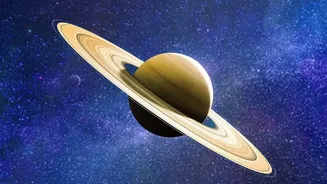
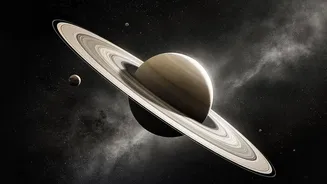
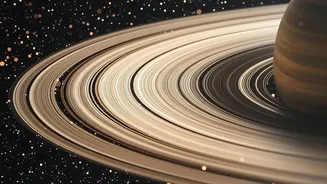
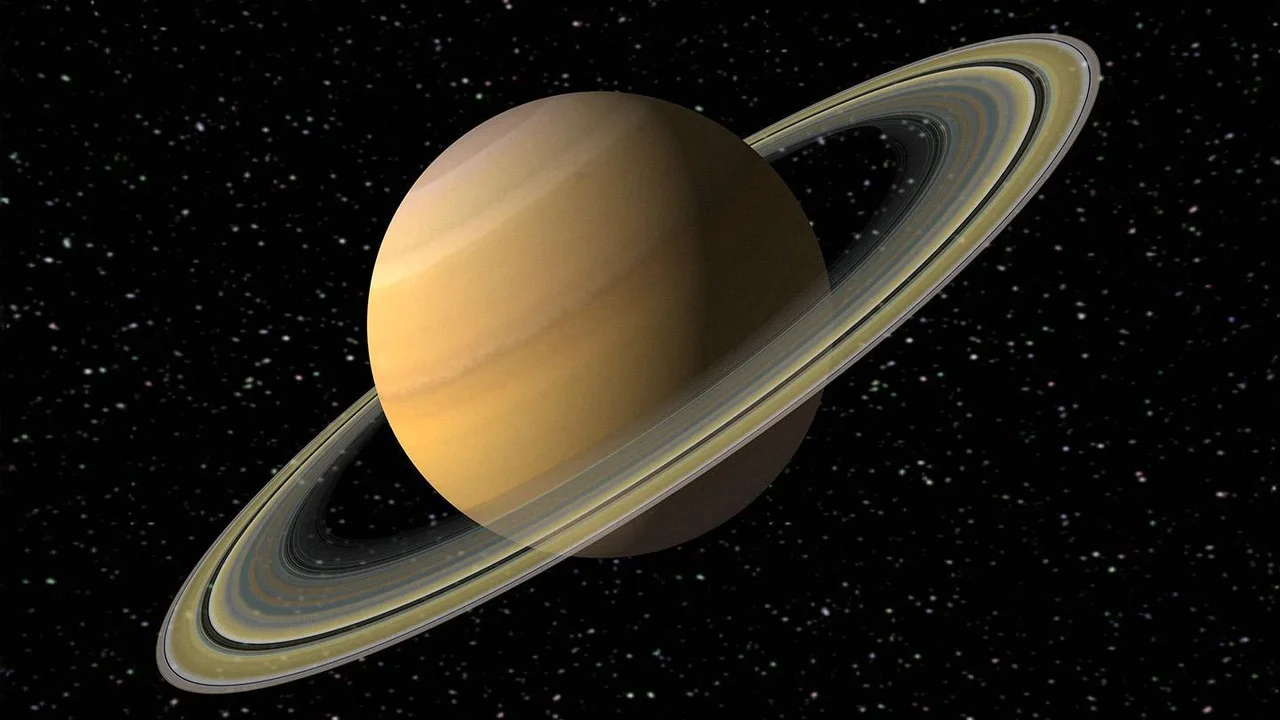
for moons in general. Generally, a moon is a natural satellite orbiting a planet or even an asteroid. But where do you draw the line? Saturn’s famous rings are made of countless particles of ice and rock, ranging from dust specks to chunks as large as a house. At what point does a large ring particle become a tiny moon? There is no official consensus on this boundary, which means an absolute, final number is impossible to pin down. Astronomers often differentiate between proper moons and smaller "moonlets" embedded within the rings, but this is an informal distinction.
The Technological Leap
For centuries, our view of Saturn was limited. Christiaan Huygens discovered the first moon, Titan, in 1655. Discoveries trickled in over the next 300 years with improvements in telescopes. The game changed with space probes like Voyager in the 1980s and especially the Cassini mission, which orbited Saturn from 2004 to 2017. These missions gave us an unprecedented up-close look, revealing small moons that were previously invisible. However, the latest surge in discoveries comes from powerful ground-based telescopes and a clever new technique. Astronomers use a “shift-and-stack” method, taking multiple long-exposure images and layering them in a way that aligns with the predicted path of a faint, moving object. This allows a moon that is too dim to see in a single image to become visible when its light is added up over many frames.
A Flood of New Discoveries
This new technique has been incredibly successful. In early 2025, a team led by Edward Ashton announced the confirmation of 128 new moons, nearly doubling the planet's total at the time. As of June 2026, the official count of confirmed moons has risen to 293. Most of these new discoveries are small, irregular moons in distant, tilted orbits. They are often just a few kilometres across, which explains why they were missed for so long. Interestingly, many of these newly confirmed moons were actually visible in archival images from years past, but they hadn't been properly tracked and identified until now. Confirming a moon isn’t instantaneous; it requires tracking an object long enough to be certain it is truly orbiting the planet and not just a passing asteroid.
Cosmic Collisions and Captured Asteroids
So where did all these tiny moons come from? Many are believed to be captured objects, like asteroids or comets, that strayed too close to the gas giant and were pulled in by its immense gravity. Others are likely the result of ancient collisions. Scientists theorize that some of Saturn's original, larger moons may have shattered after impacts with other objects. The resulting debris would then form new, smaller moons. This violent history is supported by the fact that many of the small, irregular moons are clustered together in similar orbits, suggesting they are fragments of a single, larger parent body that was destroyed. Some studies even suggest that Saturn's rings and inner moons may be relatively young, perhaps forming as recently as 100 million years ago—during the age of the dinosaurs.
Why the Numbers Matter
Counting moons isn't just about winning a cosmic competition (though Saturn is currently the decisive champion). Each moon, no matter how small, is a piece of the puzzle that tells the story of our solar system's formation and evolution. The diverse collection of moons—from the giant, atmosphere-cloaked Titan to the ocean world of Enceladus and the countless potato-shaped moonlets—provides a rich laboratory for understanding planetary science. Studying their orbits, compositions, and interactions helps scientists model the chaotic early days of the solar system and understand the powerful gravitational forces at play. The constant search pushes the boundaries of our technology and reveals a Saturnian system far more dynamic and crowded than we ever imagined.