


A Messenger From a Distant Star
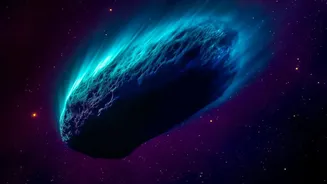
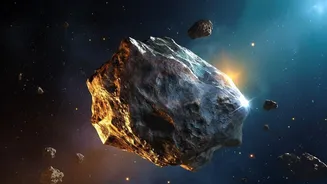
Imagine receiving a package from a place you can never visit. That’s essentially what an interstellar object is. Discovered in July 2025, 3I/ATLAS followed in the footsteps of the mysterious ‘Oumuamua (1I) and the more familiar-looking 2I/Borisov. These
objects are not bound by our Sun's gravity; their speed and trajectory prove they originated in another star system and are just passing through. They are cosmic messengers, carrying clues from their birthplace. The ATLAS survey, designed to spot near-Earth asteroids, found this latest visitor, confirming that what was once a theoretical possibility is now a recurring reality. With each new discovery, our chances of studying a piece of another solar system up close increase dramatically.
A Time Capsule of Alien Chemistry
Comets are often called 'dirty snowballs'—pristine leftovers from the formation of a solar system, their chemistry frozen in time. While our own comets tell us about our solar system's birth, an interstellar comet provides a physical sample of the building blocks of planets around another star. This is what makes them so incredibly valuable. For example, 2I/Borisov had an unusually high concentration of carbon monoxide, suggesting it formed in a very cold environment, perhaps around a small, cool red dwarf star. Early studies of 3I/ATLAS have detected gases like methanol and hydrogen cyanide, but in proportions different from our own comets. This strange chemical recipe hints that its home system may have been quite different, potentially altering the starting ingredients for planets and life.
Testing Our Understanding of the Universe
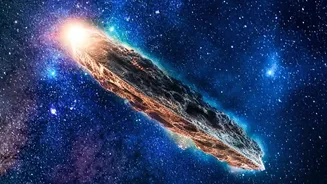
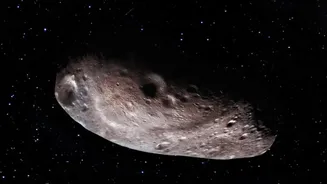
These visitors don't just bring new information; they test our existing knowledge. The first interstellar object, ‘Oumuamua, was a complete puzzle. It was small, shaped perhaps like a cigar or a pancake, and accelerated away from the Sun without showing a visible cometary tail. This sparked intense debate and forced scientists to consider new theories, from it being a nitrogen iceberg to more exotic ideas. 2I/Borisov and 3I/ATLAS, on the other hand, have behaved more like typical comets, showing a fuzzy coma of gas and dust. This diversity is crucial. Each object is a new data point that helps refine our models of how planetary systems form, how they eject material, and what kinds of objects populate the galaxy. 3I/ATLAS's high velocity even suggests it may have originated from an ancient population of stars in the Milky Way, possibly making it billions of years older than our own solar system.
The Challenge and The Future: Interception
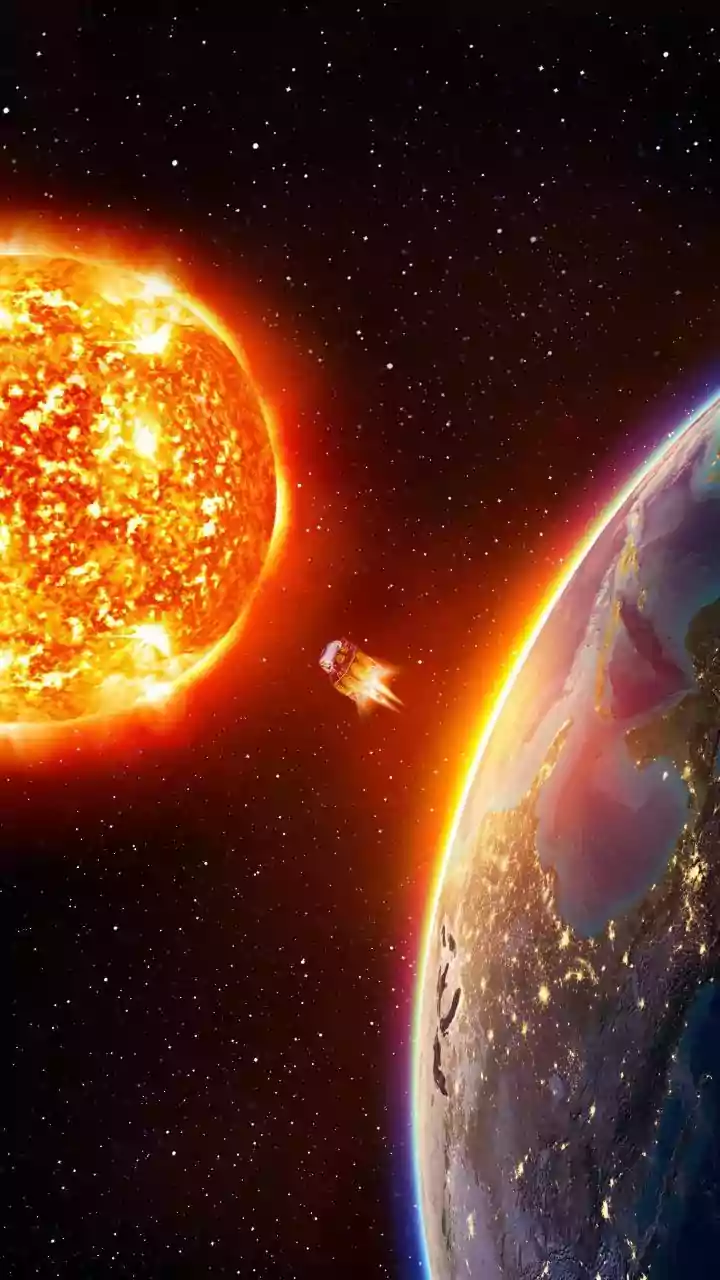
Studying these objects is a race against time. They whip through our solar system at incredible speeds and are gone forever. 3I/ATLAS travels at over 200,000 kilometres per hour. This makes getting a good look difficult. However, the scientific payoff is so immense that space agencies are already planning for the next visitor. The European Space Agency (ESA), in collaboration with Japan's JAXA, is developing the Comet Interceptor mission. Scheduled for launch around 2029, this trio of spacecraft will park in space and wait. When a new pristine comet or an interstellar object like 3I/ATLAS is found on a suitable path, Comet Interceptor will be sent to meet it, flying through its coma to analyze its material directly. This will be the first time humanity actively tries to intercept a messenger from another star system, promising to turn science fiction into scientific fact.