



The High-Stakes Guessing Game in Orbit
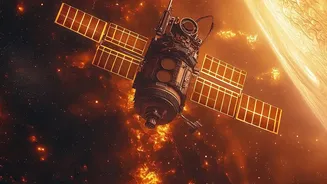
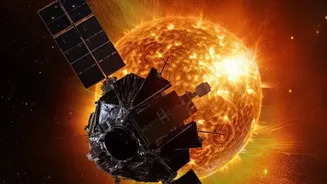
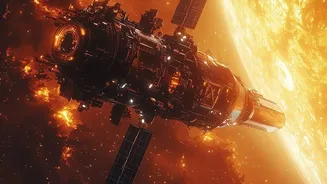
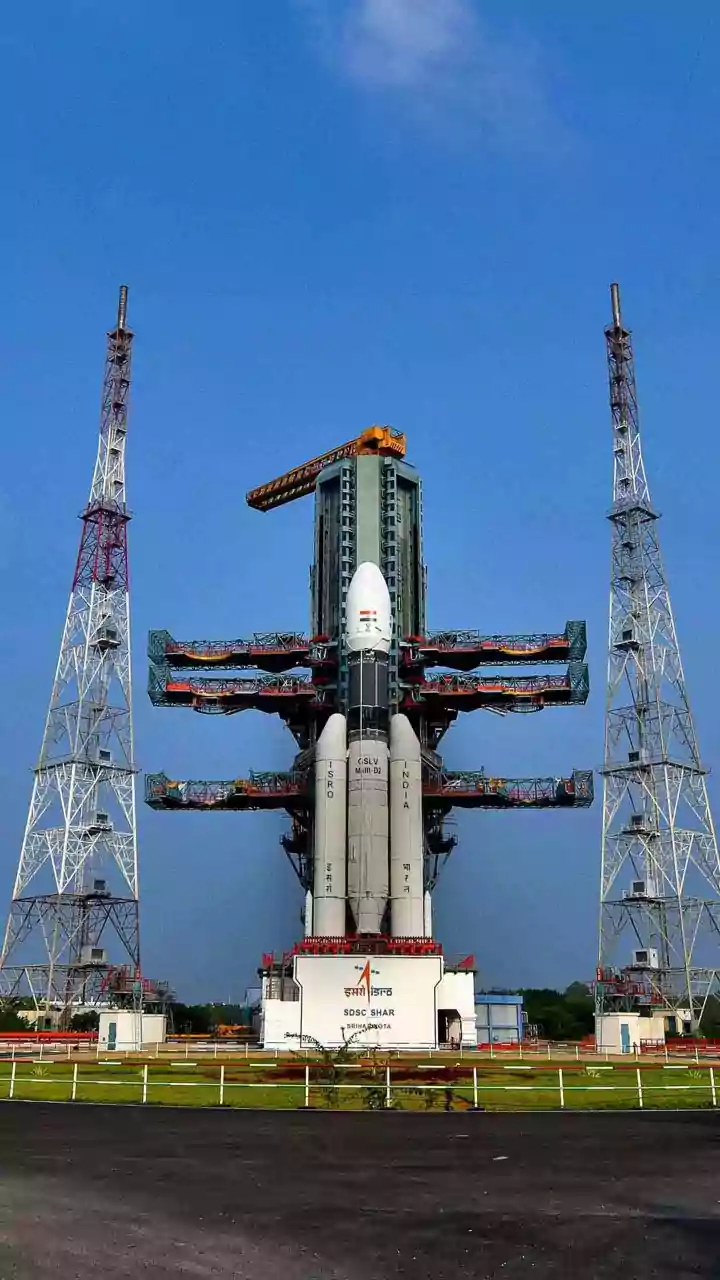
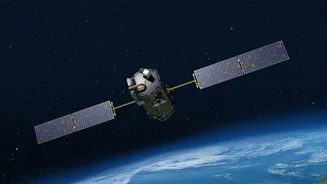
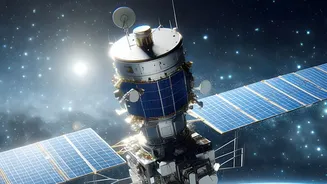
Satellites are the unseen backbone of modern life, powering everything from GPS navigation and financial transactions to global communications. When one of these sophisticated machines acts up, operators face a daunting challenge. The symptoms of a hardware
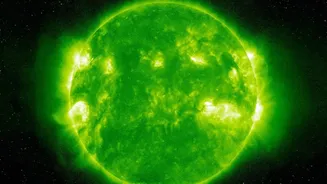
failure—like phantom commands, electronic glitches, or unexpected orientation changes—can look identical to the effects of a solar storm. A blast of charged particles from the sun can disrupt electronics, degrade solar panels, and even alter a satellite's orbit by increasing atmospheric drag. Misdiagnosing the problem can be catastrophic. Shutting down a system to fix a non-existent hardware fault means lost revenue and service disruption. Worse, ignoring what seems like a temporary space weather event could lead to the complete loss of an irreplaceable asset if it's actually a progressive hardware failure.
Earth's Frontline Defense: Ground Observatories
This is where ground-based observatories become essential partners in space operations. These facilities are a global network of sensors that constantly monitor Earth’s environment, from the upper atmosphere to its magnetic core. While satellites in space report on their own conditions, ground observatories provide the crucial, independent context needed to make an accurate diagnosis. They act as a planetary-scale diagnostic tool, giving engineers the 'ground truth' data required to distinguish between an internal problem with the satellite and an external assault from space weather. This synergy between ground and space assets is fundamental to the resilience of our orbital infrastructure.
Reading the Telltale Signs
When a satellite anomaly occurs, engineers immediately turn to data from ground observatories. The key is to look for correlations. Was the satellite's glitch a lone event, or did it coincide with a significant space weather disturbance measured on Earth? Ground-based magnetometers, which measure fluctuations in Earth's magnetic field, are a primary tool. A sudden, powerful disturbance recorded by a network of these magnetometers strongly suggests that a geomagnetic storm is underway. If the satellite malfunctioned at the exact same time, space weather becomes the prime suspect. Similarly, instruments called ionosondes and GPS receivers on the ground monitor the ionosphere, a charged layer of the upper atmosphere. Solar flares can cause this layer to become turbulent, delaying or distorting signals passing through it. If ground stations report widespread GPS inaccuracies or radio blackouts, it points to a solar event, not an isolated satellite fault.
Data Fusion for a Clearer Picture
No single data point tells the whole story. The real power of ground observatories comes from data fusion—combining measurements from multiple sources to build a comprehensive picture. An engineer might overlay magnetometer readings, ionospheric disturbance maps, and data from space-based solar observatories like GOES and DSCOVR, which provide early warnings of solar flares and coronal mass ejections. By cross-referencing this wealth of information with the timing and nature of the satellite fault, they can determine the likely cause. For instance, if a satellite in low-Earth orbit experiences increased drag at the same time ground stations detect a heating and expansion of the thermosphere, the culprit is clearly space weather. This evidence-based approach removes the guesswork, allowing operators to take appropriate action, such as putting the satellite into a protective 'safe mode' until the storm passes rather than initiating a costly and unnecessary hardware reset.