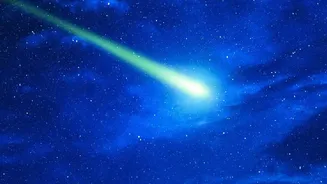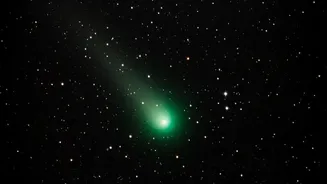




A new object is streaking through our cosmic neighbourhood, and astronomers are gearing up to give it a closer look. The recently detected asteroid, 2026 ED138, has scientists discussing a powerful method to uncover its secrets: infrared observation.
A New Visitor in Our Cosmic Neighbourhood
In the vast, dark expanse of space, countless rocky bodies left over from the formation of our solar system are constantly on the move. Recently, telescopes picked up a previously unknown object, now catalogued as 2026 ED138. This body has been classified as a Near-Earth Object (NEO), meaning its orbit brings it into proximity with Earth's own path around the sun. While the majority of NEOs pose no threat, their study is a cornerstone of modern astronomy and planetary science. Each new discovery like 2026 ED138 offers a fresh opportunity to piece together the 4.6-billion-year-old history of our solar system. These objects are essentially time capsules, preserved in the vacuum of space, holding clues to the conditions that existed when planets like Earth were just beginning to form.
Seeing the Unseen with Infrared
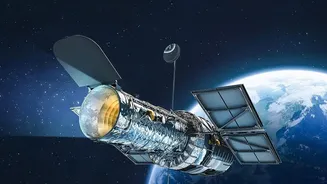
When we look at an asteroid with a standard telescope, we are seeing the sunlight that reflects off its surface. This can be deceptive. A small, shiny asteroid can appear just as bright as a large, dark one, making it difficult to determine its true size. This is where infrared astronomy changes the game. Instead of relying on reflected light, infrared telescopes detect heat. Warmed by the sun, all asteroids, regardless of how dark or reflective they are, glow with thermal radiation. The bigger the rock, the brighter it appears in infrared, allowing for a much more accurate size measurement. This technique allows space-based observatories to spot asteroids that might otherwise be missed by ground-based visible-light surveys, which are less effective at finding dark, non-reflective objects.
Decoding the Asteroid's Secrets
Beyond just determining its size, infrared observations can reveal an asteroid's composition. By using a technique called spectroscopy, scientists can analyze the infrared light coming from 2026 ED138. Different minerals and chemical compounds absorb and radiate heat at specific wavelengths, creating a unique 'thermal fingerprint'. This fingerprint can tell astronomers if the asteroid's surface is made of solid rock, loose pebbles, or fine dust. More importantly, it can identify the presence of specific materials, such as silicates, and even hunt for the tell-tale signs of water (in the form of hydrated minerals) and organic compounds—the very building blocks of life. Understanding what 2026 ED138 is made of will help classify it and compare it to known meteorite samples found on Earth.
Why This Cosmic Detective Work Matters
Characterizing an asteroid like 2026 ED138 serves two critical purposes: planetary defense and scientific discovery. Firstly, accurately tracking the orbits and understanding the physical properties of all NEOs is fundamental to planetary defense. Knowing an object's size, mass, and composition is crucial for assessing any potential impact risk—however remote—and for developing effective mitigation strategies if one were ever needed. Secondly, these objects are windows into our past. Studying them helps us refine our understanding of planetary formation and learn how materials like water may have been delivered to the early Earth. Each asteroid provides a new data point in our quest to map our solar system and understand our place within it.