



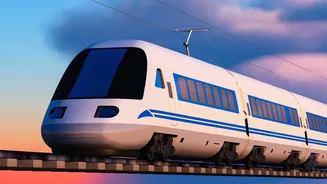
India's high-speed rail dream is fast approaching reality. The targeted 2027 launch of the first bullet train service between Surat and Vapi marks a monumental step, promising to redefine travel and trigger significant economic transformation.
The First Leg of a Landmark Journey
The government
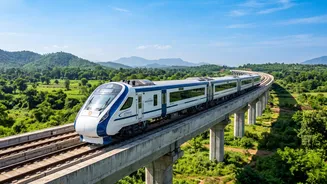
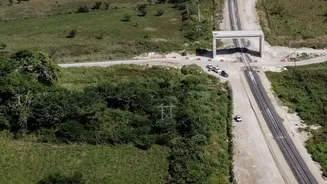
has set an ambitious target to launch India's first bullet train service in the final quarter of 2027 on the Surat-Vapi section in Gujarat. This initial operational segment is part of the larger 508-kilometre Mumbai-Ahmedabad High-Speed Rail (MAHSR) corridor. Recent updates from Railway Minister Ashwini Vaishnaw confirm that the project will be commissioned in phases, with the Gujarat portion leading the way. The focus is on making sections operational as they are completed, rather than waiting for the entire line to be finished. A crucial milestone was recently achieved with the energisation of the overhead electrical equipment on the 50-kilometre Surat-Bilimora stretch, which is part of the broader Surat-Vapi section. Trial runs on this stretch are now expected to commence by May 2027, paving the way for commercial operations later in the year.
A Glimpse into the Future of Travel
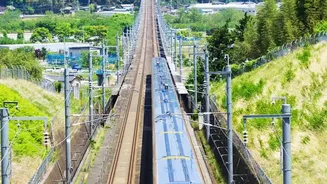
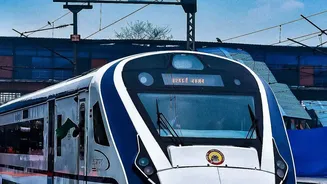
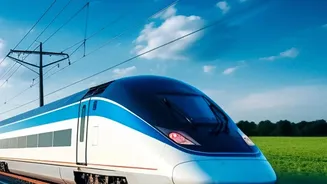
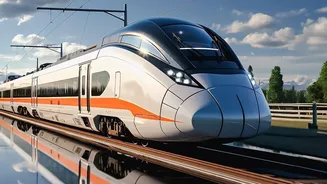
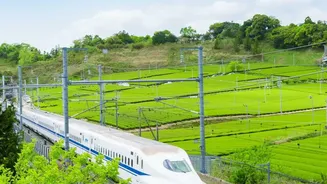
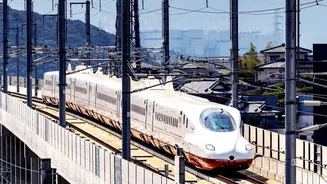
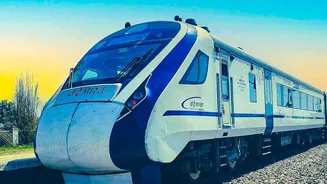
The introduction of the bullet train promises a paradigm shift in Indian travel. Based on Japan's renowned Shinkansen technology, the trains are designed for an operational speed of 320 kmph. This will dramatically cut travel time between major economic hubs. While the full Mumbai-Ahmedabad journey is expected to take just under two hours, the initial Surat-Vapi section will offer the first taste of this high-speed future. To meet the 2027 deadline, India is also pushing its indigenous manufacturing capabilities. An Indian-made B28 trainset, designed for speeds of 280 kmph, is currently under development and will be used for the initial trial runs. This focus on domestic production under the 'Make in India' initiative is a critical part of the project's long-term vision, aiming to build local expertise in high-speed rail technology.
More Than Just Speed: Economic Ripples
The bullet train is not merely an infrastructure project; it is an economic catalyst. The corridor is expected to spur significant growth in the cities it connects, including Surat, Vapi, Bilimora, and Bharuch. Enhanced connectivity will bring industrial centres and markets closer, fostering regional economic integration. This has already sparked interest in real estate markets around the planned stations, with analysts predicting increased demand for residential and commercial properties. The logic is simple: when travel time shrinks, smaller cities like Vapi become more attractive for professionals and businesses who want access to major hubs like Mumbai and Ahmedabad without living in them. The construction phase itself has already generated thousands of jobs, and the operational phase is expected to create thousands more in direct and indirect employment, from railway operations to hospitality and retail at the modern station hubs.
Challenges and the Road Ahead
The journey to 2027 has not been without its hurdles. The project, first announced in 2017, faced significant delays, particularly in Maharashtra, due to issues with land acquisition and the COVID-19 pandemic. Construction only began in earnest in 2021. While the Gujarat section has progressed rapidly, work in Maharashtra, including the construction of a complex 21-kilometre tunnel with a 7-kilometre undersea portion, remains challenging. Officials are now targeting 2029 for the line to be operational up to Thane. As of late 2026, substantial progress has been made on the overall corridor, with hundreds of kilometres of viaducts and piers completed. The phased rollout strategy, starting with Surat-Vapi, is a pragmatic approach to deliver the benefits of high-speed rail to the public as soon as possible while work continues on the more complex segments of the route.