






The Vision for 2035
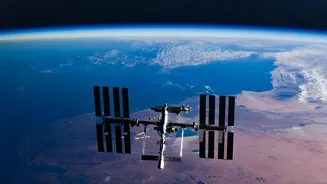
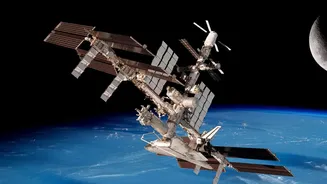
By 2035, India aims to have its own modular space station, the Bharatiya Antariksha Station (BAS), orbiting 400-450 kilometres above Earth. This ambitious goal, confirmed by the Indian Space Research Organisation (ISRO), involves launching the first module
by 2028 and assembling the complete five-module station over the following years. Designed to host a crew of three to four astronauts for long-duration missions, the station is a natural evolution of the Gaganyaan human spaceflight programme. It represents a monumental leap from singular missions to establishing a continuous human presence in space, signalling India's intent to become a major player in orbital operations.
An Engine for Economic Growth
A national space station is a powerful economic catalyst. The project is expected to create a surge in demand for high-tech manufacturing, robotics, advanced materials, and sophisticated software systems. This will not only generate employment in highly skilled sectors but also have a significant multiplier effect on the broader economy. According to a report by Novaspace, every dollar generated by India's space economy adds an estimated $2.54 through indirect and induced benefits. The government's vision is to grow India's share of the global space economy from its current 2-3% to 8% by 2033, expanding its value to an estimated $44 billion. The BAS will be a cornerstone of this strategy.
Fuelling India's Private Space Sector
The establishment of the Bharatiya Antariksha Station is set to be a game-changer for India's burgeoning private space industry. Since the sector was opened to private participation in 2020, over 400 startups have emerged. A space station creates a predictable, long-term demand for a wide array of services. Private companies will have opportunities to build launch vehicles, cargo supply spacecraft, satellite deployment systems, and ground station services. This transforms them from being mere component suppliers for ISRO to becoming integral partners in the national space ecosystem. The Indian government is fostering this environment through organisations like IN-SPACe and by liberalising Foreign Direct Investment (FDI) rules to attract capital.
The Commercial Promise of Microgravity
One of the most significant economic benefits of a space station is the unique laboratory it provides. The microgravity environment allows for research and manufacturing that is impossible on Earth. This opens up commercial avenues in diverse fields. In pharmaceuticals, microgravity helps in understanding diseases and developing purer crystalline structures for new drugs. In material science, it allows for the creation of new alloys and flawless semiconductor crystals for next-generation electronics. The BAS will serve as a hub for this pioneering research, attracting both domestic and international clients and potentially leading to patented breakthroughs and high-value products.
Strategic Gains on a Global Stage
Beyond direct economic returns, the space station offers immense strategic and geopolitical advantages. Owning and operating an orbital outpost elevates a nation's stature, placing India in an elite club alongside the US, Russia, and China. With the International Space Station (ISS) nearing its scheduled retirement around 2030, the BAS could position India as a key partner for nations seeking access to a space laboratory. This autonomy allows India to set its own research priorities, train its astronauts, and forge international collaborations on its own terms, enhancing its diplomatic influence and 'soft power' on the world stage.