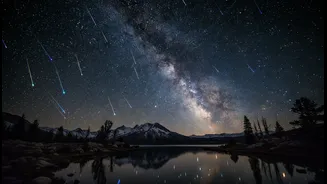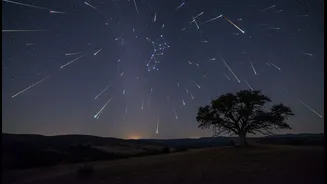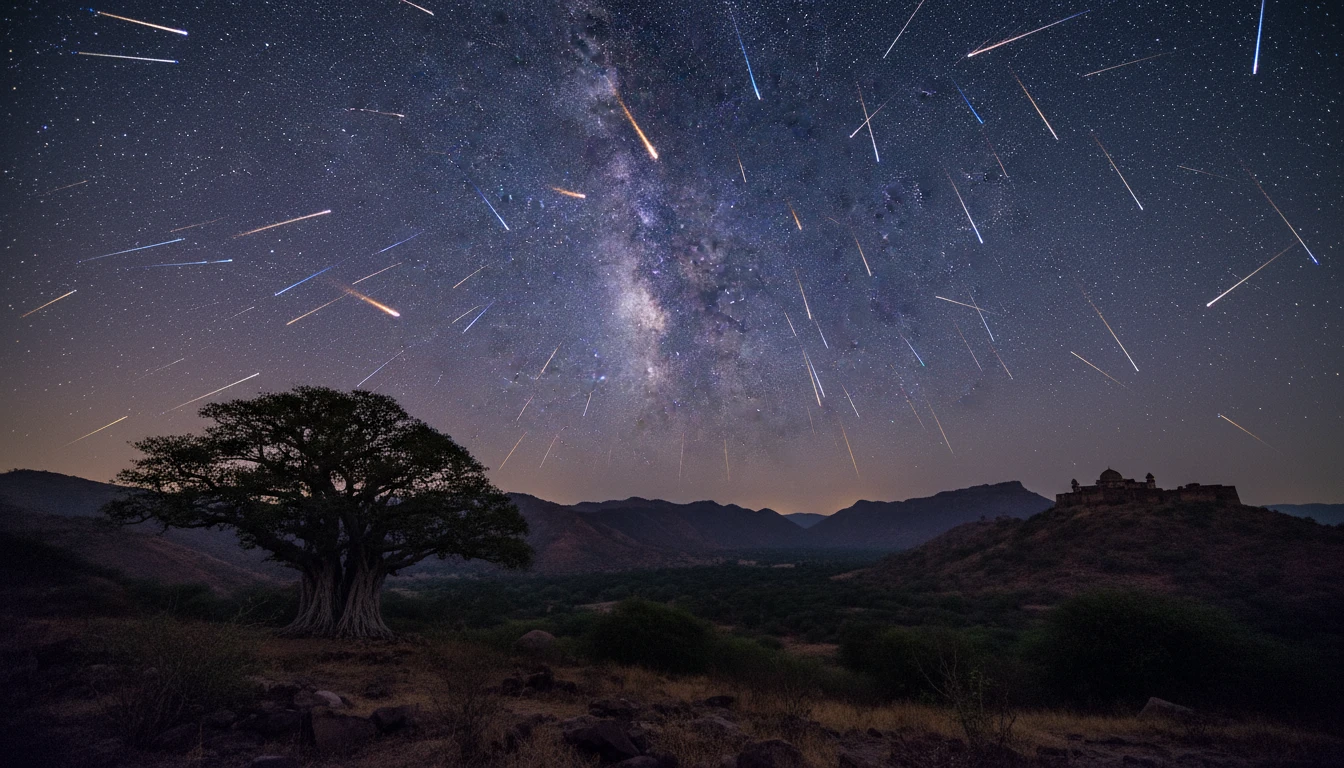




The Main Event: The Perseid Meteor Shower
The celestial event causing buzz for August 12, 2026, is the annual Perseid meteor shower. This isn't a new or unexpected phenomenon but one of the most reliable and beloved meteor showers of the year for the Northern Hemisphere. It occurs when Earth
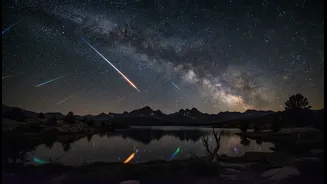
passes through the trail of debris—bits of ice and rock—left behind by Comet Swift-Tuttle. These particles, most no bigger than a grain of sand, burn up upon entering our atmosphere at high speeds, creating the bright streaks of light we call meteors or “shooting stars.” The shower is active from mid-July to late August, but it hits its peak on the nights of August 12 and 13. For 2026, viewing conditions are nearly perfect because the peak coincides with a new moon, meaning darker skies and a better chance to see more meteors.
Decision 1: Should I Travel to See It?
Your decision to travel depends on your current location and expectations. The biggest enemy of meteor watching is light pollution. If you live in a dense urban area, your view will be severely limited. Traveling to a rural area, a park away from city lights, or a designated dark-sky location will dramatically increase the number of meteors you can see. In India, high-altitude, dry regions like Ladakh and Spiti Valley are considered prime viewing spots as they are less affected by monsoon clouds in August. Other potential locations with clearer skies include desert areas like Jaisalmer. However, don't feel pressured to make a grand journey. Simply finding the darkest possible spot near you, perhaps a local park or a quiet suburban street, can be enough. Remember to check the weather forecast; a cloudy sky will ruin the show regardless of your location.
Decision 2: Do I Need Special Equipment?
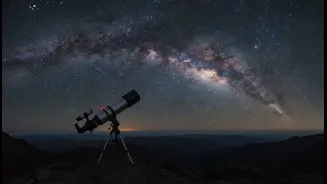
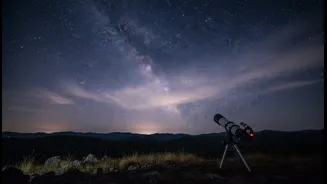
No, and in fact, using binoculars or a telescope is not recommended for watching a meteor shower. These tools restrict your field of view, and meteors can appear anywhere in the sky. The best equipment you can have is your own eyes, a comfortable reclining chair or blanket to lie on, and patience. Allow your eyes at least 15 to 30 minutes to adjust to the darkness; this means avoiding looking at your phone screen. The meteors will appear to originate from a point in the constellation Perseus, but they will streak across the entire sky, so the best strategy is to simply lie back and look up.
Fact-Checking: Astronomy vs. Astrology
Celestial events often trigger a wave of pseudoscientific claims, especially from astrological sources. You may see articles linking the Perseids to “major life changes,” “emotional thaws,” or specific fates for certain zodiac signs. It's crucial to differentiate this from astronomy, which is the scientific study of celestial objects. The Perseid meteor shower is a predictable, physical phenomenon explained by orbital mechanics. Astrological claims, on the other hand, are not based on scientific evidence. They interpret celestial positions for personal guidance, which is a system of belief, not verifiable fact. When making decisions, rely on information from scientific bodies like NASA, university astronomy departments, and reputable science publications, not horoscope columns.
Debunking Common Myths and Hoaxes
Sensationalism often accompanies cosmic events. You can safely ignore claims that meteors will strike Earth and cause damage; the particles are tiny and burn up high in the atmosphere. “Shooting stars” are not actual stars falling from the sky; they are small debris particles. Be wary of digitally manipulated photos showing impossibly large meteors or crowded skies; real meteor rates are closer to one or two per minute at best, even during a strong shower like the Perseids. Trustworthy sources will provide realistic expectations, noting you might see anywhere from 50 to 100 meteors per hour under ideal, dark-sky conditions.