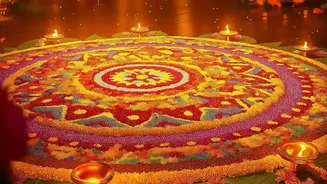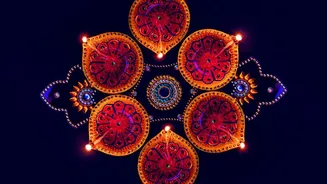





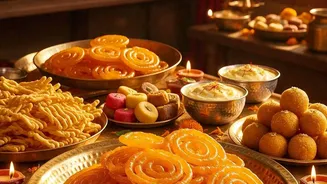
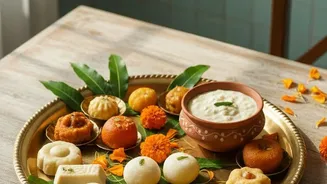
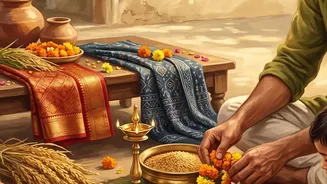
Diwali, the festival of lights, illuminates India in a spectacular display of unity. Yet, its true beauty lies in its diversity, with each region celebrating unique stories and traditions rooted in a rich tapestry of cultural history.
North India: The Triumphant Return of Rama
Across North India,
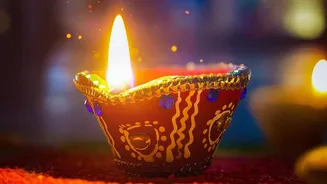
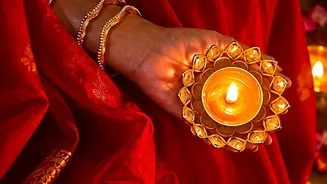
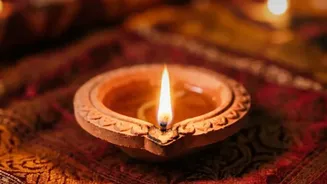
the heart of Diwali celebrations beats to the rhythm of the Ramayana. The most widely told story is the return of Lord Rama to his kingdom of Ayodhya after 14 years in exile and his victory over the demon king Ravana. The people of Ayodhya, overjoyed by their rightful king’s return, lit countless earthen lamps, or diyas, to illuminate his path on a dark new moon night. This act of celebration is the foundation for the most iconic image of Diwali: rows of glowing lamps adorning homes, temples, and public spaces. This narrative frames Diwali as a festival of homecoming, righteousness, and the ultimate victory of good over evil. Celebrations often include Lakshmi Puja, the worship of the goddess of wealth, alongside Lord Ganesha, the remover of obstacles, to usher in a year of prosperity.
East India: The Fierce Grace of Kali Puja
In West Bengal, Odisha, and Assam, the night of Diwali is dedicated to a different divine force: Goddess Kali. Here, the festival is known as Kali Puja or Shyama Puja. While the rest of India largely worships the benevolent Goddess Lakshmi for wealth and prosperity, eastern India’s traditions are deeply influenced by Shaktism, which venerates the divine feminine in all her forms. According to legend, Kali is a fierce form of Goddess Durga, who emerged to destroy demons like Raktabija. Her worship on the darkest night of the year symbolizes the destruction of all evil, both external and internal, and the triumph of spiritual strength over ignorance. This tradition was popularized in the 16th century by the sage Krishnananda Agamavagisha and later by Ramakrishna Paramhansa in the 19th century. Though her form is fearsome, devotees worship Kali as a protective mother, celebrating courage and spiritual awakening.
South India: Krishna's Victory Over Narakasura
In much of South India, including Tamil Nadu and Karnataka, the central story of Diwali revolves around Lord Krishna's victory over the demon king Narakasura. Celebrated as Naraka Chaturdashi, this day often marks the main day of Deepavali festivities in the region, falling on the day before the new moon. Narakasura was a tyrannical ruler who had imprisoned 16,000 women and terrorized the heavens. Lord Krishna, accompanied by his wife Satyabhama, defeated the demon and freed the captives, bringing an end to his oppressive reign. To commemorate this liberation, celebrations begin before dawn with a traditional oil bath, meant to cleanse the body and soul. The bursting of firecrackers at dawn symbolizes the slaying of the demon. This regional focus highlights a different narrative of liberation, where Diwali is a celebration of freedom from tyranny.
West India: A Blend of Commerce and Legend
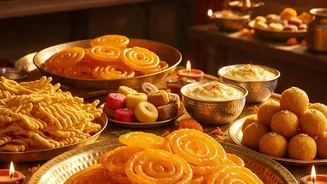
In western states like Gujarat and Maharashtra, Diwali intertwines spiritual devotion with commercial significance. For the Gujarati business community, Diwali marks the start of the New Year (Bestu Varas). A key ritual is Chopda Pujan, where merchants worship new account books, seeking blessings from Goddess Lakshmi for a prosperous year ahead. In Maharashtra, celebrations begin with Vasu Baras, a day honoring cows and their calves. A significant day is also Balipratipada, which honours the demon king Bali, whose generosity impressed Lord Vishnu. The celebrations here are a unique blend, incorporating the worship of Lakshmi, commemorating Krishna’s defeat of Narakasura, and honoring local legends. The region is also famous for its 'faral,' an assortment of homemade sweet and savory snacks shared among friends and family, and for the beautiful 'akash kandil' (paper lanterns) that adorn homes.