


The Ultimate Insurance Policy
Sending humans to space is an inherently risky endeavour. The most perilous phase is the ascent, where the launch vehicle is a controlled explosion, subject to immense aerodynamic forces, vibrations, and acoustic pressure. If anything goes wrong—a structural
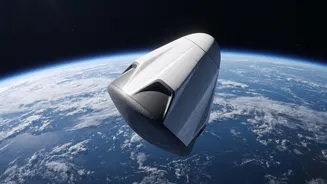
failure, a loss of thrust, or a deviation from the flight path—mission controllers have only seconds to react. This is where the Crew Escape System (CES) comes in. It's an astronaut's ultimate insurance policy, designed to act like a powerful ejection seat, not just for the crew, but for their entire capsule. The CES must be able to pull the Crew Module away from a malfunctioning rocket, accelerating it to safety faster than the rocket itself is travelling. But proving that such a system works under extreme stress is a monumental engineering challenge.
Meet the Test Vehicles
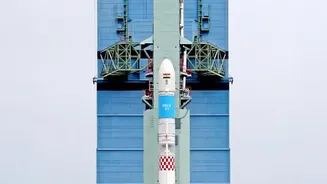
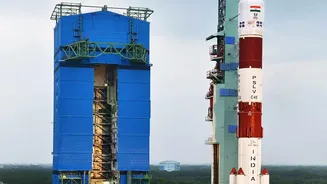
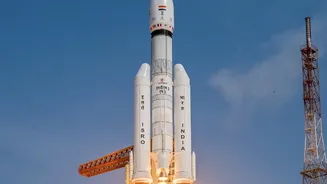
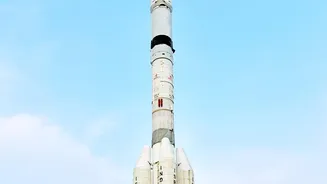
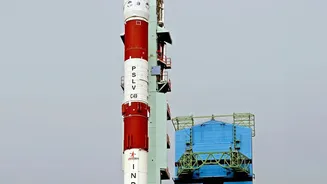
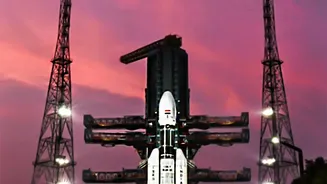
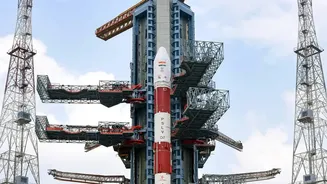
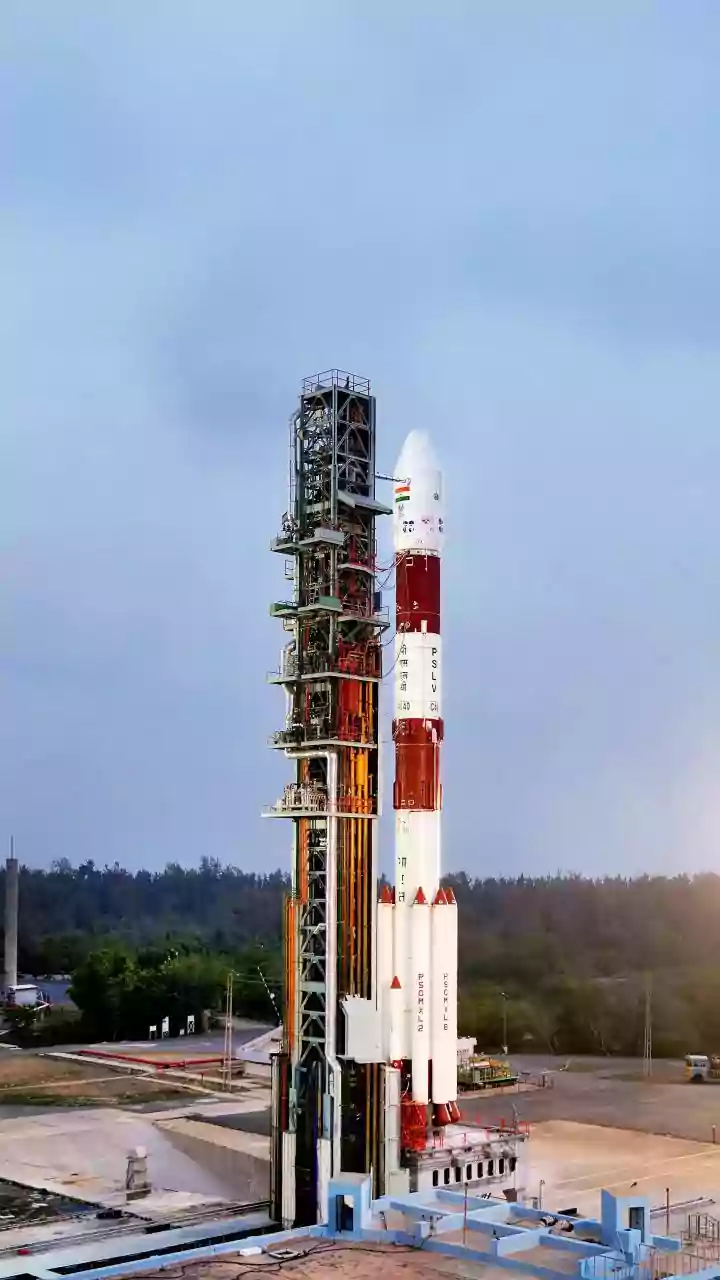
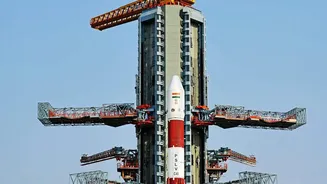
To validate the Crew Escape System, ISRO cannot simply use its human-rated LVM3 rocket for every trial. It would be prohibitively expensive and risky. Instead, ISRO has developed a series of cost-effective, specialized rockets known as Test Vehicles (TV). These vehicles, such as the single-stage liquid-propelled TV-D1, are purpose-built to mimic the flight profile and stresses of an actual Gaganyaan launch. Their sole job is to fly to a specific altitude and speed to create the exact emergency conditions ISRO needs to study. This allows engineers to test the abort sequence repeatedly, gathering crucial data in a controlled environment. Another vehicle, called SOLVE (Sub-Orbital Launch Vehicle for Experiments), is being developed to specifically test the parachute systems under various conditions.
Two Critical Scenarios: Pad and In-Flight Aborts
Launch emergencies can happen at any moment, and ISRO tests for two primary scenarios. The first is a 'Pad Abort Test', which simulates a catastrophic failure while the rocket is still on the launchpad. In a successful 2018 test, the CES fired its motors to yank the crew module away, lifting it to an altitude of nearly 3 kilometres before it parachuted safely into the Bay of Bengal. The second, and more complex, scenario is an in-flight abort. The TV-D1 mission, for instance, was designed to test an abort at an altitude of about 17 kilometres, when the vehicle is travelling at Mach 1.2—slightly above the speed of sound. This phase is known as the transonic condition, a point of maximum aerodynamic stress on the rocket, making it one of the most critical moments to test the escape system's performance.
Recreating the Violence of Launch
The test vehicles do more than just reach a certain speed and altitude. Their payloads, which consist of an unpressurised but dimensionally identical Crew Module and the Crew Escape System, are extensively instrumented with hundreds of sensors. These sensors measure every aspect of the abort sequence: the intense g-forces, the performance of the fast-acting solid motors in the escape system, the stability of the module as it is pulled away, and the precise sequence of parachute deployment. The unpressurised module also undergoes acoustic testing on the ground to ensure its structure and the avionics within can withstand the deafening roar and vibration of a rocket launch. The data from these simulations is vital for validating computer models and ensuring every component performs exactly as designed.
From Separation to Splashdown
A successful test doesn't end when the escape motors fire. The entire sequence, from abort to recovery, must be flawless. After the CES separates the Crew Module, the system autonomously executes a series of manoeuvres. The module itself separates from the escape tower, and a sequence of parachutes is deployed to slow its descent. Drogue parachutes deploy first to stabilize the module, followed by the main parachutes which ensure a soft splashdown in the ocean. Finally, recovery teams from the Indian Navy practice locating, securing, and retrieving the module from the sea, closing the loop on a complete end-to-end simulation of a real-life rescue. Each of these steps provides crucial verification that every system is ready for the ultimate challenge of human spaceflight.