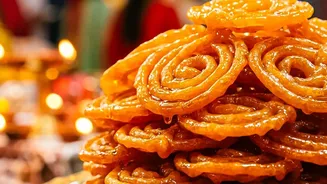



That first bite of a jalebi is pure magic: a shattering crunch gives way to a soft, chewy interior that releases a burst of sweet syrup. This iconic Indian sweet is a masterclass in texture, but how is this perfect contrast achieved? It's not magic, but science.
The Foundation: A Tale of Two Batters
The secret to jalebi's unique texture begins long before it hits the hot oil. It starts with the batter. Traditionally, the batter is made from all-purpose flour (maida), sometimes with a little gram flour (besan) or cornstarch, mixed with water and a starter like yogurt or yeast. This mixture is then left to ferment for several hours, or even overnight. This ancient technique is crucial. The fermentation process creates carbon dioxide bubbles in the batter, which will later translate into a light, airy, and slightly chewy interior. It also imparts a subtle tangy flavour that balances the intense sweetness of the syrup. While instant versions using baking soda exist to speed things up, many purists argue that the slow fermentation process is key to developing the characteristic depth of flavour and perfect texture.
The Science of the Sizzle
The moment the thin stream of batter hits the hot oil is where the transformation becomes dramatic. The temperature of the oil is critical. It needs to be moderately hot, around 175-176°C. If the oil is too hot, the jalebi will brown too quickly on the outside, leaving the inside raw and doughy. If it's not hot enough, the batter will spread, become flat, and absorb too much oil, resulting in a greasy, limp sweet. When the temperature is just right, the hot oil immediately cooks and sets the exterior of the batter spirals, creating that all-important crispy shell. Simultaneously, the heat causes the water in the batter to turn to steam and the leavening agents to release gas, puffing up the interior and forming the porous, spongy structure that makes it soft inside.
The Crisping Agents
While frying is the main event for crispiness, certain ingredients give it a helping hand. Adding a small amount of cornstarch or rice flour to the all-purpose flour is a common technique to enhance the crunch. These starches fry up to a harder, more brittle texture than wheat flour alone, giving the jalebi a more pronounced and lasting crispness. Some recipes also include a bit of gram flour (besan), which is said to help the jalebi stay crunchy for longer. The consistency of the batter itself also plays a major role; it must be a smooth, flowing consistency—thick enough to hold its shape but thin enough to be piped easily. A batter that is too thick will result in a soft, doughy jalebi, while one that is too thin won't form proper spirals.
The Sweet Surrender: A Dip in the Syrup
The final step is what brings everything together. The freshly fried, hot jalebi is immediately dunked into a warm, but not hot, sugar syrup. This temperature difference is key. The hot, porous jalebi acts like a sponge, and the capillary action pulls the sweet, fragrant syrup deep into its airy interior. The syrup itself has to be of a specific consistency, often described as a 'one-string' thickness. If the syrup is too thin, it will make the jalebi soggy. If it's too thick or has crystallized, it won't be absorbed properly and will just form a hard candy shell on the outside. The brief soak, usually just for a minute or two, is just enough time for the jalebi to become saturated with sweetness on the inside while the exterior, sealed by the frying process, remains delightfully crisp.