








What Was The Test, Exactly?
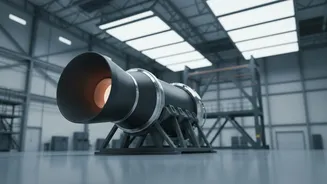
The mission was a high-altitude abort test, a key part of the Gaganyaan program. Essentially, ISRO simulated a worst-case scenario: what if the rocket fails mid-flight when it's travelling at immense speed? The test involved launching a single-stage liquid
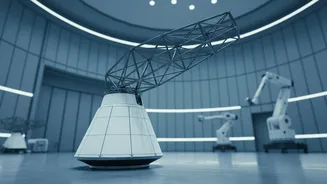
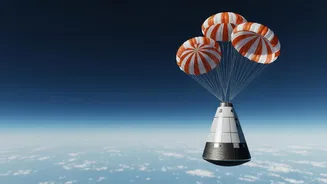
rocket carrying a test version of the Crew Module, the capsule where astronauts will sit. At an altitude of about 17 kilometres, an intentional abort sequence was triggered. This is a phase of flight where the vehicle is under tremendous aerodynamic pressure, making it one of the most challenging moments to execute a safe escape. The Crew Escape System—a set of powerful, quick-firing motors—ignited, pulling the Crew Module away from the rocket at high speed.
The Ultimate Insurance Policy for Astronauts
Sending humans to space is inherently risky, and the most dangerous phase is the launch. The Crew Escape System is the ultimate insurance policy. If anything goes wrong with the powerful LVM3 rocket during ascent, this system must work flawlessly to pull the crew to safety. This high-altitude test was designed to validate the escape system under the most severe conditions. After separating from the malfunctioning booster, the system has to orient the capsule correctly, deploy a series of parachutes to slow its descent, and ensure a gentle splashdown in the sea. The recent test successfully demonstrated this entire sequence, from the high-speed separation to the safe recovery of the module, proving the system can protect its precious human cargo when it matters most.
A Critical Step for Mission Gaganyaan
This test is not a standalone experiment; it is a cornerstone of the Gaganyaan mission, India's ambitious endeavour to send three astronauts into a 400-kilometre orbit for a three-day mission. Before ISRO can declare its systems 'human-rated', it must prove their reliability through a series of rigorous tests. This includes pad abort tests (escaping from the launchpad before liftoff), various parachute tests, and in-flight aborts like this one. According to a statement shared with Parliament on August 6, 2026, major development and validation milestones for Gaganyaan's human-rating systems have already been completed. Each successful test builds confidence and moves ISRO one step closer to the final goal: a crewed launch. With this milestone, the path to putting Indian astronauts, or 'Vyomanauts', into space becomes clearer and safer.
Putting India in an Elite Club
Successfully developing and testing a high-altitude abort system places India in an elite group of space-faring nations. Only countries that have launched their own astronauts—the United States, Russia, and China—have mastered this complex technology. An effective launch escape system has a proven history of saving lives. For instance, a Soyuz mission carrying a NASA astronaut and a Russian cosmonaut had to abort mid-flight in 2018, and the escape system brought them back to Earth safely. ISRO's successful test demonstrates a level of technological maturity that is essential for a credible human spaceflight program. It is a clear signal that India is not just aspiring to send humans to space but is methodically and rigorously building the capabilities to do so safely.
What Happens Next on the Road to Space?
While a major victory, this test is one of several hurdles to clear. ISRO has stated that more validation missions and safety tests are planned to ensure the highest standards. These will likely include further unmanned flights to test all systems in an integrated manner before the first crewed mission. The ground infrastructure, including a control centre and crew training facilities, is also being prepared. The astronauts themselves are undergoing extensive training for the mission. With the successful validation of the Crew Escape System in one of its most challenging modes, ISRO can proceed with increased confidence. The next phases will involve full-scale uncrewed dress rehearsals before the historic flight that will make India the fourth nation to independently launch humans into orbit.