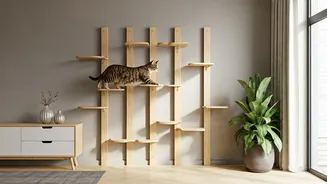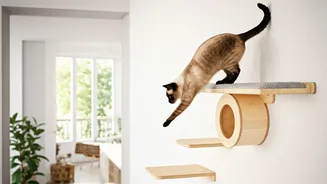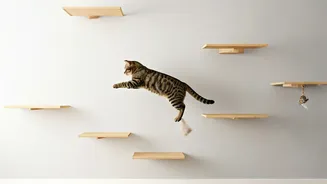








Why Cats Need to Climb
In the wild, a cat’s world is three-dimensional. They are natural climbers, seeking high vantage points for safety, observation, and confidence. This instinct doesn't disappear just because they live in a high-rise flat in Mumbai or a cosy apartment in Bengaluru.
Denying them vertical space can lead to boredom, anxiety, and even destructive behaviours like scratching furniture. Providing vertical territory, or a 'cat superhighway', taps into their core nature. It allows them to survey their domain from a safe perch, retreat from a noisy vacuum cleaner or an overly affectionate toddler, and feel more secure in their environment. A confident cat is a happy cat, and a simple wall-mounted perch or bridge is a direct line to boosting that confidence.
The Magic of a Bridge
While any cat shelf is good, a floating bridge is exceptional. It's not just a stationary spot; it's a pathway that requires focus, balance, and agility to cross. This simple act of navigating from one point to another provides both physical exercise and mental stimulation. Think of it as a mini-obstacle course that engages their mind and body. For cats in multi-pet households, these bridges can also serve as crucial escape routes, allowing a timid cat to bypass a more assertive one on the floor. A well-planned network of shelves and bridges transforms your walls from simple partitions into an interactive, enriching playground that your cat can use day and night.
Choosing Your Catwalk
Cat bridges come in two main varieties: pre-made kits and DIY projects. Pre-made options, often found on sites like Etsy or from specialised pet furniture makers, are convenient and professionally designed for safety and aesthetics. They typically use solid wood for the end platforms and either sturdy rope ladders or slatted wood for the bridge itself. Many come unfinished, allowing you to stain or paint them to match your decor. If you're handy, a DIY bridge can be a rewarding project. You can use durable materials like pine wood and thick, natural sisal rope. The key is ensuring the construction is solid and free of splinters, sharp edges, or toxic finishes. Whichever path you choose, prioritise materials that offer good grip. Bare, glossy surfaces can be slippery and dangerous for your cat.
Planning Your Feline Superhighway
Before you drill a single hole, map out the route. A great cat highway has a clear purpose. Where does it start and end? An ideal setup might begin near a piece of furniture your cat can already access, like a bookshelf or a window sill, and lead to a coveted spot, such as a comfy wall-mounted bed with a view. Consider the flow. The path should be intuitive for your cat. The distance between shelves and the length of the bridge should be manageable. A good rule of thumb is to keep the leap-gap between platforms no more than a couple of feet, especially for older or less athletic cats. Use painter's tape on the wall to mock up the placement of shelves and bridges. This lets you visualise the final look and check for any obstructions, like light switches or artwork, before committing.
Installation: Safety is Non-Negotiable
This is the most critical step. A poorly installed bridge is a serious hazard. The first rule is to anchor into something solid. In modern buildings with drywall, this means using a stud finder to locate the wooden or metal studs behind the plasterboard. In many Indian homes with brick or concrete walls, you will need a masonry drill bit and the appropriate wall plugs (also known as anchors) to ensure a secure hold. Do not rely on simple nails or weak plastic anchors. Always use the hardware recommended by the bridge manufacturer or, for DIY projects, hardware rated to hold significantly more weight than your cat. Once installed, test the bridge thoroughly. Pull on it firmly from all angles to ensure there is no wobble or give. Your cat's safety depends on your diligence here.