

A Journey Beyond the View
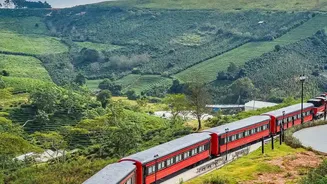
The whistle of the 'Toy Train' cuts through the cool, mist-laden air of the hills. Whether it’s the Darjeeling Himalayan Railway chugging past bustling market stalls or the Kalka-Shimla line weaving through pine forests, these journeys are a feast for the senses.
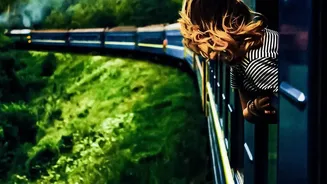
Tourists press against the windows, cameras at the ready to capture the sprawling tea gardens and panoramic mountain views. Yet, sharing the carriage are locals for whom this train is not a novelty but a necessity. A vendor might be heading to the next town's market, a group of schoolchildren returning home, or a family visiting relatives one station up the line. The train is a moving microcosm of hill life, where the extraordinary journey for one is the ordinary commute for another.
Echoes of a Bygone Era
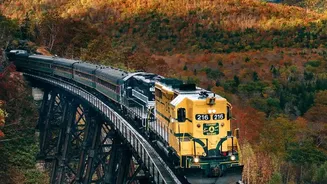
These railways are more than just tracks; they are engineering marvels and designated UNESCO World Heritage Sites, each with a story rooted in colonial history. The Darjeeling Himalayan Railway, commissioned in 1881, was a bold solution to connect the remote tea plantations and the hill station of Darjeeling with the plains below. It was built to transport goods like tea and rice, drastically changing the region's economy. Similarly, the Kalka-Shimla Railway, completed in 1903, was constructed to provide access to Shimla, the summer capital of British India. Riding these trains today is to travel through a living museum, experiencing the ambition and ingenuity that conquered formidable mountainous terrain with hundreds of bridges and tunnels.
The Lifeline of the Hills
Long after their original purpose has evolved, these railways continue to serve as a vital artery for the communities dotted along their routes. For many small villages and towns, the train is the most reliable, and sometimes only, link to the outside world, especially during harsh weather. It carries essential supplies, mail, and, most importantly, people. The charming, small stations aren't just picturesque stops for tourists; they are bustling hubs of local activity. Here, life unfolds at the pace of the train's arrival and departure. It’s where goods are exchanged, news is shared, and daily life has a rhythm dictated by the train's schedule. In this sense, the railway is not just passing through the landscape but is an integral part of its social and economic fabric.
Two Worlds in One Carriage
The true magic of a scenic rail journey is witnessing the seamless blend of past and present, tourism and daily life. In a single carriage, you can observe a traveller from halfway across the world gazing in awe at the Himalayas, while beside them, a local resident calmly reads a newspaper, completely accustomed to the majestic backdrop. The train itself embodies this duality. The vintage steam engines and heritage coaches speak of a colonial past, maintained for their historical and tourism value. Yet, the daily ticketing, the regular commuters, and the essential goods in the luggage car affirm its contemporary relevance. This unique environment, where history is not just preserved but is an active participant in modern life, is what makes the journey truly profound.