








The Experimental Approach in Action
SpaceX's approach with Starship is fundamentally different from traditional rocket programs. It's built on a philosophy of rapid, iterative testing: fly, gather data, analyze, and fly again, often within weeks. The 'experimental' nature isn't a sign of weakness;
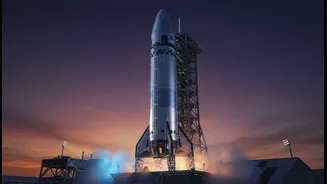
it's the core of the strategy. This was highlighted by the recent events surrounding Starship’s thirteenth flight test (IFT-13). An initial launch attempt on July 16 was automatically aborted when four of the Super Heavy booster's 33 Raptor engines failed to ignite. Instead of a months-long setback, SpaceX identified the issue, scheduled engine replacements, and re-targeted launch for as early as July 20. This quick turnaround, even from a scrubbed launch, provides invaluable data on engine reliability and ground systems, feeding directly back into the development loop.
Data, Not Just Spectacle
Each test, whether a full flight or an aborted launch, is a data goldmine. The previous flight, IFT-12 in May 2026, achieved several key milestones despite not being a fully successful mission by traditional standards. It saw the Starship upper stage reach space and demonstrate controlled descent during reentry, validating crucial thermal protection systems. However, it also revealed issues, such as an engine-out on ascent and a failure to relight an engine in space. The IFT-13 mission objectives are a direct response to this data, aiming to demonstrate a more robust engine startup sequence and attempting the in-space engine relight again. This shows how data from one flight directly shapes the hardware and software for the next, incrementally building a more reliable system.
The Revolution of Reusability
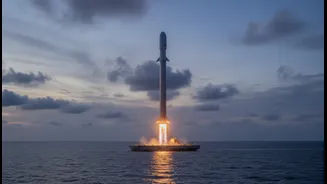
The ultimate goal driving this data collection is making Starship a fully and rapidly reusable launch system. Unlike the Space Shuttle, which was only partially reusable and required extensive refurbishment, Starship is designed for airplane-like turnaround. Success in this area, proven by flight data, is the key to drastically changing the economics of space access. Every piece of information on how the heat shield performs, how the engines handle multiple firings, and how the vehicle maneuvers for a landing contributes to this goal. By proving that the most expensive parts of the rocket can be reliably and quickly reused, SpaceX aims to slash the cost-per-kilogram to orbit by an order of magnitude. This isn't just about launching satellites for less; it's about enabling entirely new possibilities.
Unlocking the Future of Space
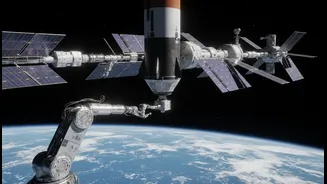
A dramatically lower cost to orbit changes everything. It makes mega-constellations of satellites, like SpaceX's own Starlink, more economically viable. It also opens the door to ambitious projects once considered science fiction: large-scale space-based solar power, asteroid mining, and frequent missions to the Moon and Mars. NASA is already relying on Starship's progress, having contracted a version of the vehicle to serve as the human landing system for its Artemis missions to return astronauts to the lunar surface. The data gathered from suborbital test flights today is directly paving the way for boots on the Moon in the near future and, eventually, the first human footsteps on Mars.