


The End of an Era
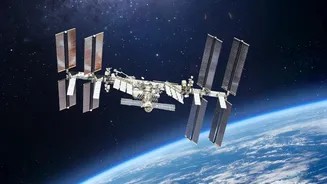
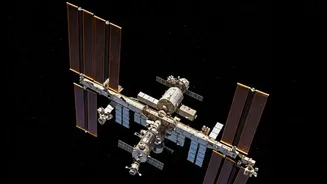
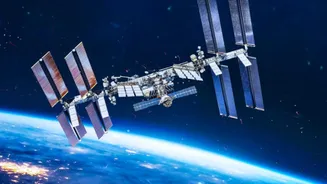
The International Space Station is a monumental achievement of engineering and global cooperation, hosting over 3,000 experiments since its launch. However, all machines have a lifespan. After three decades of continuous operation, the station is showing
its age. The primary structures are experiencing fatigue from constant thermal stress and micrometeoroid impacts. Maintaining and operating the aging hardware has become increasingly expensive for NASA and its international partners, making its continued operation beyond 2030 unsustainable. NASA plans a controlled deorbit, guiding the massive structure to a remote area of the Pacific Ocean known as Point Nemo. This retirement isn't an end to human presence in low-Earth orbit (LEO), but a transition to a very different model.
NASA's New Landlord-Tenant Model
Instead of building a new government-owned station, NASA is shifting its role from owner and operator to that of a customer. Through its Commercial LEO Destinations (CLD) program, the agency is funding private companies to build and operate their own space stations. NASA will then purchase services, such as crew time and lab space, from these commercial providers. This strategy is based on the success of similar programs for cargo and crew transport, which saw companies like SpaceX and Northrop Grumman take over routine supply runs to the ISS. The goal is to foster a robust commercial economy in LEO, where NASA is just one of many customers. This frees up NASA's resources to focus on its deep-space exploration goals, like the Artemis missions to the Moon and Mars, while ensuring a continued American presence in orbit.
The Commercial Contenders
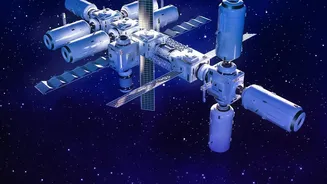
Several companies are in a race to become the first commercial landlords in orbit. Axiom Space plans to launch its first module to attach to the ISS as early as 2027. These modules will eventually detach to form the independent Axiom Station before the ISS is retired. Another major player is Starlab, a joint venture between US-based Voyager Space and European aerospace giant Airbus. Starlab is developing a single-module station focused on research and has already signed agreements with the European Space Agency. Blue Origin and Sierra Space are developing Orbital Reef, envisioned as a 'mixed-use business park' in space with a modular design based on an inflatable habitat. Each of these companies is taking a different approach, but all are vying for a piece of the emerging LEO market and NASA's support.
Benefits of a Commercial Future
This shift to commercial outposts promises significant benefits. For NASA, it means avoiding the multi-billion dollar cost of building and maintaining another station, instead paying for services on an as-needed basis. This could create a more sustainable and cost-effective presence in LEO. For the broader space industry, it opens up a new market for everything from in-space manufacturing and pharmaceutical research to private astronaut missions and space tourism. Companies could develop novel products in microgravity, such as superior fiber optics or 3D-printed human organs, without needing to be a major government contractor. By fostering competition, this new model could drive down costs and accelerate innovation, making space more accessible than ever.
Uncertainty on the Final Frontier
Despite the optimism, significant challenges remain. The primary concern is timing. Will these commercial stations be fully operational and certified before the ISS is deorbited around 2030? A gap in U.S. presence in LEO would be a major setback for scientific research and cede ground to other nations with a continuous presence, like China's Tiangong space station. There are also financial questions. Some analysts have questioned whether a truly viable business case exists for these stations without NASA as a guaranteed anchor tenant. The success of these commercial ventures will depend on their ability to attract a diverse range of customers beyond government space agencies. The recent turbulence in NASA's own strategy for the CLD program, with policy shifts in early 2026, highlights the complex interplay between government funding and private enterprise in this new frontier.