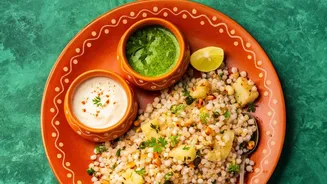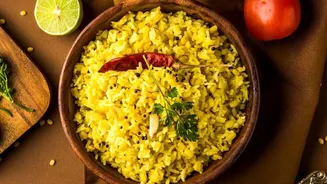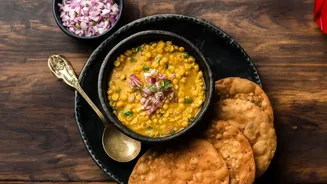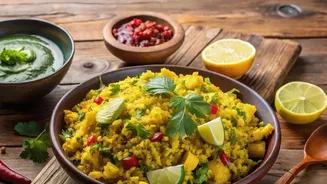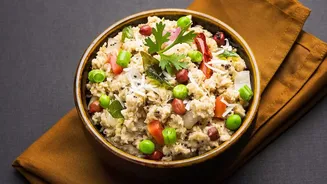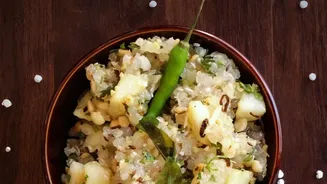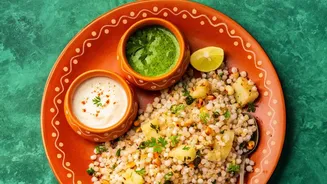


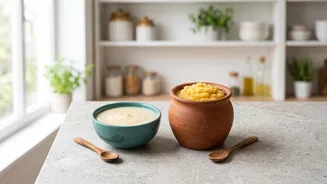
Dalia and Khichdi are staples in Indian kitchens, both celebrated as wholesome comfort foods. But when it comes to nutrition, these two beloved meals serve very different purposes. Let's break down how their ingredients shape their unique health benefits.
The Tale of Two Comfort Foods
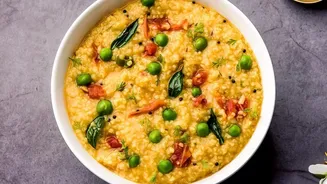
In the world of Indian cuisine, Dalia and Khichdi hold a special place. Both are revered as simple, nourishing, and easy on the stomach, often recommended during recovery from illness or as a light meal. Dalia, made from cracked or broken wheat, is a whole-grain porridge that can be prepared sweet or savoury. Khichdi, on the other hand, is a versatile one-pot dish combining rice and lentils, typically moong dal, with mild spices. While they share a reputation for being 'healthy', their core ingredients—wheat versus a rice-and-lentil combination—set them on distinct nutritional paths.
Ingredient and Protein Profile
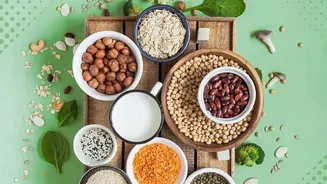
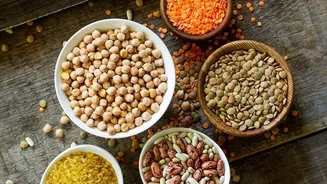
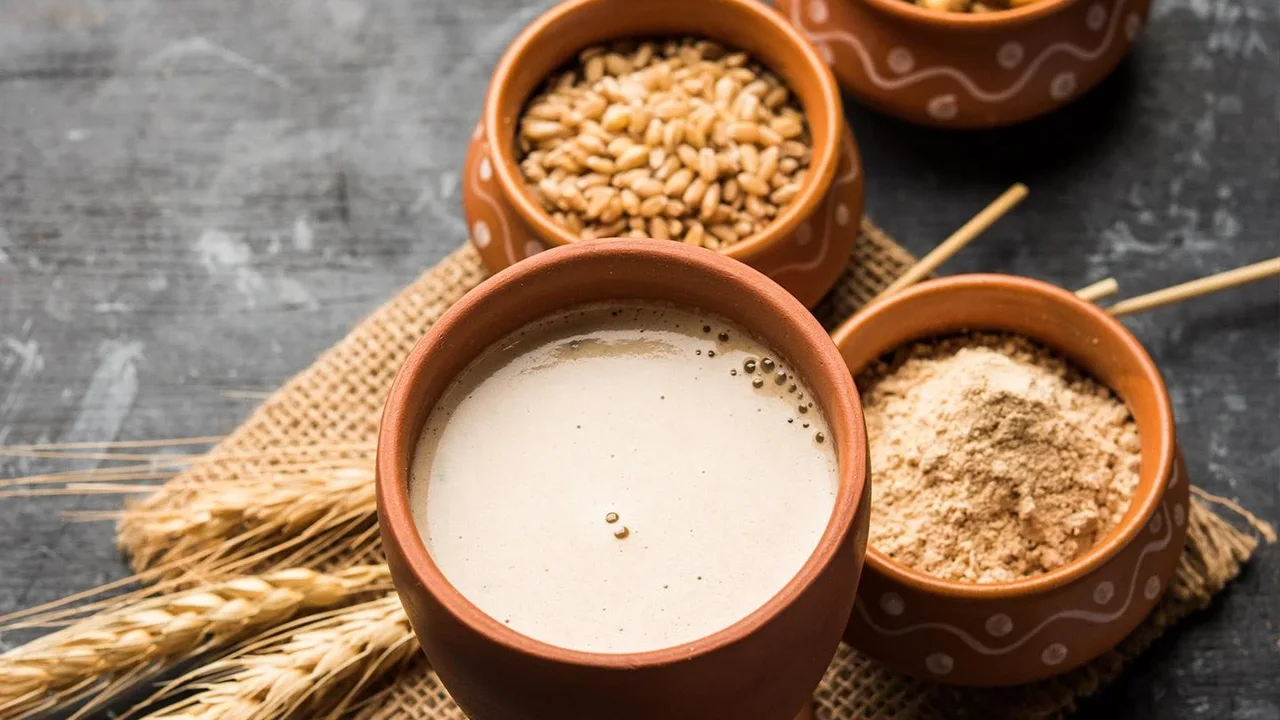
The fundamental difference lies in their composition. Dalia is a single-ingredient grain, specifically whole wheat with the bran and germ intact. This makes it a great source of complex carbohydrates and fibre. However, like most grains, Dalia is not a complete protein on its own, as it lacks certain essential amino acids. To make it a complete protein meal, it needs to be paired with a legume or dairy, such as in a Dalia khichdi with dal, or served with curd. Khichdi, by its very nature, solves this problem. The classic combination of rice and lentils is a textbook example of protein complementation. Rice is low in the amino acid lysine, which lentils have in abundance, while lentils are low in methionine, which rice provides. Together, they form a complete protein, containing all nine essential amino acids, making Khichdi a nutritionally whole meal in one bowl.
Fibre, Digestion, and Gut Health
When it comes to fibre, Dalia is the clear winner. As an unprocessed whole grain, Dalia is packed with dietary fibre, which is crucial for digestive health, preventing constipation, and promoting a feeling of fullness. The high fibre content makes it an excellent choice for weight management, as it keeps you satiated for longer and helps control cravings. Khichdi is generally considered lighter and easier to digest. Made with split moong dal, which is known to be gentle on the stomach, and soft-cooked rice, it is often the go-to meal during sickness or for those with sensitive digestive systems. While it contains some fibre from the lentils, a standard khichdi made with white rice has significantly less fibre than Dalia.
Calorie Count and Blood Sugar Impact
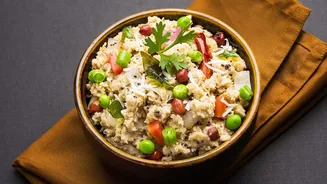
Calorically, both meals are quite moderate, though the final count depends heavily on preparation, especially the amount of ghee or oil used. A simple bowl of vegetable Dalia khichdi can range from 170-200 calories, while a plain moong dal khichdi is often around 200-260 calories. The more significant difference is their impact on blood sugar. Dalia has a low glycemic index (GI) of around 41, meaning it releases sugar into the bloodstream slowly. This provides sustained energy and makes it a particularly good choice for individuals managing diabetes. A standard khichdi made with white rice has a higher GI, but the presence of dal, with its protein and fibre, helps to moderate the blood sugar response compared to eating white rice alone.
The Verdict: Which One Should You Choose?
Neither Dalia nor Khichdi is universally 'better'; the ideal choice depends entirely on your personal health goals.
Choose Dalia when:
Your primary goal is weight management, as its high fibre content promotes fullness.
You need to manage blood sugar levels, thanks to its low glycemic index.
You are looking for a high-fibre breakfast to keep you energised throughout the morning.
Choose Khichdi when:
You need a light, easily digestible recovery meal after an illness or digestive upset.
You want a complete protein source in a single vegetarian dish, perfect for post-workout muscle repair.
You are looking for a comforting, balanced meal that nourishes without stressing the digestive system.