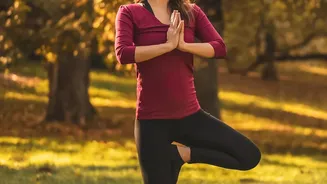









Tree Pose, or Vrksasana, is a classic yoga posture that builds balance, strengthens legs, and calms the mind. But if you find yourself wobbling, don't worry. This pose is about finding stability, not perfection. Let's explore some variations.
Understanding the Foundation of Tree Pose
In its full
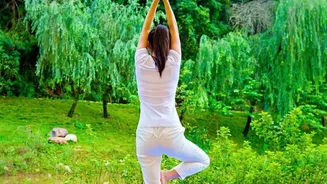
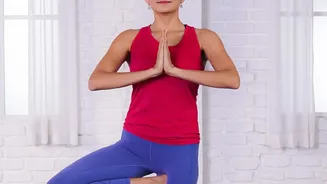
expression, Tree Pose involves standing on one leg with the sole of the other foot pressed firmly into the inner thigh. The hands are typically brought to the heart in a prayer position or extended overhead like branches. The goal is to stand tall and steady, rooting down through the standing foot while lengthening the spine. This posture is celebrated for improving balance, enhancing concentration, and strengthening the ankles, calves, and core. However, it's a deceptively challenging pose that requires a combination of strength, focus, and hip flexibility. The key is to progress at your own pace and remember one crucial rule: never place your foot directly on the knee joint of your standing leg, as this can cause strain.
Start with a 'Kickstand' for Grounding
The most accessible modification for Tree Pose is to use your lifted foot as a kickstand. Begin in Mountain Pose (Tadasana), standing tall with your weight evenly distributed. Shift your weight onto your left foot. Then, bend your right knee and place the ball of your right foot on the floor next to your left ankle, with your right heel resting against the ankle. This variation allows you to experience the alignment of the pose and engage your core without the intense challenge of balancing. It helps you build foundational strength and confidence while keeping a connection to the ground for support.
Move Up to the Calf
Once you feel steady in the kickstand position, the next step is to lift your foot to your calf. From Mountain Pose, shift your weight to one leg and lift the opposite foot, placing its sole against the inner calf of your standing leg. This is a significant step up in balance but remains a very stable and safe position. Remember to actively press your foot into your calf and your calf back into your foot. This creates an energetic lock that increases stability. Keep your hips level and facing forward, resisting the urge to let one hip jut out to the side.
Use a Wall for Steady Support
There is no shame in using props; in fact, they are smart tools for deepening your practice. A wall is an excellent partner for learning Tree Pose. You can stand with your back against the wall, which provides full support as you find your balance. Alternatively, stand beside a wall and place one hand on it for light support. This allows you to experiment with lifting your foot higher, perhaps to the inner thigh, without the fear of falling. The wall gives you the freedom to focus on proper alignment, such as keeping your hips square and your spine long, before you take the pose to the center of the room.
Try a Chair for Balance and Confidence
Similar to a wall, a chair can offer reliable support and help you build confidence. You can practice Tree Pose while seated on the edge of a chair, which removes the balance element entirely but still allows you to work on hip opening and upper body posture. For a standing variation, place a chair beside you and rest a hand on its back for stability. This method is particularly helpful for anyone working with balance issues or leg weakness, as it provides a safety net while you build the necessary strength in your standing leg.
Experiment with Arm Variations
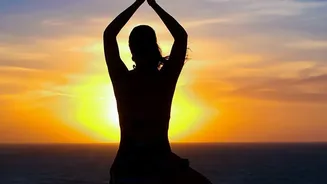
The position of your arms can significantly change the feel and challenge of the pose. While hands at the heart center (Anjali Mudra) is the classic position, you have other options. Bringing your hands to your hips can sometimes feel more grounding and stable. Extending your arms out to the sides like a 'T' can help with balance, while reaching them overhead like branches creates a feeling of lift and expansion. For an added challenge, you can introduce gentle movement, swaying your arms like branches in the wind to test your core stability.
Focus Your Gaze and Your Breath
A key component of any balancing pose is 'drishti', a steady, focused gaze. Find a non-moving point in front of you at eye level and rest your gaze there. This simple act dramatically calms the mind and helps stabilize the body. If your mind wanders, your body will likely follow. Pair this focused gaze with a steady, even breath. Holding your breath creates tension, while smooth inhales and exhales promote calm and stability. Focusing on your drishti and breath can be more important than how high you lift your leg.