







Beyond the Traditional Safety Kit
For decades, the solo female traveller’s toolkit in India has been a mix of practical, analogue solutions and gut instinct. It involved booking the upper berth for privacy, carrying pepper spray, sharing PNR details with family, and strategically making
a ‘phone call’ to a waiting father or husband upon arrival, even if no one was there. This self-reliance, while a source of strength, was born from a defensive posture — a mental checklist of everything that could go wrong. It framed solo travel not just as an adventure, but as a risk to be managed. The journey was often bookended by worry: the family’s before departure, and your own during the trip.
The New Digital Safety Net
Enter the localized digital safety network. This isn't just one app or a single platform. It’s a burgeoning ecosystem of tools and communities that women are using to build a new layer of security. This includes hyper-local WhatsApp groups, city-specific Facebook communities like ‘Goa Girl,’ and features within larger apps that are adapted for Indian conditions. Unlike generic SOS apps, these networks are powerful because they are contextual. They understand that safety isn't just about an emergency button; it's about avoiding the emergency in the first place through shared knowledge and community support.
From Planning to Arrival
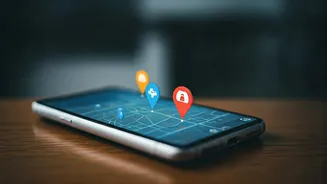
So how does this work in practice for a train journey? It begins during the planning phase. On a dedicated travel group, a woman might ask, “Is it safe to get off at Panvel station at 11 PM? What’s the best way to get a reliable taxi?” Within minutes, she can receive advice from other women who have made that exact journey. During the trip, live location sharing goes beyond just family. Apps like Safetipin or even Google Maps’ built-in feature can be shared with a trusted circle of friends or fellow travellers who can monitor the journey. If a train is unexpectedly rerouted or delayed, the community becomes a real-time information hub. Some groups even facilitate informal ‘buddy systems,’ connecting women who happen to be travelling on the same train or route.
More Than Just an App
The true innovation here is the blend of technology and community. An algorithm can’t tell you that the pre-paid auto-rickshaw stand at a particular station is poorly lit and notorious for overcharging after 10 PM, but a woman who was there last week can. This crowdsourced wisdom transforms the journey. It's the difference between feeling alone in a crowd and feeling like you have a network of digital lookouts. This sense of solidarity is profoundly empowering. It reframes the solo traveller not as a potential victim who needs protection, but as a capable individual who is part of a resourceful and supportive community. It’s a safety net woven from data packets and human experience.
Navigating the Limitations
Of course, these networks are not a perfect solution. Their effectiveness is often dependent on patchy internet connectivity, a significant issue on many Indian train routes. The advice shared in informal groups, while mostly well-intentioned, is unvetted and requires a degree of user discretion. Furthermore, these tools are a supplement to, not a replacement for, institutional responsibility. They empower the individual, but the larger goal remains a society where such elaborate safety planning is no longer a prerequisite for a woman to travel freely. The onus of safety should not be entirely on the traveller. However, until that systemic change is complete, these digital tools are a crucial and effective adaptation.