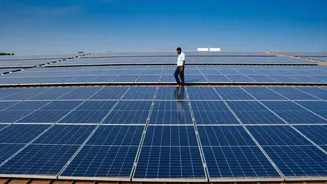










A Sun-Soaked National Ambition
India's commitment to clean energy is impossible to miss. The nation is rapidly expanding its renewable capacity, with a significant push towards rooftop solar. The government's PM-Surya Ghar scheme, for instance, provides substantial subsidies to encourage
homeowners to install grid-connected solar systems, aiming to add massive capacity from residential rooftops alone. This policy push has ignited the sector, with installations surging. The goal is not just to generate clean electricity but to empower households, reduce reliance on traditional power grids, and create a green economy. The vision is clear: a future where millions of homes generate their own power from the sun.
The Widening Skills Chasm
However, this exponential growth in demand has exposed a serious vulnerability: a shortage of skilled workers to safely and effectively install these systems. While the targets are set in gigawatts, the foundation required to achieve them is measured in people—specifically, trained technicians. The successful implementation of national solar programs hinges on a skilled workforce capable of installation, maintenance, and support. The government itself acknowledges this, with schemes anticipating the need for around 100,000 new solar PV technicians. The gap between this need and the current availability of properly trained personnel is a bottleneck that threatens to slow progress and compromise quality.
More Than Just Mounting Panels
A common misconception is that rooftop solar installation is a straightforward construction job. In reality, it is a multi-disciplinary trade demanding a specific and varied skill set. A certified technician must be able to conduct a site assessment, analyze the structural integrity of a roof, and design a system for optimal energy generation. They need to be proficient in electrical wiring, connecting panels to inverters, and ensuring the system integrates safely with the grid. This includes understanding net-metering policies and navigating approvals from local distribution companies (DISCOMs), which can be a significant hurdle. Beyond technical know-how, safety protocols are paramount to prevent electrical hazards and structural damage. It's a profession that blends the skills of an electrician, a civil engineer, and a project manager.
The Rise of the Solar Academies
To bridge this skills chasm, a new ecosystem of training and certification is emerging, forming a de facto 'Rooftop-Solar Academy'. Government bodies like the National Institute of Solar Energy (NISE) and the Skill Council for Green Jobs (SCGJ) are at the forefront of this effort. NISE, an autonomous institute under the Ministry of New and Renewable Energy, runs numerous training programs, including the well-known 'Suryamitra' initiative, to develop a cadre of skilled solar technicians. The SCGJ, established by the Ministry of Skill Development, works to define job roles, create qualification standards, and certify trainers and workers for the green economy. Under the PM-Surya Ghar yojana, these organisations are tasked with upskilling thousands of existing electricians and training new candidates through targeted, often short-term, residential courses that combine theory with practical, on-the-job training.
The High Cost of Cutting Corners
Ignoring the skills gap is not an option. The consequences of improper installation are severe, ranging from underperforming systems that don't deliver promised savings to catastrophic failures like roof collapses or electrical fires. Poorly executed projects not only pose a safety risk but also erode consumer confidence, which is critical for the widespread adoption of rooftop solar. A fragmented ecosystem with inconsistencies in quality can undermine the entire industry's reliability. Furthermore, if India is to meet its ambitious climate and energy goals, it cannot afford inefficiencies. Ensuring every installed system performs optimally over its 25-year lifespan depends directly on the quality of the initial installation and subsequent maintenance. Investing in skills is, therefore, a direct investment in the long-term success and safety of the country's solar future.