




Beyond the Traditional Simulator
For decades, the gold standard for aerospace training has been the full-flight simulator (FFS). These behemoths, costing crores of rupees, are marvels of engineering, perfectly replicating an aircraft's cockpit on a motion platform. They are incredibly
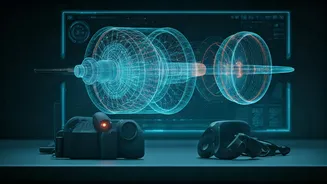
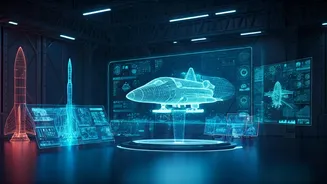
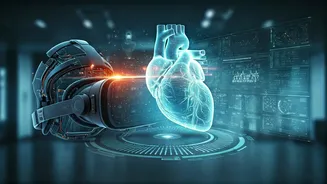
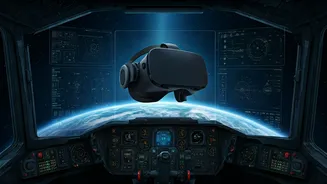
effective but also incredibly expensive, bulky, and limited in availability. This creates a bottleneck, restricting access and driving up training costs. Now, education and industry leaders are turning to a more flexible and scalable solution: virtual reality (VR) classrooms powered by artificial intelligence (AI). Instead of one massive simulator, imagine a room of trainees, each wearing a VR headset, fully immersed in a virtual aircraft hangar or cockpit.
The Power of Total Immersion
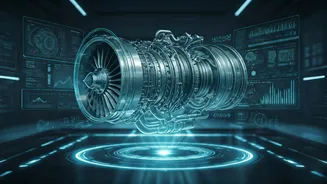
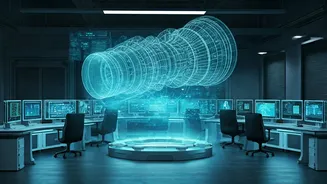
The first piece of this puzzle is VR. Unlike looking at a screen, a VR headset places the trainee directly inside the environment. They can walk around a virtual jet engine, trace fuel lines with their hands, or sit in a cockpit where every switch, dial, and display is interactive. This level of immersion creates 'muscle memory' and spatial awareness that flat-screen training simply cannot replicate. For maintenance crews, this could mean practising a complex repair on a virtual engine before ever touching the real thing. For pilots, it means experiencing the true feeling of being in the cockpit, able to look around freely and react to their surroundings in a natural way.
Enter the AI Tutor
This is where the real revolution happens. The VR environment provides the 'where,' but the integrated AI tutor provides the 'what' and 'how.' This isn't just a pre-programmed scenario; it's a dynamic, adaptive instructor. The AI can monitor a trainee's performance in real-time. It tracks eye movements to see if a pilot is checking the right instruments during a critical procedure. It can introduce unexpected events, like an engine failure or a sudden change in weather, and analyse the trainee's response. If a mistake is made, the AI doesn't just flag it; it can pause the simulation, offer corrective feedback, and even replay the scenario with guidance. This personalises the learning process, allowing trainees to progress at their own pace and focus on areas where they are weakest.
Safer, Cheaper, and More Effective
The benefits of this combined approach are transformative. Firstly, safety is paramount. Trainees can practice responding to catastrophic failures and dangerous, once-in-a-career emergencies in a completely risk-free environment. These are scenarios that are too hazardous to replicate in a real aircraft and often difficult to programme into traditional simulators. Secondly, the cost savings are immense. While high-end VR hardware is not cheap, it pales in comparison to the cost of building, housing, and maintaining a full-flight simulator. This democratises access to high-quality training. Multiple VR stations can be set up for the price of a fraction of one FFS, allowing for more concurrent training and faster upskilling of personnel.
The Future of Skilling in India
For a nation like India with a booming aviation market and a growing defence-industrial base, this technology is not just a novelty; it's a strategic necessity. Companies like CAE and research at institutions like Embry-Riddle Aeronautical University are already pioneering these systems. Adopting VR/AI training can help rapidly scale the pool of qualified pilots, maintenance engineers, and air traffic controllers needed to support this growth. It ensures that the workforce is trained on the latest aircraft models and can handle complex situations with confidence. The same principles can be applied to other high-skill sectors, from complex surgery to advanced manufacturing, positioning India to be a leader in next-generation vocational training.