



The Soulful Songs of the Desert
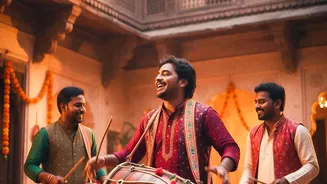
The air at the Pushkar Mela hums with melodies that have echoed through the Thar Desert for centuries. At the heart of this musical tradition are the Manganiyars, a community of hereditary Muslim folk musicians. For generations, they have served as the storytellers
and genealogists for their patrons, primarily the Hindu Rajput communities, performing at births, weddings, and festivals. Their music is a unique blend of devotional and secular traditions, praising both Sufi saints and the Hindu god Krishna. Using instruments like the kamaicha, a complex bowed lute, their soulful voices carry tales of heroism, romance, and history, creating a sound that is inextricably linked to the desert landscape. These performances are not mere entertainment; they are an oral history passed down through generations, making them a vital part of the Mela's authentic atmosphere.
The Mesmerising Kalbelia Dance
Perhaps the most iconic performance at Pushkar is the Kalbelia dance, a vibrant and sensuous art form recognised by UNESCO as an Intangible Cultural Heritage of Humanity. Performed by women of the Kalbelia tribe, who were traditionally snake charmers, the dance movements are serpentine and fluid, mimicking the grace of a serpent. Dressed in flowing black skirts called 'lehengas' embroidered with colourful patterns, the dancers twirl and sway with unbelievable flexibility. The music is driven by the hypnotic sounds of the 'pungi' or 'been', the snake charmer's woodwind instrument, accompanied by percussion from instruments like the 'dholak' and 'dufli'. This energetic and graceful performance is a celebration of any joyful moment in the community and has become a major attraction, captivating audiences with its raw energy and beauty.
A Spectrum of Rajasthani Folk Arts
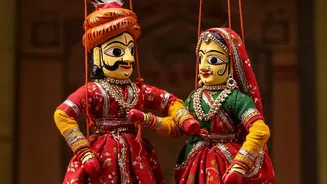
Beyond the Manganiyars and Kalbelias, the fair is a stage for a wide array of Rajasthani cultural expressions. The Ghoomar, a traditional community dance of Rajput women, is a vision of grace, where veiled dancers perform elegant circular movements in colourful skirts. Another impressive sight is the Bhavai dance, a difficult ritualistic performance where skilled artists dance while balancing up to nine brass pitchers on their heads. The fair also features the Gair dance, a powerful performance by men who move in circles striking wooden sticks, creating a strong percussive rhythm. These performances are complemented by traditional Kathputli (puppet shows), which narrate ancient tales and local legends, offering entertainment for all ages and another glimpse into the state's rich artistic heritage.
More Than Just a Show
The cultural events at Pushkar Mela are deeply woven into the fabric of the festival. The official program, typically running for about eight days with dates for 2026 expected from November 17th to 24th, includes a packed schedule of performances alongside other events. Visitors can witness everything from school group dances and local folk artist showcases to larger evening concerts. Competitions like the longest moustache contest, turban tying, and 'matka phod' (pot breaking) provide further insight into local traditions. This blend of organised stage shows and spontaneous street performances ensures that the spirit of Rajasthani culture is everywhere. It’s a reminder that these arts are not relics of the past but are a living, celebrated part of community identity today.