

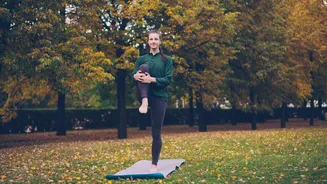
Master the Classic Tree (Vrikshasana)
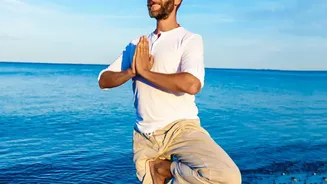
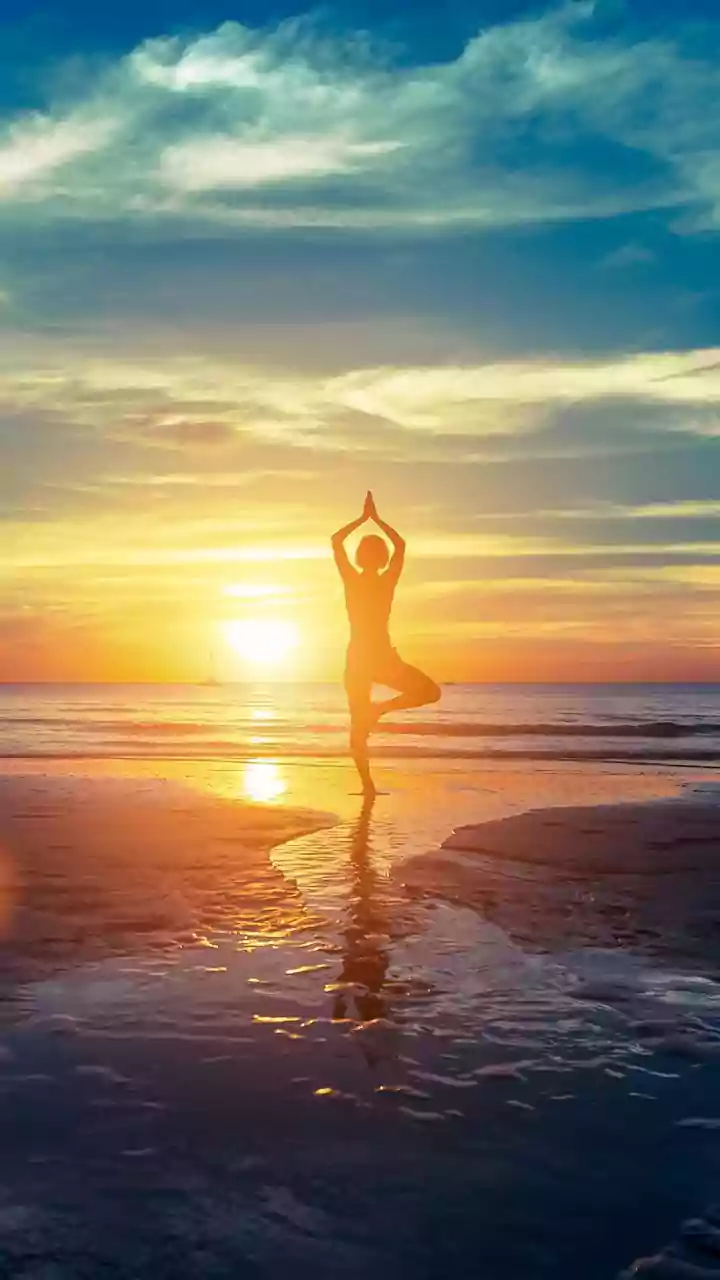
Before branching out, master the trunk. Stand tall and shift your weight into one foot. Place the sole of your other foot on your inner ankle, calf, or thigh—avoiding the knee joint. Press the foot and standing leg firmly into each other to create stability.
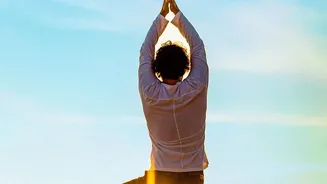
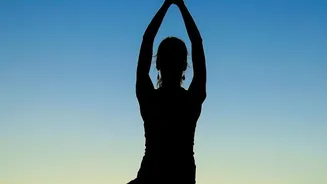
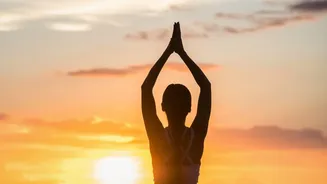
Bring your hands to your heart center or extend them overhead like branches. The key is to find a Drishti, a non-moving focal point, to steady your gaze and mind. This classic pose builds concentration, strengthens your legs and core, and establishes the foundation for all standing balances. Mastering the stillness here is the first step toward building confidence.
Find Support with a Wall Assist
If full Tree Pose feels wobbly, the wall is your best friend. Stand with your side to a wall, about an arm’s length away. Place your nearest hand on the wall for support. Begin to lift your opposite leg into your preferred Tree position—ankle, calf, or thigh. Use the wall as much or as little as you need. This variation allows you to experience the alignment and muscle engagement of the pose without the fear of falling. It builds muscle memory and confidence, teaching your body what stability feels like so you can eventually move away from the wall and find balance on your own.
Open Hips in Half Lotus Tree (Ardha Padmasana)
For those comfortable in the classic pose, this variation introduces a deeper hip-opening element. From your standing leg, carefully draw your other foot up, placing the top of the foot onto the opposite hip crease. The sole of the foot should face the sky. This requires significant external rotation in the hip, so move slowly and never force it. If there is any pain in the knee, revert to the classic pose. This variation intensifies the stretch, challenges your balance with an asymmetrical load, and prepares the body for more advanced postures like full Lotus.
Challenge Your Gaze with Eyes Closed
Balance is a collaboration between your inner ear, your eyes, and proprioception—your body's awareness in space. By closing your eyes in Tree Pose, you remove one of your primary tools for stability. This forces your body to rely entirely on its internal sense of balance. You will likely sway and wobble, and that’s the point. Start by closing your eyes for just a second or two, gradually increasing the duration. This practice dramatically enhances your proprioceptive skills and builds a deep, unshakable trust in your body’s ability to find its center.
Deepen the Stretch with a Side Bend
Once you feel steady in your Tree Pose with arms extended overhead, you can introduce a side bend to challenge your core and stability in a new plane. Inhale to lengthen your spine, and as you exhale, gently bend your torso toward the side of your lifted leg. Keep your core engaged to protect your lower back. This variation, sometimes called Swaying Tree, not only tests your balance but also provides a beautiful stretch along the side body. It teaches you to remain grounded through your standing leg while finding fluidity in your upper body.
Explore Advanced Expression with a Toe Lock
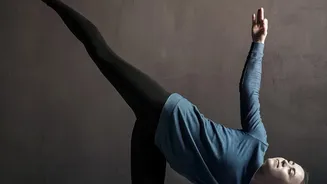
For seasoned practitioners, grabbing the big toe of the lifted leg offers a frontier of balance, flexibility, and focus. From a stable Tree Pose, bend your torso forward with a flat back and catch the big toe of your lifted foot with your peace fingers. You can stay here, folded forward, or begin to extend the leg out to the side for an extended variation like Utthita Hasta Padangusthasana. This requires immense hamstring flexibility, core strength, and concentration. It’s a humbling and powerful posture that integrates all the lessons of the previous variations: stability, hip openness, focus, and a willingness to playfully explore your limits.