






The Other Pilot Takes Command
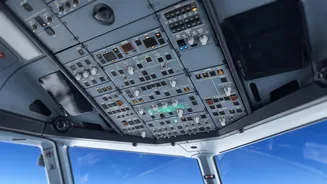
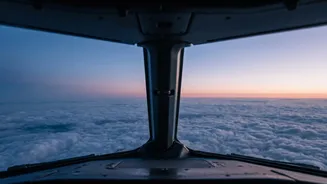
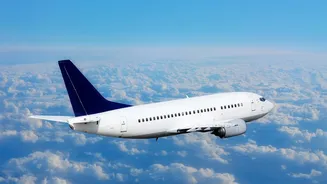
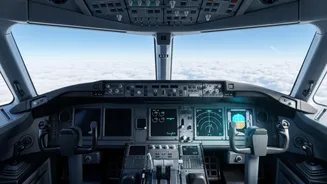
The most immediate and important safety feature is the person in the other seat. Commercial airliners are always flown by two highly qualified pilots: a Captain and a First Officer (or co-pilot). Both are fully capable of flying and landing the aircraft
alone. Should one pilot become incapacitated, the other's first responsibility is to take full control of the aircraft. Standard procedure involves the remaining pilot asserting control, often by saying "I have control," and then managing the situation. They will then fly the plane, navigate, and communicate with air traffic control. The roles are distinct but the training is overlapping, ensuring a seamless handover. From a passenger's perspective, the transition should be unnoticeable. The flight will continue to be managed safely and professionally as the remaining pilot diverts to the nearest suitable airport.
A Team Effort in the Air
The safety net extends far beyond the two pilots. The entire crew operates under a framework known as Crew Resource Management (CRM). Originating from NASA research in the 1970s which found that human error, not mechanical failure, was behind most accidents, CRM transformed aviation culture. It moves away from a rigid hierarchy and empowers all crew members, including cabin crew, to speak up if they see something wrong. In an incapacitation event, the cabin crew are crucial. They can provide medical assistance to the affected pilot and secure the cockpit to ensure the flying pilot is not interfered with. This collaborative approach ensures that all available human resources are used effectively to manage the workload, communicate clearly, and make sound decisions under pressure.
The Autopilot as a Powerful Assistant
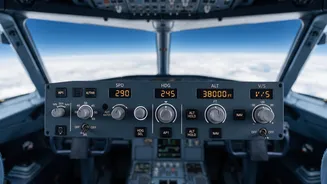
Modern aircraft are equipped with sophisticated automation that provides a significant layer of support. The autopilot is not a replacement for a pilot but rather an advanced tool that can be programmed to manage the aircraft’s path, speed, and altitude. In an emergency, this is invaluable. The remaining pilot can engage the autopilot to handle the physical task of flying the plane, freeing them up to focus on other critical tasks like assessing the situation, communicating with the ground, and preparing for landing. While commercial airliners cannot yet land themselves without any pilot input, the autopilot can execute a highly precise, pre-programmed instrument landing in low visibility, which it does under pilot supervision. This reduces the single pilot's workload during the most critical phase of flight.
Eyes and Ears on the Ground
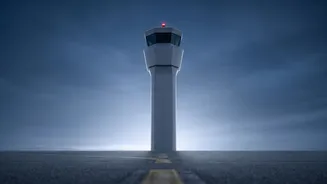
No flight is ever truly alone. In an emergency, the crew is in constant contact with Air Traffic Control (ATC). Once a pilot declares an emergency, their flight immediately becomes the top priority. Controllers clear the airspace, provide weather updates, and guide the aircraft toward the nearest suitable airport. They also coordinate with emergency services on the ground, ensuring fire and medical teams are ready and waiting when the plane lands. In an extreme scenario, such as the 2022 case where a passenger with no flying experience had to land a small plane in Florida, air traffic controllers can even provide step-by-step instructions to help guide the aircraft down safely. This ground support system is a vital part of the multi-layered safety net.
Training for the Unthinkable
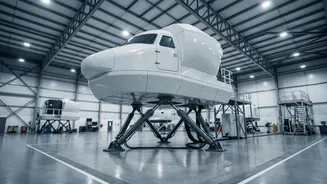
Ultimately, passenger safety relies on the rigorous and continuous training that pilots and crews undergo. Pilots repeatedly train for emergency scenarios, including incapacitation, in highly realistic full-flight simulators. These sessions build not just procedural knowledge but also the muscle memory and calm decision-making needed to act effectively under immense stress. Pilots practice these drills every six to twelve months to ensure their skills remain sharp. This relentless preparation means that when a real emergency occurs, the response is not one of panic but of practiced, professional execution of a well-rehearsed plan.