




The Daily Crush on Mumbai's Lifeline
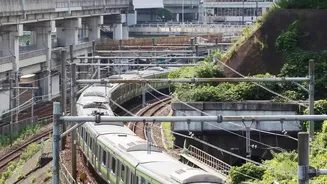
Mumbai's suburban railway network is one of the busiest in the world, carrying over 6.5 million passengers daily. This immense volume leads to what is often termed 'super-dense crush load', a situation where trains carry far more people than their intended
capacity. The core of the problem has long been track congestion. The same lines used by suburban local trains are also shared by long-distance passenger trains and, crucially, slow-moving goods trains. This mixed traffic forces local services into a complex, often delayed, dance for track space, making it nearly impossible to significantly increase the frequency of services, especially during peak hours. The result is a system constantly operating at its saturation point, where a single delay can have a cascading effect across the network.
A Separate Highway for Goods Trains
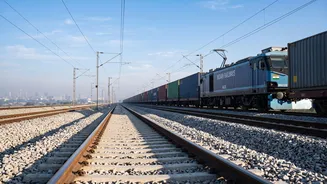
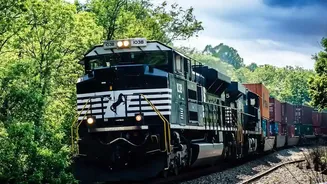
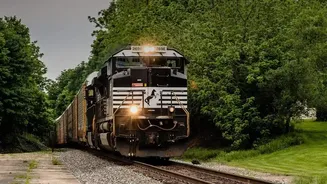
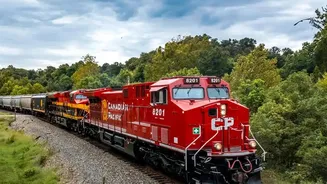
Enter the Dedicated Freight Corridor (DFC), a project designed to untangle India's congested railway network. The key idea is simple: build separate, high-speed railway lines exclusively for transporting goods. For Mumbai, the most important of these is the Western Dedicated Freight Corridor (WDFC), a 1,506-kilometre route connecting Dadri near Delhi to Jawaharlal Nehru Port (JNPT) in Navi Mumbai. After nearly two decades of work, the final sections of the WDFC were inaugurated on September 8, 2026, making the entire corridor fully operational. This 'freight highway' is built to handle heavier loads and allows for double-stack container trains to run at higher speeds, a significant upgrade from the existing system.
How It Frees Up Tracks for Commuters
The primary benefit for Mumbai's commuters comes from what the WDFC takes away from the existing suburban lines. By shifting the bulk of goods trains from the shared passenger network onto their own exclusive tracks, the WDFC effectively decongests the routes used by local trains. Previously, a slow-moving freight train could occupy a track for a significant amount of time, holding up multiple local services behind it. With the WDFC now operational, these freight trains will largely bypass the passenger network, particularly on the congested stretches leading into the city. This frees up invaluable time slots and track capacity, giving railway operators the flexibility to run more passenger services.
More Trains, Better Punctuality?
The newly available capacity opens the door for tangible improvements. Railway officials have stated that the decongestion will allow for more passenger trains to be operated. For commuters, this could translate into increased frequency of local trains, helping to reduce the perilous gap between services during peak hours and distributing the passenger load more evenly. This could lead to less crowding in each train. Furthermore, with fewer conflicts with goods trains, the punctuality of suburban services is expected to improve. While recent updates to the Mumbai local timetable have focused on optimising existing services rather than adding a large number of new ones, the completion of the WDFC is the critical first step that enables future expansion. In September 2026, the Railway Minister announced a target to increase Mumbai's daily local services from around 3,200 to 3,500 by 2030, a goal supported by this new infrastructure.
The Road Ahead and What to Expect
While the WDFC is now officially complete, the full benefits for Mumbai's commuters will not be instantaneous. Integrating the new freight routes and redesigning passenger timetables to leverage the freed-up capacity is a complex process. The change involves not just running more trains but also coordinating with other ongoing upgrades, such as the introduction of new 15-car rakes and the advanced 'Kavach' signalling system, which aims to further reduce the time between trains. The plan to introduce 238 new AC local rakes by 2030 is also part of this broader vision for a modernised suburban network. Commuters should therefore see the WDFC's completion as the unlocking of potential—a foundational change that will enable a series of incremental improvements over the coming months and years, paving the way for a faster, safer, and less crowded journey.