







What is Microgravity?
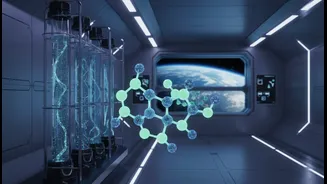
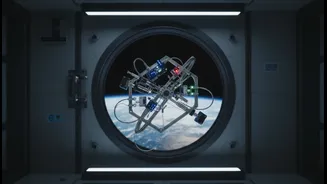
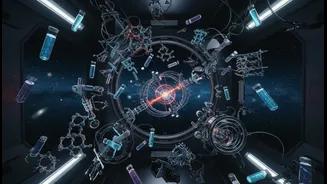
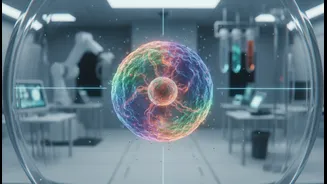
Imagine a world without weight, where heavy and light objects float together and liquids don’t settle. This is the environment of microgravity, or 'zero-g', experienced in orbit. On Earth, gravity’s constant pull influences everything, from how liquids mix
to how living cells grow. By escaping this fundamental force, scientists can observe physical and biological processes in their purest form. In this unique laboratory, phenomena that are masked by gravity on Earth become clear. This allows for experiments in biology, materials science, and medicine that are simply not possible on the ground. For India, mastering research in this environment is not just an academic exercise; it is the critical next step in becoming a true space-faring power with a sustained presence beyond our planet.
From Space Labs to Earthly Gains
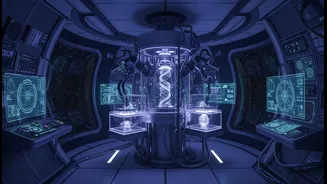
The benefits of microgravity research have profound implications back on Earth. For medicine, the environment allows for the growth of larger, more perfect protein crystals, which is crucial for designing new drugs to fight diseases like cancer. Without the pull of gravity, human cells can grow into three-dimensional structures that more closely resemble tissues in the body, offering better models for studying diseases and testing therapies.
Beyond health, microgravity is a frontier for materials science. The absence of sedimentation and convection allows for the creation of unique metal alloys and flawless optical fibres that are impossible to manufacture on Earth. ISRO's recent focus on microgravity experiments, from studying muscle deterioration to crop germination, aims to harness these benefits. Findings could lead to treatments for age-related muscle loss and new agricultural techniques for extreme environments. This research transforms space exploration from a distant spectacle into a direct driver of national innovation and public well-being.
India’s Zero-G Game Plan
India's strategy for microgravity research is multi-pronged and ambitious. A significant step was the recent series of experiments conducted by an Indian astronaut-in-training aboard the International Space Station (ISS) as part of a collaboration with NASA. These studies focused on key challenges for long-duration spaceflight, including muscle health, growing edible plants like moong and methi, and cultivating microalgae and cyanobacteria for potential food and life-support systems. Valuable data was also gathered on how humans interact with technology in a weightless environment.
To build on this, ISRO’s Human Space Flight Centre recently hosted the first National Workshop on Microgravity Research in July 2026, bringing together scientists, industry leaders, and startups to create a robust domestic ecosystem for this field. This initiative aims to ensure that India's upcoming space platforms are fully utilised for cutting-edge science. The immediate goal is to integrate a suite of experiments into the Gaganyaan missions, which will mark India’s historic first human spaceflight.
The Ultimate Goal: A Lab in the Sky
The long-term vision for this scientific push is the Bharatiya Antariksha Station (BAS), India's own modular space station. Planned to be operational by 2035, with its first module slated for a 2028 launch, the BAS is being designed from the ground up as a permanent orbiting laboratory. It will provide a sustained platform for Indian scientists to conduct long-duration experiments in microgravity, moving beyond the short-term opportunities offered by current missions.
The station is foundational to India’s grander ambitions, including sending an Indian to the Moon by 2040. Living and working on the BAS will provide invaluable experience in mastering life support systems, robotics, and the physiological challenges of extended space travel. By building this capability, India will join an elite group of nations with a permanent human presence in space, cementing its status as a leader in scientific exploration and technological innovation.