





The Flex of Colossal Scale
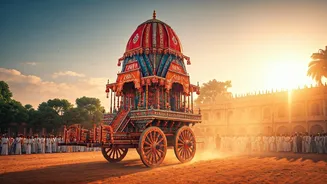
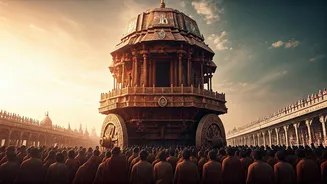
First, let's talk numbers. The Rath Yatra isn't a gathering; it's a human ocean. Every July, the coastal town of Odisha swells as over a million devotees descend upon its streets. They come from every corner of India and the world, not as tourists, but
as participants in a divine procession. The sheer energy of this crowd—singing, chanting, and moving as one—is a spectacle that few events on Earth can match. This isn't about organised seating or VIP sections. It's a raw, unfiltered convergence of humanity, all focused on a single purpose: to catch a glimpse of the Lord of the Universe on His annual journey. Managing this is a logistical feat, but its organic, devotional nature is the real marvel.
The Flex of Building Moving Temples
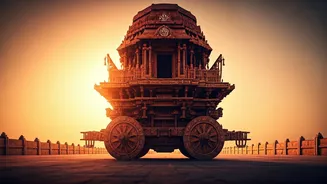
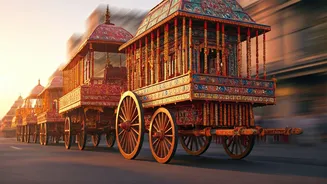
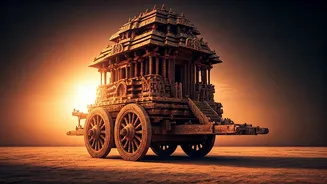
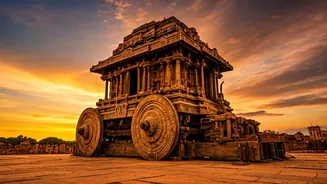
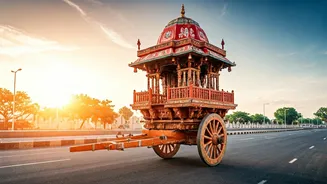
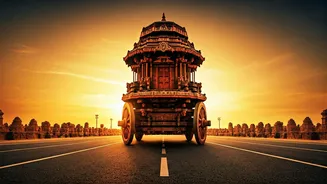
The stars of the show are, of course, the three chariots. But these aren't just decorated floats. Each year, three massive wooden chariots are built from scratch, following ancient specifications passed down through generations. Lord Jagannath’s chariot, Nandighosha, stands at a staggering 45 feet tall with 16 wheels. Lord Balabhadra’s Taladhwaja and Devi Subhadra’s Darpadalana are similarly immense. Made without a single metal nail, using specific types of wood sourced from designated forests, their construction is a year-long ritual in itself. After the festival, the wood is used as fuel in the temple's mega-kitchen. Building and dismantling what are essentially moving temples every single year is a flex of tradition, craftsmanship, and unwavering commitment.
The Flex of Royal Humility
In a world often obsessed with status, the Rath Yatra offers a powerful lesson in humility. One of its most significant rituals is the ‘Chhera Panhara’. Here, the Gajapati King of Puri, considered the foremost servant of Lord Jagannath, performs the duties of a sweeper. He climbs onto each of the three chariots and sweeps the platforms with a golden broom before sprinkling sandalwood water. This act symbolises that before the divine, everyone is equal—even a king is but a humble devotee. In an age of political pageantry, this quiet act of service by a royal figure, performed in front of millions, is perhaps the most profound flex of all, demonstrating that true power lies in devotion, not dominion.
The Flex of Divine Accessibility
For most of the year, Lord Jagannath, along with his siblings Lord Balabhadra and Devi Subhadra, resides within the sanctum sanctorum of the main temple, where entry is restricted. But the Rath Yatra is built on a revolutionary concept: the deities leave their temple to mingle with the masses. The journey from the main temple to the Gundicha Temple is a symbolic act of the divine coming out to meet everyone, regardless of caste, creed, or social standing. For those nine days, the Lord is not confined to stone walls but is on the ‘Bada Danda’ (Grand Road), accessible to all. This open-armed inclusivity, where God ventures out to bless the common person, is a spiritual statement of unparalleled generosity.
The Flex of People Power
The colossal chariots are not moved by engines or animals. They are moved by people. Thick, coir ropes are attached to the front of each chariot, and it is the raw, collective strength of thousands of devotees pulling in unison that sets these wooden giants in motion. This act is the physical manifestation of ‘bhakti’ (devotion). The belief is that pulling the Lord's chariot is an act of immense religious merit, a way to serve the divine directly. The sight of thousands of hands on a single rope, straining with faith and joy to move their beloved deity, is the ultimate testament to the power of collective belief. It’s a reminder that the greatest force isn’t mechanical; it’s the untamed power of human faith.