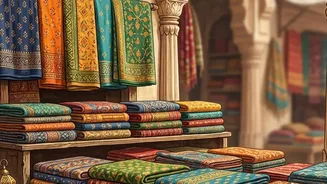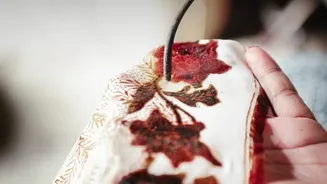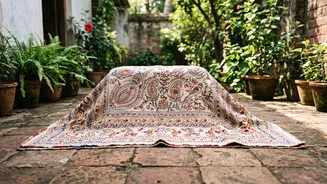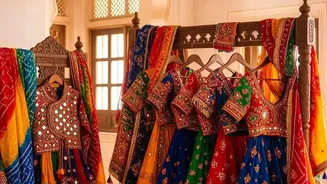


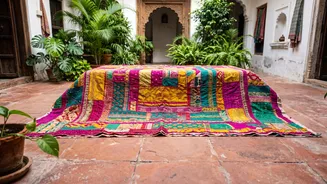
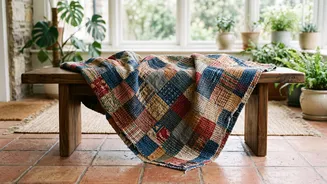

In the villages of Bengal, a beautiful tradition gives old fabrics a second life. Born from necessity and creativity, Kantha is a centuries-old craft where women transform worn-out saris into exquisite quilts, stitching stories into every layer.
A Stitch Born from Thrift
Kantha
has its origins in the resourcefulness of rural women in the Bengal region, encompassing present-day West Bengal, Bangladesh, and parts of Odisha. The word 'Kantha' is believed to be derived from the Sanskrit word 'kontha', meaning rags. For at least 500 years, women have been layering soft, worn-out cotton saris and dhotis, stitching them together to create everything from light blankets (lep-kantha) to bedspreads (sujni-kantha). This was not a craft commissioned by royalty but a domestic art form passed down from mother to daughter. It was born out of a desire for frugality and the need to provide warmth for the family, especially for swaddling newborns in the belief it would bring them good fortune. The process was simple yet profound: take what is old and, with patience and thread, make it new and beautiful again.
The Language of the Needle
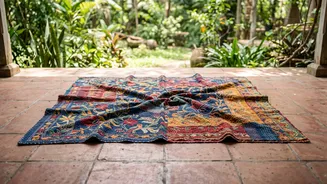
The heart of Kantha is the humble running stitch, known as the 'kantha phor'. This simple stitch, when repeated in dense, varied patterns, creates the craft's signature wrinkled and wavy texture. Artisans traditionally used threads pulled from the borders of the old saris themselves, ensuring no part of the fabric went to waste. Beyond merely binding the layers of cloth, the embroidery became a form of storytelling. Without formal training, women stitched motifs inspired by their lives and beliefs. Common designs include the lotus flower, symbolising purity; the Tree of Life, representing family continuity; and various animals like fish, birds, and elephants. Many quilts, known as Nakshi Kantha, feature elaborate narrative scenes from mythology, folklore, and daily village life, making each piece a unique visual diary.
From Heirloom to High Fashion
While Kantha was traditionally a personal and utilitarian craft, it has undergone a significant revival and evolution. After a period of decline, revival efforts in the 20th century, notably involving the family of poet Rabindranath Tagore, helped bring Kantha into the limelight. Today, the craft has moved from the home to the high-fashion ramp. Designers are now applying Kantha embroidery not just to quilts but to sarees, jackets, stoles, and home decor, often using new fabrics like silk and high-quality cotton as a base. This modern adaptation has created a global appreciation for the intricate handwork involved. True Kantha remains a hand-stitched art, as machine-made replicas lack the soulful variation and character of the original craft.
Empowering Artisans, Preserving Heritage
The contemporary resurgence of Kantha is not just an artistic success story; it is also a powerful tool for social and economic empowerment. Numerous social enterprises, NGOs, and artisan cooperatives now work with rural women in regions like West Bengal's Birbhum district, providing them with fair wages and a platform to showcase their skills. Organisations like Anchal Project and Threads have helped turn a leisure-time activity into a sustainable livelihood for thousands of women, enabling them to become entrepreneurs. By purchasing authentic, handmade Kantha, consumers directly support these artisans and help ensure that this centuries-old tradition of sustainable art continues to thrive for future generations.