









Unlocking Our Deepest Pasts
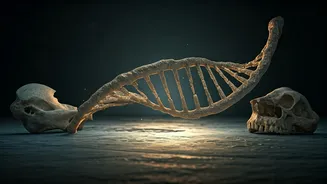
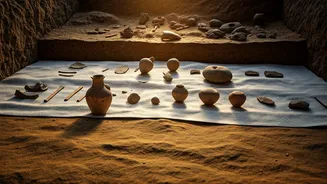
Ancient DNA analysis is like a form of genetic time travel. Over the last decade, technological breakthroughs have allowed scientists to extract and sequence DNA from archaeological remains like bones, teeth, and even soil. This has provided unprecedented
insights into human evolution, ancient migrations, and the origins of diseases. Studies have reshaped our understanding of everything from our relationship with Neanderthals to the movements of populations across continents. In India, aDNA research is central to untangling the complex tapestry of its population history, exploring the relationships between ancient groups like those of the Indus Valley Civilisation and present-day populations. It offers a powerful tool to complement archaeological and textual evidence, providing a direct window into our biological past.
The High Price of Knowledge
This incredible knowledge comes at a cost. Extracting aDNA is often a destructive process, requiring researchers to drill into or break off pieces of irreplaceable human remains. This raises a fundamental ethical question: when is the potential for scientific discovery worth the damage to an ancestor's physical remains? Many cultures and communities view these remains not as scientific specimens, but as the bodies of their ancestors, deserving of respect and peace. This tension places a profound responsibility on researchers to justify their work and minimize harm, remembering that they are studying human beings, not just data points.
The Critical Question of Consent
The most significant ethical challenge in the field is consent. While researchers studying living people must obtain informed consent, who gives permission for the study of someone who died thousands of years ago? For too long, some scientists operated in a grey area, taking samples from museum collections without consulting the communities who consider themselves descendants or guardians of these ancestors. This has led to accusations of 'vampire science' or 'helicopter science,' where researchers, often from Western institutions, extract valuable biological material without meaningful engagement, collaboration, or sharing of benefits with local communities. This practice has eroded trust and highlighted the colonial dynamics that can persist in modern science.
When Science and Identity Collide
The findings from aDNA studies can have a massive social and political impact. Genetic narratives about ancestry and migration can challenge, or be used to challenge, the foundational identity and oral histories of communities. In the Indian context, for example, findings related to the 'Aryan migration' theory are highly sensitive and politically charged. It is crucial for scientists to recognise that their findings are not released into a vacuum. Genetic data should never be used as an arbiter of identity, and researchers have a responsibility to communicate their findings carefully and oppose misinterpretations that fuel racist or nationalistic narratives.
Forging an Ethical Path Forward
In response to these challenges, a global movement is underway to establish clear ethical guidelines for aDNA research. In 2021, an international group of over 60 scientists, curators, and archaeologists published a landmark paper proposing five core principles for responsible practice. These guidelines stress the importance of abiding by all local regulations, minimising damage to remains, making data available for re-examination, and, most critically, engaging with descendant communities and other stakeholders from the very beginning of a project. The consensus is that community collaboration is not a barrier to science, but a fundamental part of ethical and rigorous research. A 'no' from a community must be accepted as a perfectly valid answer.