



The Cozy Embrace of the North: Phiran & Phulkari
Travel to the valleys of Kashmir and you'll find the Pheran, a garment that is the very definition of elegant comfort. [5] Traditionally a long, loose-fitting gown worn by both men and women, the Pheran is a practical and stylish answer to the region's
cold climate. [5] Made from wool in the winter and cotton in the summer, modern versions for women are often adorned with exquisite 'Tilla' or 'Aari' embroidery, transforming a simple silhouette into a piece of wearable art. [5, 18] Further south, in Punjab, the magic unfolds in the form of Phulkari, which literally translates to "flower work." [10, 14] This vibrant embroidery technique once adorned dupattas and shawls made from hand-spun 'khaddar' cotton. [7] The intricate patterns, created with shimmering silk floss, were never just for decoration; they were a core part of a woman's life, with grandmothers beginning a bride's trousseau at her birth. [7] These pieces tell stories of daily life, celebrations, and heritage. [7]
The Vibrant West: Bandhani & Leheriya
The western states of Gujarat and Rajasthan offer a riot of colour through their famous tie-dye traditions. Bandhani, or Bandhej, is an ancient craft where tiny sections of fabric are tied with thread before dyeing. [24, 25] When untied, they reveal intricate patterns of dots, squares, and waves. [25] This technique, practiced for generations, is central to festive and wedding attire, especially in auspicious colours like red and yellow. [25, 28] Closely related but visually distinct is Leheriya from Rajasthan, which means "waves." [20, 24] Here, the fabric is rolled diagonally and tied at intervals to create stunning striped or wave-like patterns. [20] Traditionally worn during the monsoon festival of Teej, the flowing lines of a Leheriya saree evoke a sense of fluid grace and vibrant energy, making it a lighter, more graphic alternative to the intricate Bandhani. [20, 24]
The Timeless South: Kanjeevaram & Kasavu
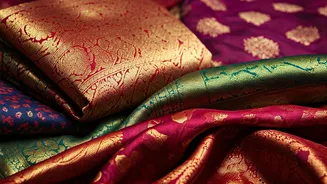
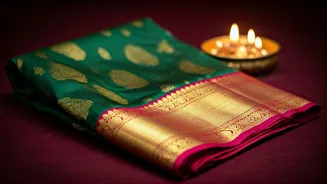
In South India, the saree is not just an outfit; it's an heirloom. From the temple town of Kanchipuram in Tamil Nadu comes the magnificent Kanjeevaram saree. Woven from pure mulberry silk, these sarees are renowned for their heavy, luxurious drape, contrasting borders, and rich zari work featuring temple motifs, peacocks, and floral patterns. [31, 34] A true Kanjeevaram's border and body are woven separately and then interlocked, a technique that gives them their signature structured elegance and durability. [34] Further west, in Kerala, beauty lies in sophisticated simplicity. The Kerala Kasavu is an iconic off-white or cream cotton handloom garment distinguished by its simple gold or silver zari border, known as the 'kasavu'. [30, 31, 34] This minimalist elegance makes it the go-to attire for festivals like Onam and other auspicious occasions, representing purity and cultural pride. [30, 34]
The Artistic East: Kantha & Mekhela Sador
The eastern states showcase a deep connection between textiles and storytelling. From West Bengal comes Kantha, a style of embroidery traditionally used to repurpose old sarees and dhotis into quilts. This running stitch technique creates narrative pieces, with motifs depicting folklore, nature, and daily life. Today, Kantha work adds a layer of artisanal texture and history to modern sarees and kurtas. Meanwhile, the traditional attire for women in Assam is the Mekhela Sador, a graceful two-piece garment. [36, 38] It consists of the 'Mekhela', a cylindrical skirt, and the 'Sador', a drape worn over the upper body. [36] Typically made from Assam's famous silks like Muga, Pat, and Eri, the Mekhela Sador is adorned with intricate woven motifs inspired by local flora and fauna, making it a unique and elegant expression of regional identity. [36, 38]
The Regal Centre: Chanderi & Chikankari
Central India offers a blend of royal legacy and delicate craftsmanship. From the town of Chanderi in Madhya Pradesh comes the namesake fabric, a beautiful blend of silk and cotton that results in a material that is lightweight, sheer, and has a subtle sheen. [21, 34] Chanderi sarees and suits are prized for their breezy elegance, making them perfect for India's climate. [34] The fabric's unique texture provides an ideal canvas for another celebrated craft: Lucknow's Chikankari. [19] This delicate and intricate form of white-on-white hand-embroidery involves a variety of stitches to create ethereal floral and paisley patterns. [19] When the gossamer feel of Chanderi is combined with the artistry of Chikankari, the result is a garment that speaks of understated luxury and timeless grace. [16, 21]