








The Danger of the Digital Shortcut
As the deadline for filing Income Tax Returns (ITR) approaches, our social media feeds and messaging apps are swamped with well-meaning but hazardous advice. You've seen them: screenshots of tax-saving tips, forwarded PDFs of ITR checklists, and links
to "finfluencers" promising to simplify the process. While seemingly helpful, relying on these unofficial sources is a significant gamble with your financial data. The information can be outdated, as tax laws and forms are subject to annual changes. A guide from last year could lead you to make costly errors. More alarmingly, these files can be Trojan horses for phishing attacks or malware, designed to steal your sensitive banking and personal information. The convenience of a quick download is not worth the risk of identity theft or financial fraud.
Red Flags of Financial Misinformation
Learning to spot a scam is your first line of defense. Be skeptical of any financial advice that isn't from a verified source. Red flags include communications that create a sense of panic, such as threatening to block your PAN card or withholding a refund unless you act immediately. The Income Tax Department does not communicate in this manner. Scrutinize the sender's email address; official communications come from addresses ending in "@incometax.gov.in". Any variation on this is likely a fake. Poor grammar, spelling errors, and unofficial-looking formatting are also giveaways. Finally, never click on links or download attachments from unsolicited emails or messages. Always log in to the official portal directly to verify any claims.
The Official Toolkit for Safe ITR Filing
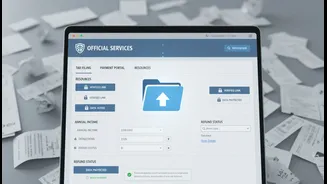
To file your return safely and accurately, you only need one primary resource: the official Income Tax Department e-filing portal (incometax.gov.in). This is the central hub for all ITR-related activities. Here, you can register as a taxpayer, download the correct ITR forms for the Assessment Year 2026-27, and either file online or upload the JSON utility. The portal itself confirms that ITR-1, 2, 3, and 4 are now live for filing. The due date for most individual taxpayers (filing ITR-1 or ITR-2) is July 31, 2026. The portal also has a wealth of verified resources, including tax tutorials, FAQs, and a tax calculator to help you navigate the process.
Essential Pre-Filing Checks
Before you start filling out your ITR, log in to the e-filing portal and review your Annual Information Statement (AIS) and Form 26AS. These documents summarize the financial information the tax department has on you, including salary, interest income, and taxes deducted at source (TDS). Reconciling these statements with your own records is crucial to ensure you are reporting all income correctly and claiming the right amount of tax credit. Any mismatch can trigger a notice from the department. The portal allows you to provide feedback on AIS entries if you find discrepancies. Completing this step first can save you a lot of trouble later.
Verification and Beyond
Filing your return is only half the job; you must also e-verify it. An ITR that is not verified is considered invalid. The department provides multiple easy ways to do this, including through an Aadhaar OTP or your net banking account. You have 30 days from the date of filing to complete the verification. Once verified, you will receive an acknowledgment (ITR-V). For any questions or grievances, the official portal lists helpdesk numbers and email addresses. Remember, the Income Tax Department will never ask for your PIN, passwords, or bank account details via email.