





Nature's Tiny Time Capsules
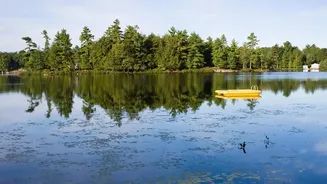
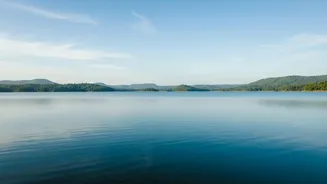
Imagine a history book that writes itself, layer by layer, at the bottom of a lake. This is essentially what lake sediments are. Each year, dust, soil, and microscopic pollen grains from surrounding plants settle on the lakebed. These layers build up
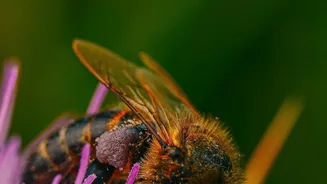
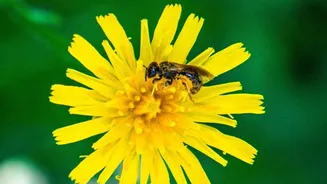
over millennia, creating a vertical timeline of the local environment. The science of studying this ancient pollen is called palynology. Because each plant species produces a uniquely shaped pollen grain, and these grains have incredibly tough outer walls, they can remain perfectly preserved for thousands of years. By identifying and counting the pollen in each sediment layer, scientists can reconstruct what the landscape looked like, what plants were dominant, and by extension, what the climate was like.
Inside the Chhattisgarh Study
Scientists from the Birbal Sahni Institute of Palaeosciences (BSIP) in Lucknow turned their attention to Raja Rani Lake in the Korba district of Chhattisgarh. This location is significant because it lies within India's Core Monsoon Zone (CMZ), the region that receives the vast majority of the country's annual rainfall. Understanding climate history here is key to understanding the history of the Indian Summer Monsoon itself. The researchers carefully extracted a 40-centimetre-long sediment core from the lakebed—a tube of mud containing an unbroken environmental record stretching back approximately 2,500 years. Layer by layer, they analysed the ancient pollen trapped inside to piece together a story of profound environmental change.
A Stronger, Wetter Past
The study's most striking finding relates to a period known as the Medieval Climate Anomaly (MCA), which occurred roughly between 1060 and 1725 CE. The pollen record from this era showed a clear dominance of species found in moist, tropical deciduous forests. This was a significant discovery, as it pointed to a much warmer and more humid climate than is typical today, fuelled by an unusually strong and sustained monsoon. These findings challenge previous assumptions and suggest that the Indian Summer Monsoon was far more intense during this medieval period than earlier believed. The research attributes this powerful monsoon to a combination of factors, including La Niña-like conditions in the Pacific, which often bring heavier rains to India.
From Savannah to Forest
The pollen records didn't just reveal a single snapshot in time. They showed a dramatic transformation of the landscape over centuries. Looking back further, around 2,000 to 2,800 years ago, the pollen indicated a savannah-like environment, suggesting a drier climate with moderately strong monsoons. As the monsoons gradually strengthened, the vegetation changed. The study documents a shift from this open savannah to a more densely wooded landscape and eventually to the lush, mixed tropical forests of the Medieval Climate Anomaly. This detailed picture of vegetation change provides tangible evidence of how sensitive the region's ecosystems are to fluctuations in monsoon rainfall.
Why Looking Back Helps Us Look Forward
Reconstructing past climates isn't just an academic exercise. It provides a crucial baseline for understanding our current and future climate challenges. By studying periods of natural climate variability, like the intense monsoons of the medieval era, scientists can better model how regional climates might respond to global warming. These long-term records reveal the full range of a climate system's behaviour, including extremes that haven't occurred in modern recorded history. This knowledge is vital for making informed decisions about water resource management, agricultural planning, and biodiversity conservation in a country so heavily dependent on the monsoon. Studies like the one in Chhattisgarh provide a roadmap from the past to help navigate the uncertainties of the future.