


The Sun’s Unseen Temper
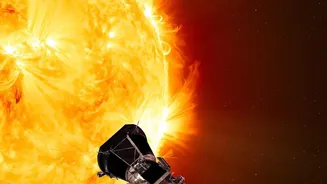
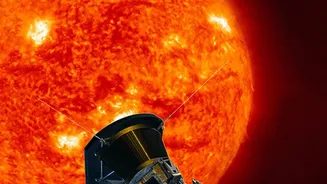
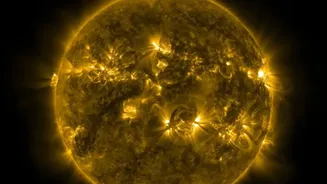
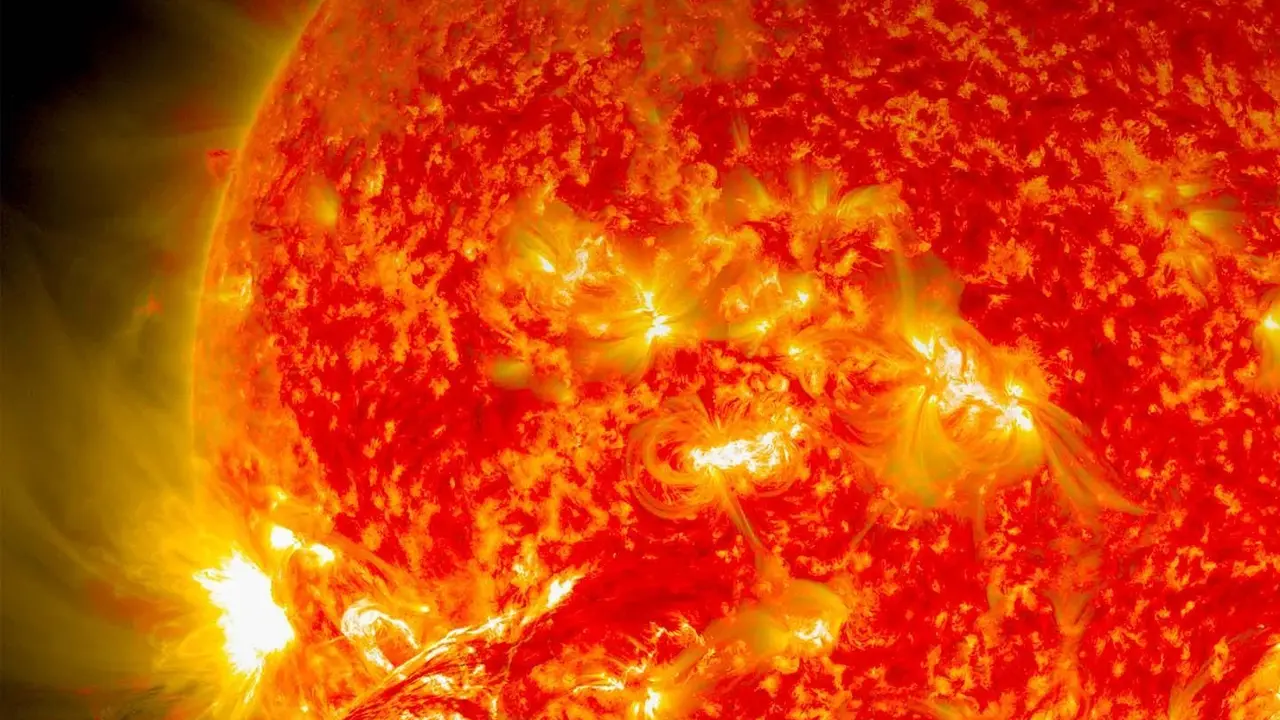
Far from being a gentle, constant star, the Sun has a dynamic and often violent nature. It occasionally ejects enormous clouds of magnetised plasma and charged particles in an event known as a Coronal Mass Ejection (CME). These CMEs travel outward through
space at incredible speeds, sometimes heading directly for Earth. When one of these solar blasts collides with our planet’s protective magnetic field, or magnetosphere, it can trigger a geomagnetic storm. This interaction transfers vast amounts of energy into our upper atmosphere, creating beautiful auroras but also posing a significant threat to our technology.
Satellites Under Siege
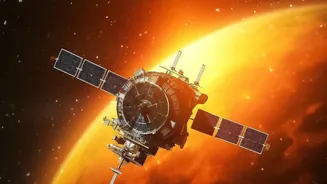
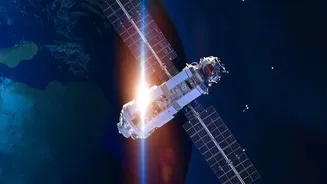
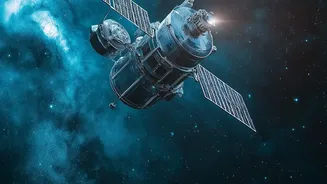
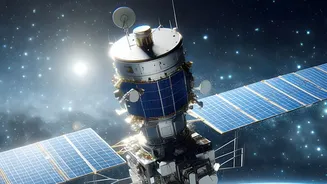
For satellites, a geomagnetic storm is a multi-pronged assault. The surge in charged particles can damage sensitive electronics and cause internal components to build up an electrical charge, leading to potentially damaging electrostatic discharges. The storm also heats and expands Earth's upper atmosphere, increasing the atmospheric drag on satellites in low-Earth orbit. This increased drag can cause satellites to lose altitude and require them to burn precious fuel to maintain their orbit. In severe cases, these storms can disrupt GPS signals, cripple communications, and permanently damage the multi-million-dollar satellites that underpin global finance, logistics, and broadcasting.
Earth's First Line of Defense
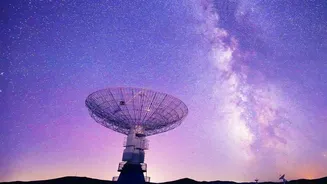
While space-based satellites like DSCOVR and the GOES series provide the very first warning—often just 15 to 60 minutes before a CME hits—it's a global network of ground-based observatories that monitors the storm's impact in real time. These facilities, run by organisations like the U.S. Geological Survey and the British Geological Survey, use highly sensitive instruments called magnetometers. Magnetometers continuously measure the strength and direction of the Earth's local magnetic field with incredible precision. When a solar storm begins to interact with our magnetosphere, these instruments are the first to register the disturbance on the ground.
Reading the Telltale Signs
A geomagnetic storm doesn't arrive all at once. The initial impact from an interplanetary shockwave, which travels ahead of the main CME cloud, causes a sudden, sharp jolt in the magnetic field data recorded by magnetometers on the ground. This is known as a "sudden storm commencement." This initial signal confirms that a solar storm has made contact with Earth's magnetosphere and that more intense effects are likely to follow. By pooling data from hundreds of these observatories worldwide, organisations like NOAA's Space Weather Prediction Center can build a comprehensive picture of the storm's intensity and geographic reach, issuing alerts and warnings accordingly.
From Alert to Action
This early warning is critical for satellite operators. Once an alert for a significant geomagnetic storm is issued, they can take protective measures to mitigate potential damage. A common procedure is to switch a satellite into a protective "safe mode." This involves temporarily shutting down non-essential systems, orienting the spacecraft to present a smaller profile to the incoming particle stream, and securing sensitive electronics. For satellites in low-Earth orbit, operators might prepare for manoeuvres to counteract the increased atmospheric drag. These actions, made possible by the timely data from ground observatories, can mean the difference between a temporary disruption and the permanent loss of a critical asset.