





The Challenge: A Bubble in the Void
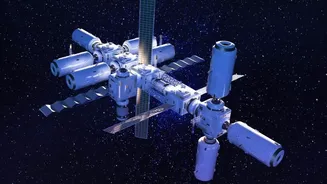
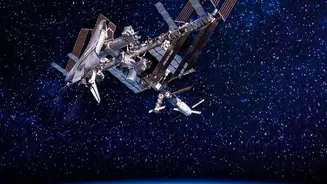
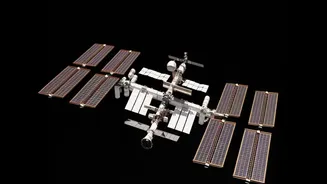
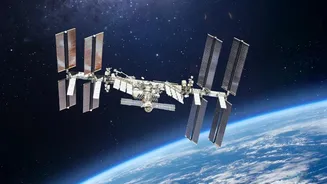
The International Space Station (ISS) is essentially a self-contained bubble. Unlike on Earth, where plants and natural cycles replenish our air, the ISS must do everything artificially. Simply bringing huge tanks of oxygen is impractical for long-term
missions due to cost and limited storage space. Instead, engineers designed a sophisticated recycling plant in the sky, known as the Environmental Control and Life Support System (ECLSS). This system's primary job is to perform 'air revitalization': generating breathable oxygen, removing the carbon dioxide astronauts exhale, and filtering out other harmful contaminants. The goal is to create a self-sustaining or 'closed-loop' system that minimises the need for resupply missions from Earth.
Making Oxygen from Water
The primary method for producing oxygen aboard the ISS is a process called electrolysis. The station’s Oxygen Generation System (OGS) uses electricity, supplied by large solar panels, to split water molecules (H₂O) into their constituent parts: oxygen and hydrogen. The oxygen is released into the cabin atmosphere for the crew to breathe. The hydrogen, which is a byproduct, is either vented into space or, more cleverly, sent to another part of the system for further recycling. Where does all this water come from? While some is delivered on supply missions, much of it is recycled from sources already on the station, including humidity from the air (astronauts' breath and sweat) and even purified urine.
Removing Carbon Dioxide
Breathing in oxygen is only half the battle; the carbon dioxide (CO₂) astronauts exhale is toxic in high concentrations and must be constantly removed. On Earth, plants do this for us, but on the ISS, machines handle the job. The primary system, the Carbon Dioxide Removal Assembly (CDRA), uses beds of tiny, porous clay-like crystals called zeolites. Air is passed through these beds, and the zeolite material acts like a molecular sieve, trapping CO₂ molecules while letting oxygen and nitrogen pass through. The system then alternates between beds; while one is actively scrubbing the air, the other is heated and exposed to the vacuum of space, venting the captured CO₂ overboard and regenerating the zeolite for its next cycle.
Closing the Loop with the Sabatier System
Simply venting all the CO₂ and hydrogen into space is wasteful. To make the system even more efficient, engineers implemented the Sabatier system. This remarkable device takes the 'waste' hydrogen from the oxygen generator and combines it with the 'waste' carbon dioxide captured by the CDRA. Through a catalytic reaction at high temperatures, it produces two new substances: water (H₂O) and methane (CH₄). The water is a precious resource that can be fed back into the electrolysis system to create more oxygen, further 'closing the loop'. The methane is currently vented into space, but this process significantly reduces the amount of water that needs to be launched from Earth, a crucial step for enabling longer missions.
Filtering the Unseen Dangers
Beyond just oxygen and CO₂, the air inside a sealed habitat can accumulate dozens of other trace contaminants. These come from the astronauts' own bodies (like ammonia and methane) and from the off-gassing of electronic equipment and other materials. If left unchecked, these chemicals could become hazardous to crew health. To manage this, the ECLSS includes a Trace Contaminant Control System. Air is passed through filters, including beds of activated charcoal, which absorb many organic compounds. For more stubborn contaminants, a high-temperature catalytic oxidizer essentially burns them out of the air, ensuring the atmosphere remains clean and safe over the long term.