




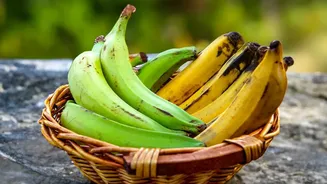
The Great Starch Transformation
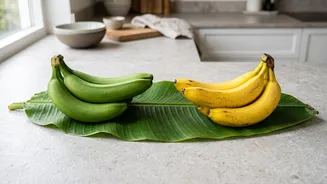
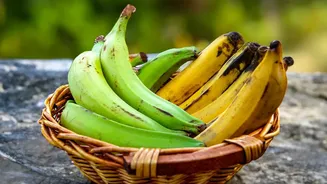
A banana’s journey from green to yellow is a fascinating natural process driven by enzymes. When a banana is unripe and green, its carbohydrate content is mostly made up of resistant starch. In fact, starches can constitute 70-80% of an unripe banana's
dry weight. This 'resistant' starch gets its name because it resists digestion in the small intestine, functioning much like dietary fibre. As the banana ripens, enzymes like amylase and sucrose phosphate synthase get to work, breaking down these complex starch chains into simple sugars like sucrose, glucose, and fructose. This conversion is why a ripe yellow banana is significantly sweeter, softer, and contains very little starch—often just 1%.
The Case for Unripe: A Resistant Starch Powerhouse
Choosing a green banana means you're opting for a snack high in resistant starch and pectin. These fibres are considered prebiotics, meaning they feed the beneficial bacteria in your gut, contributing to a healthy microbiome. This high fibre content also promotes a feeling of fullness, which can aid in weight management. One of the most significant benefits is for blood sugar control. Because resistant starch is digested slowly, it leads to a much slower, lower rise in blood glucose levels. An unripe banana has a low glycemic index (GI), typically around 30 to 42, making it a potentially better choice for individuals managing diabetes or looking to maintain stable energy levels. However, for some, the high starch content can be harder to digest and may cause gas or bloating.
The Case for Ripe: Sweet, Simple Energy
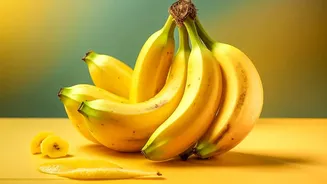
As a banana turns yellow, it becomes a source of quick, easily digestible energy. The conversion of starch to simple sugars means your body can access the energy rapidly, making a ripe banana an excellent pre- or post-workout snack. Ripe bananas are often easier on the digestive system, making them suitable for children, people recovering from illness, or those with sensitive stomachs. While their glycemic index is higher than that of green bananas—typically in the moderate range of 51 to 62—they are still packed with essential nutrients like potassium, vitamin B6, and vitamin C. Interestingly, as bananas become overripe with brown spots, their antioxidant levels are thought to increase.
Which Banana Is Right For You?
The 'best' banana truly depends on your personal health needs and goals. For Blood Sugar Management: The green, unripe banana is the clear winner. Its high resistant starch content and low GI help prevent sharp spikes in blood sugar. For Gut Health: Go green. The prebiotic fibres (resistant starch and pectin) in unripe bananas are excellent for nourishing your gut microbiome. For Quick Energy: Reach for a yellow banana. Its simple sugars provide a fast and easily accessible fuel source, perfect for athletic performance. For Easy Digestion: A ripe, yellow banana is generally better tolerated. If you have a sensitive stomach or digestive issues like IBS, the lower starch content may be more comfortable for you.