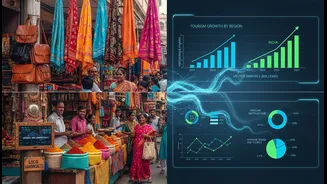









The Allure of Big Numbers
Every year, the conversation around Indian tourism is dominated by a few headline figures: total Foreign Tourist Arrivals (FTAs), Domestic Tourist Visits (DTVs), and overall growth percentages. These numbers are simple, easy to report, and create a narrative
of progress. Government portals, including the National Integrated Database of Hospitality Industry (NIDHI), are designed to be comprehensive databases for policy formulation and planning. They successfully catalogue the scale of the industry, from hotels to tour operators, providing a sense of its size and geographic spread. This focus on volume, however, can be misleading. While it's important to know how many people are coming, these metrics alone tell an incomplete story, one that prioritizes quantity over quality and short-term gains over long-term sustainability.
What the Data Doesn't Tell Us
The most critical weakness of focusing only on arrival numbers is what gets left out. Our current data offers little insight into the real impact of tourism. For example, where do tourists actually spend their money? What is the rate of economic leakage, where money flows out of the local economy to large, non-local corporations? How long do visitors stay in one particular region versus another? Are we measuring the strain on local resources like water and power, or the carbon footprint of travel? The official data struggles to answer questions about visitor satisfaction, community sentiment, or whether tourism is genuinely benefiting the host communities it relies on. Without this information, we are navigating blind, unable to distinguish between beneficial growth and the kind of tourism that hollows out a destination.
The Problem with Hype-Driven Policy
When policy is driven by hype, investment follows the hype. A singular focus on increasing arrivals might lead to building a new airport while ignoring the terrible last-mile connectivity that ruins the visitor experience. It encourages a model that values a single, high-volume destination over dispersing tourists to lesser-known areas, which could distribute economic benefits more evenly. Recent data shows that despite a global travel rebound, India's foreign tourist arrivals have been stagnating or even declining compared to pre-pandemic levels and regional competitors. This suggests our current strategy is not working. Relying on vanity metrics can mask serious underlying issues like poor infrastructure, safety concerns, and a lack of visitor-friendly experiences that require targeted, nuanced solutions—not just bigger marketing campaigns.
Asking Smarter Questions for a Better Future
To build a resilient and truly 'Incredible India', we must start asking better questions. The framework for this already exists; global standards now incorporate environmental and social impacts. Instead of just 'how many?', our data portals should help us answer 'how well?'. For example: What is the average daily spend of different tourist segments, and where does it go? What is the visitor-to-resident ratio in ecologically sensitive areas? How do local communities feel about tourism's impact on their culture and quality of life? We need to track visitor satisfaction and repeat visitation rates as key performance indicators. By shifting the focus, we can move from simply attracting visitors to creating high-quality, sustainable experiences that benefit everyone.
From Data Repository to Decision Engine
India's tourism data infrastructure, including platforms like NIDHI+, has the potential to be more than just a digital filing cabinet. It can become a dynamic decision engine. By integrating more diverse datasets—from water usage and waste management to real-time visitor sentiment analysis from social media and review sites—the portal could offer predictive insights. It could help a state government understand the carrying capacity of a hill station before it's overwhelmed or guide an entrepreneur in identifying a gap for eco-friendly accommodations. The Ministry of Tourism's objective is to use data for informed decision-making. To truly achieve this, the system must evolve from counting heads to providing the intelligence needed to build a more profitable, equitable, and sustainable tourism sector for the decades to come.